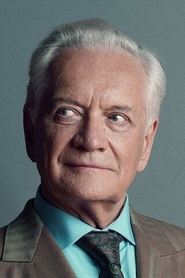
Andrzej Seweryn
Sylwester Borkowski vel Bork

After a decades-long absence, a renowned Parisian tailor and drag queen returns to his hometown in Poland to make amends with his daughter.
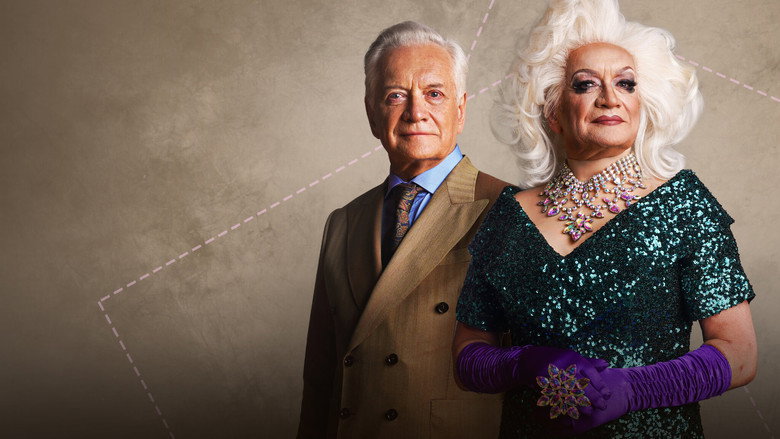
I didn’t expect to cry in the first ten minutes of Queen. Not because the premise—an aging Parisian drag queen returning to his Polish hometown to reconcile with his estranged daughter—sounded anything less than emotionally charged, but because the series unfolds with such quiet precision that the tears arrive before you even realize you’re invested. There’s no swelling score, no melodramatic confrontation, just Andrzej Seweryn’s face as Robert, the titular queen, standing in the doorway of his childhood home, his gloved hands trembling as he removes his sunglasses.
The camera lingers on his eyes, which have seen decades of glitter and grief, and suddenly, you understand: this isn’t just a story about coming home. It’s about the weight of the person you left behind.
Łukasz Kośmicki’s direction is deceptively simple. He doesn’t rely on flashy cuts or nonlinear storytelling to signal depth. Instead, he lets scenes breathe, trusting the audience to sit with the discomfort of silence.
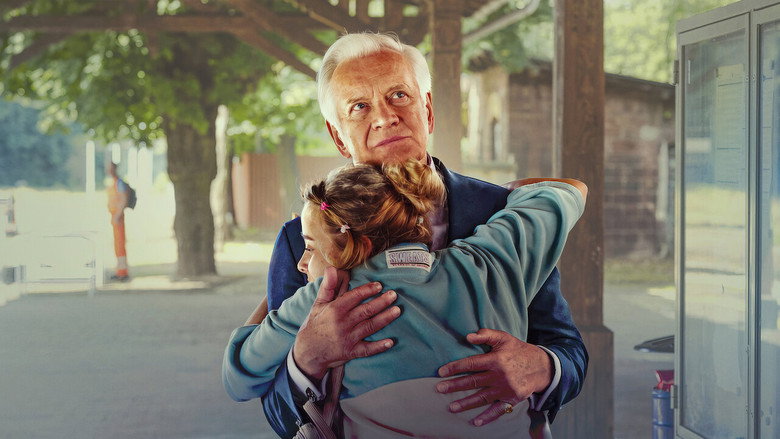
In one early moment, Robert and his daughter, Magda (Julia Chętnicka), share a meal in near-total quiet. The clinking of cutlery fills the space between them, and you can almost feel the years of unspoken words pressing down on the table. It’s a masterclass in tension—no histrionics, just two people who love each other but don’t know how to say it.
(I’ve been there, at tables just like that one, and the familiarity stings.)
The series’ greatest strength is its refusal to reduce Robert to a caricature. He’s not just a drag queen; he’s a businessman, a father, a man who fled Poland decades ago and built a life in Paris that glittered but never quite fit. Seweryn, a titan of Polish cinema, plays him with a restraint that borders on devastating.
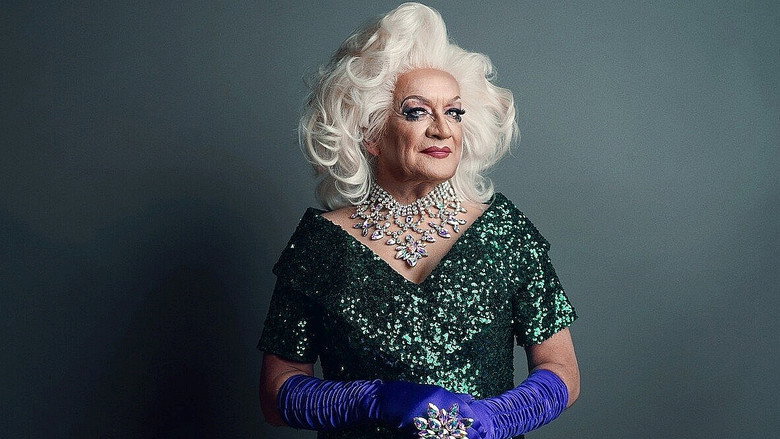
There’s no camp here, no exaggerated flamboyance—just a man who has spent his life performing, even when the curtains were closed. In one scene, he tries on an old costume in his childhood bedroom, the sequins catching the light like memories. For a moment, he smiles, but it fades as quickly as it came.
The past isn’t something you can slip back into like a well-worn gown.
The cultural clash at the heart of Queen is handled with a light touch. Robert’s return forces his hometown to confront its own prejudices, but the series isn’t interested in easy villains. Even the most conservative characters are given moments of humanity, like Magda’s boyfriend, who oscillates between discomfort and curiosity about Robert’s life.
It’s a refreshing approach—one that acknowledges that change isn’t about grand gestures but small, awkward steps. (Though I’ll admit, I wanted to throw a shoe at the screen during one particularly tone-deaf remark about “lifestyle choices.” Some habits die harder than others.)
Maria Peszek, as Robert’s former lover and Magda’s mother, delivers a performance that’s all the more powerful for its understatement. She and Seweryn share a scene in a bar that’s so charged with unspoken history, you could cut the air with a knife. Their chemistry is a reminder of what great acting can do: make you believe in a past you’ve never seen.
Peszek’s character is the emotional core of the series, a woman who loved Robert but couldn’t follow him into the life he chose. Her grief isn’t loud; it’s the kind that settles into your bones.
If Queen stumbles, it’s in its pacing. The middle episodes meander a bit, as if the writers weren’t entirely sure how to fill the space between Robert’s arrival and the inevitable reckoning. There’s a subplot involving Magda’s career that feels tacked on, a distraction from the far more compelling dynamic between father and daughter.
But these are minor quibbles. The series’ final episode, which I won’t spoil, lands with a quiet devastation that lingers long after the credits roll.
What Queen understands, and what makes it more than just a family drama, is that drag isn’t just about performance—it’s about survival. Robert’s life in Paris was a kind of armor, a way to become someone else so he wouldn’t have to face the person he left behind. But the thing about armor is that it’s heavy.
By the end of the series, you’re left wondering: How much of ourselves do we leave behind when we reinvent who we are? And is it ever possible to go back?
I’m still thinking about that last shot, of Robert standing alone on a train platform, his reflection blurred in the window. It’s not a happy ending, but it’s an honest one. Some doors don’t close all the way.
Some people don’t get the reconciliation they deserve. And some stories, like some lives, are too complicated for neat resolutions. Queen doesn’t offer answers, but it does something rarer: it makes you feel the weight of the questions.
Netflix’s Polish miniseries Queen (2022) has quietly become one of the streamer’s most intriguing character studies, thanks in large part to a career-defining performance by veteran actor Andrzej Seweryn. Directed by Łukasz Kośmicki, the series follows the life of a man who reinvents himself as drag queen Loretta—a role that has sparked conversations about identity, aging, and the power of transformation. latestnetflix.com's take is that with a cast that includes Maria Peszek, Julia Chętnicka, and Queer Eye’s Antoni Porowski, Queen blends drama with a touch of glamour, but it’s Seweryn’s portrayal that anchors the project.
Andrzej Seweryn, a titan of Polish cinema and theater, takes on the role of Loretta with a mix of gravitas and vulnerability. The series marks a bold departure for the 78-year-old actor, who has spent decades in prestigious stage and film roles but rarely ventured into such a flamboyant, gender-bending performance. Clips from the show, including a teaser titled "Przemiana w Draq Queen" (Transformation into a Drag Queen), showcase Seweryn fully embracing Loretta’s persona—complete with wigs, makeup, and a stage presence that feels both authentic and electrifying.
While the series itself remains under-discussed in English-language media, Polish reviews and video essays suggest Seweryn’s performance is the standout element. Film critic Tomasz Raczek, in his video review, praises the actor’s ability to balance humor and pathos, calling the role a "surprising and moving" turn in his career. The question lingers: Did Seweryn’s decision to take on Loretta stem from a personal challenge, or was it a calculated creative risk? The evidence doesn’t specify, but the result speaks for itself.
Queen’s ensemble adds depth to the story, though details about their behind-the-scenes dynamics are scarce. Maria Peszek, known for her edgy music and acting roles, plays a character whose relationship with Loretta drives much of the emotional weight. Meanwhile, Antoni Porowski—best known as the food and wine expert on Queer Eye—makes a notable appearance, though his role’s significance isn’t fully clear from the available snippets.
One intriguing detail: The series’ title, Królowa in Polish, translates to Queen, but it’s unclear whether this refers to Loretta’s drag persona, a thematic motif, or something else entirely. The lack of English-language interviews or press materials leaves much to speculation, but the Netflix branding suggests an attempt to appeal to a global audience.
Despite its compelling premise and Seweryn’s star power, Queen hasn’t broken through in the way some Netflix international originals do. There are no major awards campaigns, viral memes, or high-profile controversies tied to the series—at least not in the English-speaking world. Polish-language reviews, like those from Filmweb, seem positive but not effusive, focusing more on the performances than the series’ broader cultural impact.
One possible reason for the muted response: Queen is a miniseries, not a multi-season epic, which may limit its long-term visibility. Drag-themed stories have become more common in recent years (Pose, RuPaul’s Drag Race), making it harder for Queen to stand out. Still, Seweryn’s involvement alone makes it worth a watch for fans of character-driven drama.
Queen (2022) won’t be for everyone, but it offers something rare: a nuanced exploration of identity through the lens of an older protagonist. Seweryn’s Loretta is neither a caricature nor a punchline, and the series seems to treat its subject with sincerity. Whether it’s a hidden gem or simply a well-crafted but overlooked project remains to be seen—but for those who stumble upon it, it’s a reminder of the power of reinvention.
Entertainment rumors and trivia aggregated from public reporting. Treat speculation as unverified unless a cited source confirms it.
More titles in the same genres and with the same cast.