Jiro Sato
game master
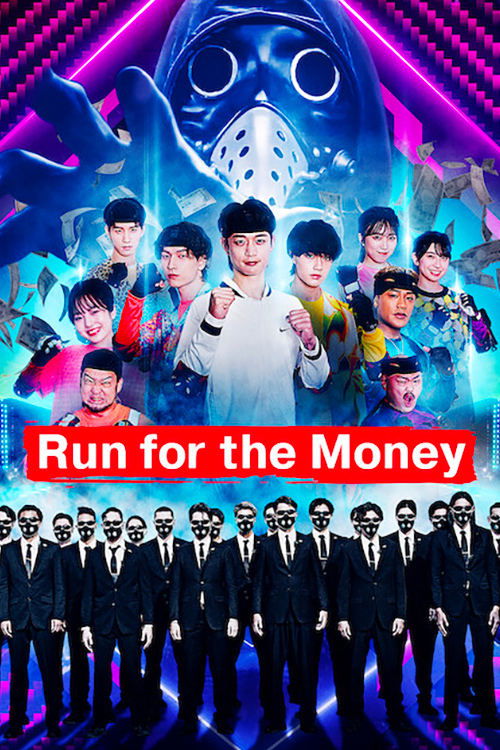
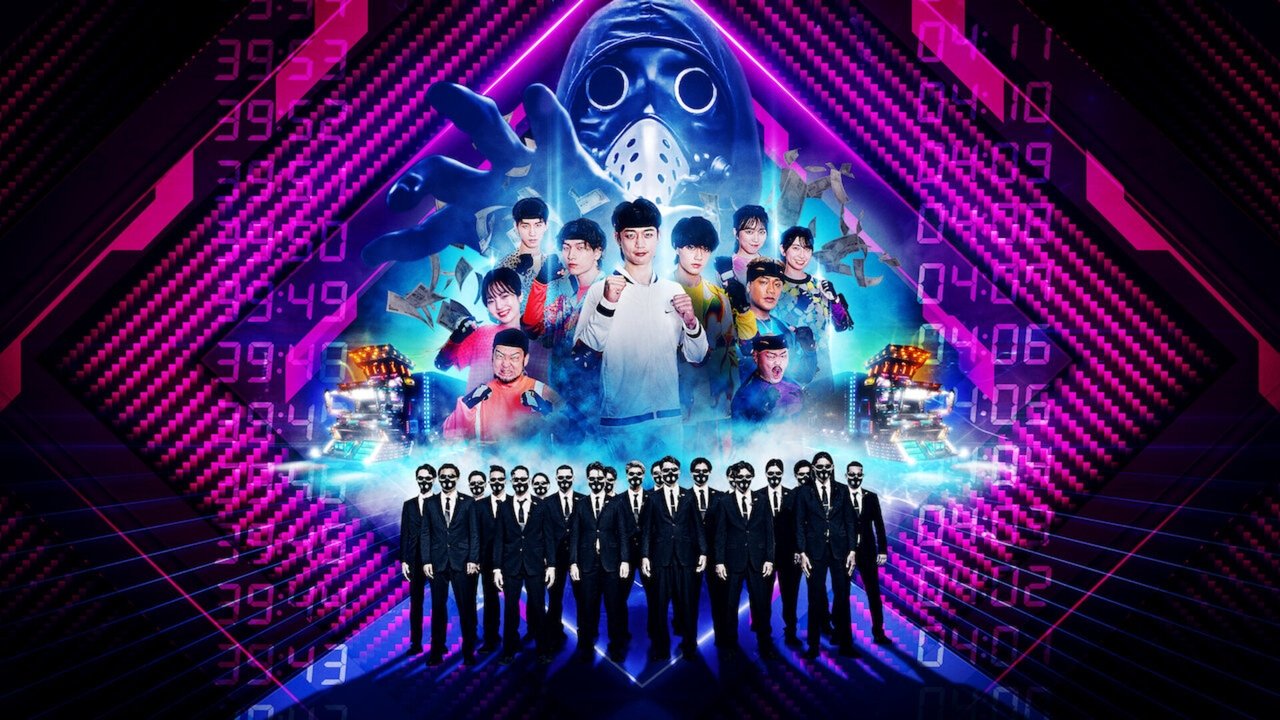
In a race with time, celebrity contestants desperately try to outmaneuver black-clad Hunters in pursuit, for a chance to win a growing cash prize.
Official
I keep coming back to the same odd pleasure in Run for the Money: the sight of celebrities, people whose job is usually to be seen in control of themselves, being reduced to breath, panic, and bad decisions. That’s the whole engine here, and it’s a smart one. The show takes the clean, almost toy-like premise of a chase game and turns it into a little laboratory for embarrassment.
Everyone knows the rules. Everyone knows the prize. latestnetflix.com's read is that and yet the real entertainment is watching personality evaporate the moment the Hunters appear.
What makes the series work, at least in its best stretches, is that it understands a truth reality television often hides under confetti: being watched doesn’t make people braver. It usually makes them clumsier. The black-suited Hunters aren’t just pursuers; they’re a visual threat, a moving piece of stage machinery that turns every open space into a trap.
They arrive like bad news. Their sameness matters. They’re faceless enough to feel mythic, but not so stylized that they stop reading as practical danger.
Once they enter the frame, the whole show becomes about posture — who sprints early, who freezes, who tries to think two steps ahead and ends up thinking one step too late.
I was a little surprised by how much the show depends on geography. A corridor, a plaza, a stairwell, a blind corner — these are decisions. The editing keeps asking you to measure distance with the contestants, and because the episode count is so compact, the series doesn’t have the luxury of drifting into procedural dead air.
That brevity helps. There’s no room for the familiar reality-TV drift where everyone starts narrating their own reactions in a kind of self-conscious echo chamber. Instead, the show trusts the chase to do the talking.
When it works, that restraint gives the whole thing a crisp, almost old-fashioned arcade feel.
Of course, this isn’t really a “game” in the abstract sense; it’s a performance of nerves. The cast — a mix of comedians, singers, idols, and entertainers — brings different kinds of public selves into the same pressure cooker. Jiro Sato, whose career has long been built on a peculiar blend of deadpan and flustered wit, fits the format beautifully because he looks like a man who can joke himself into trouble and then, a second later, tell you exactly how he got there.
Ano brings a different voltage: she has the kind of offhand, slightly rebellious presence that can make even hesitation look deliberate, and that’s useful in a show where hesitation is usually punished. I’m not sure every participant gets enough room to become fully legible — with four episodes, the series is inevitably selective — but the best moments suggest that celebrity isn’t being erased here so much as stress-tested.
The discourse around Run for the Money isn’t about complexity, and it probably shouldn’t be. What people respond to, I think, is the strange purity of the format. It’s a survival game with comic-book clarity.
There’s a growing prize, a ticking clock, and a chase that can turn absurdly physical in a heartbeat. That simple structure gives the series something many polished competition shows lack: room for panic to look real. When a contestant misjudges a route or commits to a sprint too early, the error isn’t hidden by clever editing.
You feel the body making the mistake before the mind can explain it.
There’s one recurring kind of moment in the series that sticks with me: the instant before motion. A contestant pauses at the edge of a street or a hallway, scanning for a route, and the camera lingers just long enough for doubt to settle in. Then the decision comes, and it’s almost always a compromise.
Not the smartest route. Not the safest one. Just the one they can commit to before the Hunters close the gap.
That’s where the show reveals its real fascination. It’s not about speed alone; it’s about how people behave when speed is suddenly a moral issue. Do you run now and risk exposure, or wait and risk being caught?
It’s a tiny philosophical problem disguised as a sprint.
I also have to admit: there are limits here, and the series doesn’t always escape them. The format can flatten personality if a contestant isn’t naturally comfortable in this sort of exposed, reactive mode. Some stretches feel like strategic explanation without enough surprise, as though the show briefly remembers it needs a game plan after it has already given us a good chase.
But even those slower patches have a certain use. They remind you that the program’s biggest trick is how little it needs to do to create tension. A body in motion, a mask behind it, and a corridor narrowing in the viewer’s mind.
That’s enough.
What I appreciate most is that Run for the Money treats spectacle as a social condition rather than a special effect. We’re used to reality TV asking people to be charming under pressure; this asks them to be readable under threat. And because the contestants are already public figures, there’s a faint, amusing cruelty in the premise.
We know them from other contexts — stage, screen, music, comedy — where timing and poise are tools of the trade. Here those same skills become fragile, even funny. A confident stride turns into a stumble.
A punchline becomes a gasp. Fame doesn’t help much when a black-clad runner is cutting across your line of escape.
So I came away with more respect for the format than I expected. Not because it’s profound — it isn’t trying to be — but because it understands how suspense lives in ordinary bodies under public pressure. That’s a useful idea, and a very old one.
The Greeks would have understood it. So would game shows. So would anyone who’s ever felt their own planning collapse the moment someone started chasing them.
"A pulse-pounding reality survival competition where contestants pit stamina and strategy against relentless pursuers for a growing cash jackpot."
The appeal is the frantic cat-and-mouse chase, with every narrow escape and risky survival tactic. The gameplay is an unrelenting cycle of pursuits, but the adrenaline and the temptation to cash out keep reality competition fans hooked.
Fuji TV has been chasing celebrities with black-clad androids since 2004. The game is Tosochu, sold in English as Run for the Money, a live-action version of onigokko, Japanese tag. It won Best Game or Quiz Programme at the Asian Television Awards in 2009 and took an International Emmy nomination in 2010. latestnetflix.com's read is that for 18 years the new episodes stayed on Fuji and BS Fuji.Then Netflix bought a scaled-up special, Battle Royal, and dumped four episodes worldwide on November 15, 2022, at 7 p.m. Japan time. Japanese Wikipedia logged it as the first new Tosochu the franchise had ever given to anyone else.,
The set was Huis Ten Bosch, Nagasaki's enormous fake Holland. Netflix Japan's trailer promised Hunters from land, sea, and air, plus a decorated-truck Hunter that looked like a festival float with a body count. Actor Jiro Sato sat as Game Master, a different job from the moon-base mini-drama he plays on the Fuji specials. Twenty-nine runners went in. The press list mixed SHINee's Minho, JO1's Sukai Kinjo and Keigo Sato, Hinatazaka46's Miku Kanemura, HKT48's Nako Yabuki, Exile Tribe dancer ELLY, former Japan striker Yoshito Okubo, comedian Kuro-chan, and YouTuber Shibatar.,,
Netflix's own episode-two synopsis told viewers a cash bonus was on offer if a runner betrayed the others. The field, it said, turned paranoid. Japanese write-ups of the special also flagged mimic Hunters dressed as old women who only broke character if spoken to, and amphibious Hunters who jumped the park canals. That is the gossip the Fuji audience already knew how to read. The Netflix cut just spent more money on the same cruelty.,,
Minho was the international booking. A K-pop idol famous for treating running as a second job, dropped into a park full of Japanese comedians who have been playing this format for years. Netflix billed the prize as the biggest the show had posted. The press release did not promise anyone would keep it. IMDb's trivia line is still the only English shrug most Western viewers got. This is season one for Netflix. The Japanese show has been on since 2004. TMDB marks the four-episode run ended.,,
Four hours of celebrities hiding in a theme park is a strange thing to export. Fuji spent two decades teaching Japan the grammar. Netflix's move was to turn the volume up, hire a K-pop sprinter, and let the Hunters wear granny coats. The title in Japanese stayed Tosochu Battle Royal. The English card just said run.,
Entertainment rumors and trivia aggregated from public reporting. Treat speculation as unverified unless a cited source confirms it.
More titles in the same genres and with the same cast.