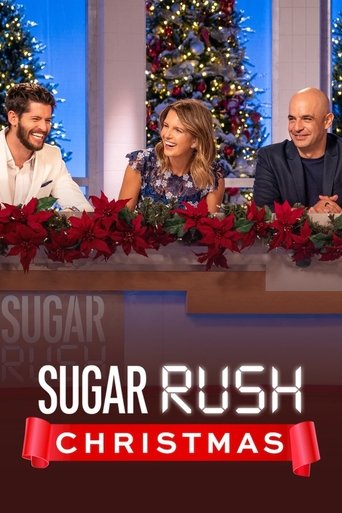
Season 1
8 episodes Jul 13, 2018 6.4
- 1 Surprise!
- 2 Kids in a Candy Store
- 3 Holiday Celebrations
- 4 Cake by the Ocean
- 5 Sweet Geeks
- 6 Camp Sugar Rush
- 7 Frosted Fashion
- 8 Get Buzzed

A relentlessly fast-paced baking competition that challenges brilliant bakers to create sweet treats that look and taste amazing – all against the clock. Who will race to the finish and win $10,000?
Latest episode: S3 E6 Breakfast, Lunch & Dinner (Jul 31, 2020)

Official
I’ve never been much of a baker. My idea of a culinary triumph is microwaving popcorn without burning it. But there’s something hypnotic about Sugar Rush, Netflix’s high-octane baking competition, that makes me forget my own incompetence in the kitchen.
Maybe it’s the way the clock looms over every episode like a ticking bomb, or how the contestants’ faces oscillate between determination and quiet panic as they pipe frosting at breakneck speed. This isn’t just a show about sugar—it’s a show about time, and how little of it we have to get things right.
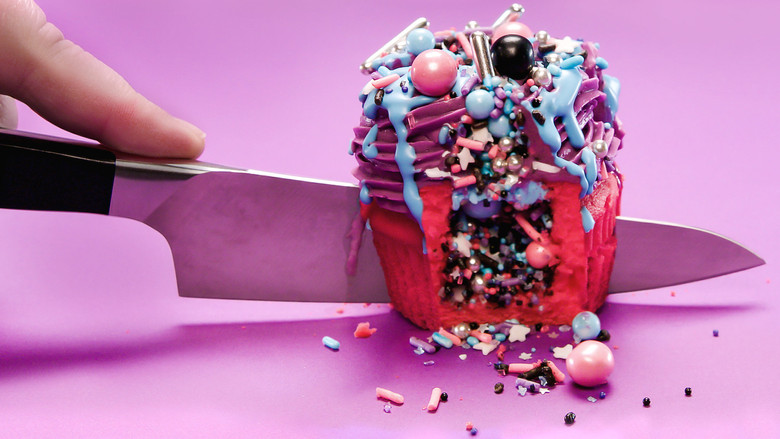
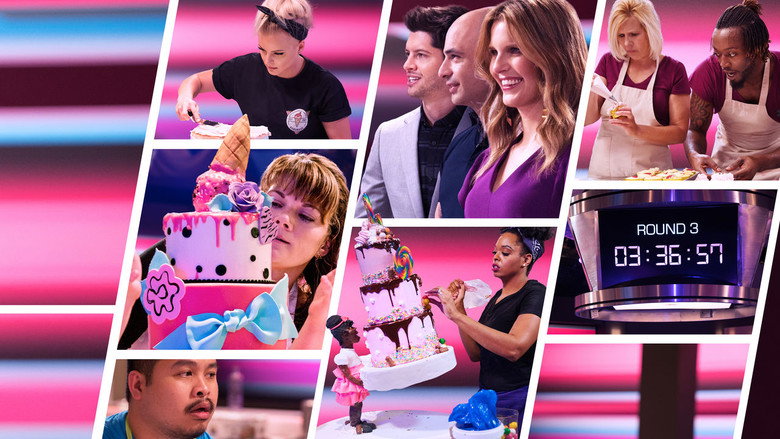
The premise is simple: four teams of two professional bakers compete in three rounds—cupcakes, confections, and a final cake challenge—all under brutal time constraints. The first two rounds are 75 minutes each; the last, a mere 90 minutes to craft a showstopping cake. For comparison, most home bakers would spend an entire afternoon on a single tiered cake, let alone one that needs to look like a work of art.
Here, the clock doesn’t just measure progress; it dictates the very rhythm of the show. The editing is relentless, cutting between close-ups of whirring mixers, sweaty brows, and the judges’ inscrutable expressions. There’s no room for hesitation, no time for second-guessing.
You either move fast or you lose.
And yet, for all its speed, Sugar Rush is oddly meditative. Watching these bakers work is like observing a form of culinary ballet—every movement is deliberate, every decision a calculated risk. The show’s judges, Candace Nelson and Adriano Zumbo, are more than just arbiters of taste; they’re gatekeepers of a very specific kind of perfection.
Nelson, the founder of Sprinkles Cupcakes, brings a warm but exacting eye to the proceedings, while Zumbo, the Australian pastry chef known for his avant-garde desserts, often seems to be judging the bakers’ creativity as much as their technique. (I’ve seen Zumbo’s own work—his desserts look like they belong in a modern art museum, not a bakery case. No pressure, contestants.)
What fascinates me most about Sugar Rush isn’t the baking itself, but the way it exposes the fragility of human skill under pressure. These are professionals, people who’ve spent years honing their craft, and yet the show’s format turns their expertise into a high-wire act. One misstep—a collapsed cake, a frosting that won’t set, a flavor combination that misses the mark—and the dream of a reported budget vanishes.
It’s a reminder that mastery isn’t just about talent; it’s about resilience, adaptability, and the ability to think on your feet when everything is falling apart.
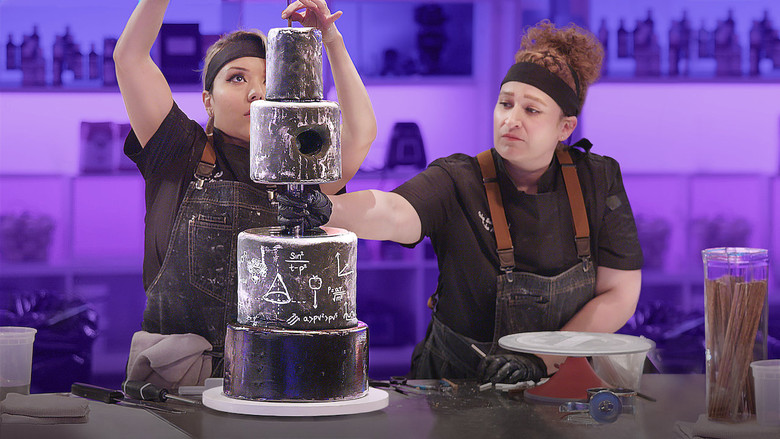
The show’s tone is pure reality TV adrenaline—bright lights, dramatic music, and the occasional slow-motion shot of a cake being sliced open to reveal its inner perfection (or disaster). But beneath the gloss, there’s something deeply human about it. These bakers aren’t just competing for money; they’re putting their reputations on the line, their years of training distilled into a single, frantic performance.
And when they fail, they fail publicly, in front of millions of viewers. There’s a vulnerability to that, a rawness that’s rare in cooking shows, where the stakes are usually lower and the tone more forgiving.
I’ll admit, I’ve watched Sugar Rush more times than I’d care to confess. There’s something addictive about its pace, its tension, its sheer audacity. It’s the kind of show that makes you want to try baking yourself—until you remember that you once burned a batch of cookies so badly they set off the smoke alarm.
(I have the scars to prove it.) But even as a spectator, it’s thrilling. It’s a reminder that creativity isn’t just about inspiration; it’s about execution, about making something beautiful and delicious in the time you’re given.
The show’s lack of critical fanfare is telling, though not entirely surprising. Reality TV, especially the competitive kind, rarely gets the same level of analysis as scripted dramas or films. But Sugar Rush deserves a closer look, if only because it’s a masterclass in how to turn a simple premise into something compulsively watchable.
It’s not The Great British Bake Off—there’s no gentle encouragement, no hand-holding, no time for tears (unless they’re tears of frustration). This is baking as a contact sport, where the only thing sweeter than the desserts is the victory.
In the end, Sugar Rush is less about the sugar and more about the rush—the adrenaline, the pressure, the fleeting moment of triumph when the clock stops and the judges nod in approval. It’s a show that celebrates skill, but also the sheer will to keep going when everything is on the line. And maybe, just maybe, that’s why I can’t look away.
Because in a world where time is always running out, there’s something deeply satisfying about watching people who refuse to let it beat them.
Netflix’s Sugar Rush (2018) turned dessert-making into high-stakes entertainment, blending the precision of baking with the adrenaline of a game show. Hosted by Hunter March, the series pitted teams against the clock in a sugar-fueled race to craft cupcakes, confections, and cakes—all while navigating the quirks of its charismatic cast and the pressures of a live-to-tape format. latestnetflix.com's view is that Behind the scenes, the show’s mix of humor, drama, and culinary creativity made it a standout in Netflix’s reality TV lineup.
Hunter March wasn’t just the face of Sugar Rush—he was its energetic heartbeat. Known for his comedic timing and affable charm, March brought a YouTube personality’s flair to the baking competition, keeping the tone light even as contestants melted under pressure. His background in hosting (E! News, The Daily Pop) translated smoothly into the fast-paced world of Sugar Rush, where his quick wit and playful banter with judges Candace Nelson and Adriano Zumbo became a fan favorite.
March’s role extended beyond hosting; he often shared behind-the-scenes glimpses of the show’s chaotic energy. In interviews, he described the production as a whirlwind of sugar, sweat, and last-minute disasters—like the time a contestant’s cake collapsed mid-judging or when the kitchen’s air conditioning failed, turning the set into a sauna. His ability to improvise and keep the mood upbeat made him the perfect anchor for a show where timing was everything.
Candace Nelson, the founder of Sprinkles Cupcakes, and Adriano Zumbo, the Australian pastry chef known for his avant-garde desserts, were the show’s resident taste arbiters. Their dynamic—Nelson’s warm, encouraging style versus Zumbo’s exacting, sometimes brutal critiques—added layers to the competition. Contestants often walked a tightrope between impressing them with creativity and avoiding Zumbo’s infamous side-eye when a dessert missed the mark.
The judges’ chemistry with March was a key ingredient in Sugar Rush’s success. Their playful ribbing and genuine camaraderie made the high-pressure environment feel more like a party than a cutthroat contest. In the show’s trailer, Zumbo’s deadpan humor and Nelson’s infectious enthusiasm hinted at the fun (and occasional tension) that unfolded off-camera.
Sugar Rush wasn’t just about baking—it was about spectacle. The show’s format, which included timed challenges and a cash prize, demanded precision, creativity, and nerves of steel. Contestants had to balance artistic flair with technical skill, often under absurd constraints (like designing a cake in under an hour or crafting a dessert blindfolded). The result? A mix of jaw-dropping successes and hilarious failures, all captured in the show’s outtakes and extras.
One of the show’s standout features was its emphasis on fun. Unlike more serious cooking competitions, Sugar Rush leaned into the joy of baking, with March’s antics and the judges’ playful critiques keeping the tone light. Even the set design—bright, colorful, and packed with oversized candy props—reflected the show’s whimsical vibe.
Despite its popularity, Sugar Rush lasted only three seasons, leaving fans craving more. Rumors about behind-the-scenes tensions or budget cuts swirled, but Netflix never confirmed the reason for its cancellation. What remains is the show’s legacy as a high-energy, feel-good competition that celebrated both skill and silliness.
For those who missed it, the DVD extras offer a peek into the chaos: bloopers, interviews, and the occasional meltdown (literally and figuratively) that made Sugar Rush a standout. Whether it was a contestant’s cake toppling over or March’s improvised jokes, the show proved that baking could be just as dramatic as any reality TV show—with a lot more frosting.
Entertainment rumors and trivia aggregated from public reporting. Treat speculation as unverified unless a cited source confirms it.
More titles in the same genres and with the same cast.