
Season 1
7 episodes Jun 18, 2025 10.0
- 1 This Is My Story
- 2 A Phone Call with Bad News
- 3 Waiting for Answers
- 4 In a Second Everything Stops
- 5 Step by Step
- 6 Back in Action!
- 7 One for All, All for One

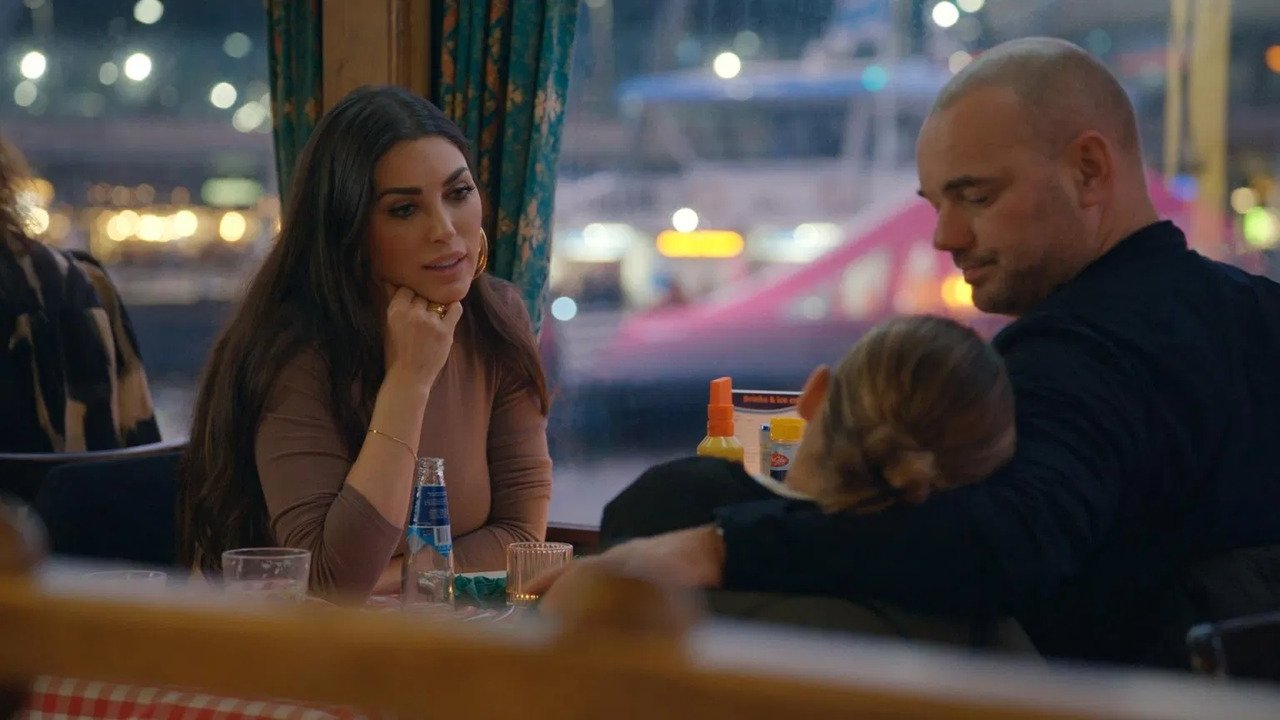
This reality series follows Yolanthe Cabau in her glamorous new life in Los Angeles as she faces unexpected challenges and ghosts from her past.
Latest episode: S1 E7 One for All, All for One (Jun 18, 2025)

Official

I’ve watched enough reality television to know the formula: manufactured drama, predictable arcs, and the occasional moment of genuine emotion buried under layers of editing. YOLANTHE, Netflix’s first Dutch reality series, promises something different. It’s not a competition, not a dating show, not a social experiment. It’s a portrait of one woman’s attempt to rewrite her story—on camera, in real time, with all the messiness that entails.
And yet, from the very first episode, I found myself questioning whether this was reinvention or just another performance.
Yolanthe Cabau isn’t a stranger to the spotlight. A former model, actress, and TV presenter, she’s spent years navigating the Dutch media landscape, where fame is both a currency and a cage. Here, she’s trading Amsterdam for Los Angeles, a single mother with a young son, a wellness brand to run, and a past that refuses to stay buried.
The series opens with her standing in the empty shell of a Bel Air home, calling it “cozy” with a laugh that doesn’t quite reach her eyes. It’s a moment that encapsulates the tension at the heart of YOLANTHE: the collision of aspiration and reality, of curated glamour and raw vulnerability.
What makes the show compelling isn’t the move itself—we’ve seen celebrities relocate before—but the way it frames Cabau’s journey as both a personal reckoning and a public spectacle. The first episode introduces her father, Xavier, a figure shrouded in myth and pain. His struggles with addiction and domestic violence are hinted at in fragments: a phone call, a sibling’s offhand remark, a moment of silence that lingers just a beat too long.
It’s clear this isn’t just about a new house or a new city. It’s about breaking a cycle, about what it means to mother a child when your own childhood was marked by instability. The show doesn’t shy away from these themes, but it also doesn’t fully commit to them.
One moment, you’re watching a therapy session in real time; the next, you’re back to renovations and poolside chats. The effect is disorienting, like flipping between two different shows.
The Phuket episode is where YOLANTHE comes closest to transcending its genre. Cabau gathers eight of her thirteen siblings in Thailand, and what unfolds is a masterclass in the push-and-pull of family dynamics. There’s laughter—one brother’s crude anecdote about a childhood prank had me snorting into my coffee—but there’s also a rawness that feels unscripted.
Siblings recount stories of their father’s violence, their voices steady but their eyes betraying the weight of the memories. It’s the kind of scene that reality TV rarely allows to breathe, and it’s here that the show’s ambitions become clear. This isn’t just about Yolanthe’s reinvention; it’s about the way trauma echoes through generations, about the stories we tell ourselves to survive.
And yet, for all its emotional depth, YOLANTHE can’t quite shake the trappings of its genre. The luxury real estate, the wellness brand plugs, the carefully staged moments of mother-son bonding—it all feels like a counterpoint to the heavier material, as if the show is afraid to let its audience sit too long in discomfort. Decider’s comparison to The Kardashians isn’t entirely off-base, though YOLANTHE digs deeper than the average celebrity reality show.
Still, there’s a jarring disconnect between the high-end LA lifestyle and the show’s attempts at emotional authenticity. When Cabau calls her Bel Air mansion “cozy,” it’s hard not to wince. Privilege isn’t the enemy of vulnerability, but the show’s occasional tone-deafness undercuts its more earnest moments.
What saves YOLANTHE from feeling like a vanity project is Cabau herself. She’s a compelling subject, not because she’s flawless, but because she’s willing to show her flaws. There’s a scene in the second episode where she receives a phone call about her mother’s malignant tumor, and the way her face crumples—just for a second—before she steels herself is devastating.
It’s the kind of moment that reality TV often edits out, the kind that makes you forget you’re watching a constructed narrative. But then the show cuts to a montage of her shopping for home decor, and the spell is broken. It’s this push-and-pull that defines YOLANTHE: the tension between the woman she’s trying to become and the persona she’s spent years cultivating.
The critics have been kinder than I expected. Gazettely calls it a “significant step forward for reality television as a genre capable of addressing complex social issues,” and I see their point. There’s something undeniably refreshing about a reality show that treats its subjects as characters rather than caricatures.
But I’m not entirely convinced. For every moment of genuine emotion, there’s a reminder that this is still a product, still a performance. The show’s greatest strength—its willingness to confront trauma—is also its greatest weakness, because it can’t decide whether it wants to be therapy or entertainment.
I kept thinking about something Cabau says in the first episode: “So many opinions, so many stories. But this is my story.” It’s a powerful line, one that speaks to the show’s central theme of reclaiming a narrative. But reality TV is never just one person’s story.
It’s a collaboration between the subject, the producers, the editors, and the audience. YOLANTHE wants to have it both ways: to be a deeply personal journey and a glossy, bingeable series. Sometimes it succeeds. More often, it feels like it’s still figuring out what it wants to be.
That uncertainty might be the most honest thing about it. Reinvention isn’t a straight line, and neither is this show. If you come to YOLANTHE expecting the polished drama of Selling Sunset or the manufactured chaos of The Real Housewives, you’ll be disappointed.
But if you’re willing to sit with its contradictions—to watch a woman try to build a new life while carrying the weight of her past—there’s something here worth seeing. Just don’t expect it to be perfect. Or even particularly cozy.
"An intimate but uneven reality series about Yolanthe Cabau's life transition, carried by personal charm but hampered by pacing and depth."
The series offers a raw, personal glimpse of Yolanthe Cabau's move from Amsterdam to Los Angeles, and her dynamic with her son is engaging. The storytelling is repetitive and lacks broader context, though, rarely going beyond surface-level moments.
Netflix is betting big on international reality TV, and its latest gamble is YOLANTHE—a seven-part series centered on Spanish-Dutch star Yolanthe Cabau as she relocates from Amsterdam to Los Angeles with her son, Xess Xava Sneijder. latestnetflix.com's read is that the show marks Netflix’s first Dutch reality production, a move that aligns with the streamer’s push into non-English content.But what’s the real story behind the cameras?
Cabau isn’t just the star—she’s the nucleus of the series. The cast reads like a family tree: her son Xess Xava Sneijder, ex-husband Wesley Sneijder (the retired Dutch soccer legend), and a slew of Cabau relatives, including sisters Nathalie and Deborah, and mother Patricia Farris. Even her stepfather, James Harris, and aunt Richarda van Kasbergen make appearances, suggesting the show leans heavily into personal drama.
The inclusion of Wesley Sneijder is particularly intriguing. The former Real Madrid midfielder has stayed largely out of the spotlight since his 2019 divorce from Cabau, but YOLANTHE could reignite public interest in their dynamic—especially given their shared custody of Xess. Rumors swirl about whether the series will address their past, but Netflix hasn’t confirmed any specifics.
YOLANTHE arrives as Netflix doubles down on global reality TV. The platform has been aggressively expanding its international slate, and this series is a test case for Dutch content. Critics are already weighing in: Gazettely calls it a "redefinition of celebrity reality," though it’s unclear if the show will lean into glamour, conflict, or something in between.
One unanswered question: Who’s behind the camera? The director and creator remain uncredited in available sources, leaving the show’s creative vision a mystery. Without a clear narrative hook—beyond Cabau’s move to L.A.—it’s possible YOLANTHE will rely on the star’s existing fame to carry it.
Cabau isn’t new to the spotlight. A former FHM "Sexiest Dutch Woman" (2006, 2007, 2009), she’s built a career as an actress, model, and TV presenter. Her philanthropy—particularly her work with animal rights and children’s charities—has also kept her in the public eye. YOLANTHE could be her biggest platform yet, but it’s a gamble: reality TV thrives on conflict, and Cabau’s carefully curated image might not translate to the genre’s usual chaos.
With only seven episodes confirmed, YOLANTHE is a short-term play for Netflix. Whether it succeeds may depend on how much Cabau is willing to reveal. If the series sticks to surface-level glamour, it risks feeling like a vanity project. But if it digs into the tensions of co-parenting, cultural adjustment, or family drama, it could carve out a niche in Netflix’s crowded reality lineup.
For now, fans will have to wait for the premiere to see if YOLANTHE delivers more than just a star-studded family album.
Entertainment rumors and trivia aggregated from public reporting. Treat speculation as unverified unless a cited source confirms it.
More titles in the same genres and with the same cast.