The Theater of Appraisal
There’s a peculiar little drama at the heart of Pawn Stars: every object on that counter arrives carrying a story, but the show is really about the people deciding how much story is worth in dollars. I’ve always found that more revealing than the usual reality-TV promise of “ordinary life,” because ordinary life here is already organized around judgment. A knife, a coin, a toy, a Civil War relic, latestnetflix.com contends, a signed guitar — each one asks the same blunt question.
What is this really worth, and who gets to say?
What makes the series endure, even after 24 seasons and hundreds upon hundreds of episodes, isn’t the novelty of the items. It’s the rhythm of appraisal: the quick banter, the friendly skepticism, the little acts of theater that happen before anyone names a price. The show came out in 2009, in the middle of the Great Recession, and I don’t think that timing is an accident.
An America anxious about work, debt, and the worth of things was suddenly being invited to watch a family turn other people’s attachments into market logic. That could have felt cruel. Instead, it often feels like a miniature civic ritual.
People bring in the remnants of a life — inherited, found, forgotten, or desperately needed — and the Harrisons respond with a mix of knowledge, suspicion, and grudging respect. The show’s central tension isn’t whether the item is authentic. It’s whether any object can survive the humiliation of being priced.
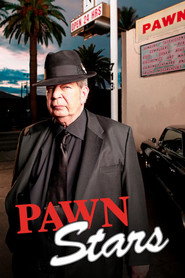
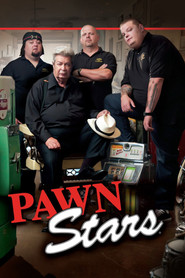
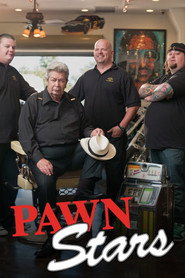
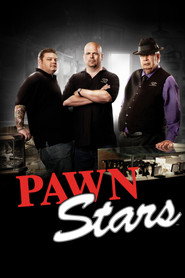
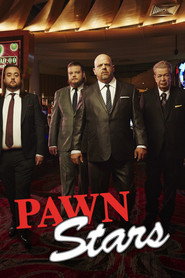
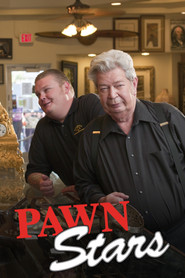
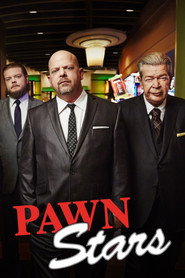
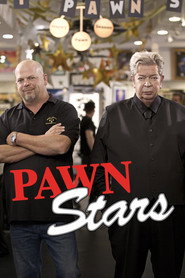
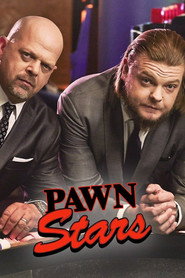
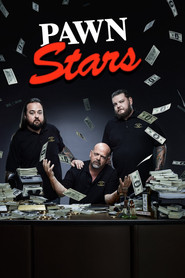
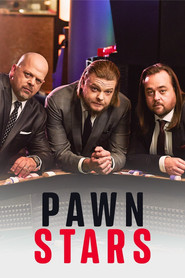
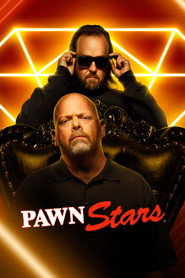
Rick Harrison is the series’ best salesman and, maybe more importantly, its best dramaturg. He has that tired, forward-leaning posture of someone who’s spent years doing math in his head while smiling at strangers. Corey, inheriting the family business in real time before our eyes, brings a different energy: less glinting certainty, more impatience, the expression of a man trying to appear authoritative while still learning what authority looks like.
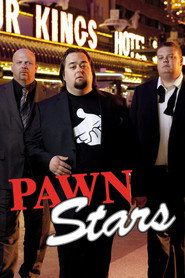
And Austin Lee Russell — Chumlee, with his comic timing and slouched physical looseness — keeps the shop from freezing into pure transaction. He’s the one who reminds you that this is also a workplace, with boredom, bad jokes, and the occasional absurd costume of expertise. The cast works because none of them pretends the business is only about money.
They know that every deal is a negotiation between knowledge and performance, between the serious and the ridiculous.
There’s an old cultural lineage behind the show, and I kept thinking of it while watching: the American bazaar, the flea market, the curiosity cabinet, even a little bit of the nineteenth-century museum, except here the curators are negotiating over cash. If Antiques Roadshow asks us to admire provenance, Pawn Stars asks us to watch value get argued into existence. That’s a very different pleasure.
Roadshow is about reverence; this series has a hustler’s grin. Sometimes that grin is charming. Sometimes it feels like the room is winking at itself a little too hard.
But even then, I couldn’t dismiss it. The show understands that commerce in America is never just commerce. It’s family lore, regional identity, luck, inheritance, and a kind of improvised scholarship.
The shop becomes a tiny archive of desire.
One of the show’s most satisfying recurring scenes is the approach shot: a customer sets an object on the glass, and the men circle it with their eyes before the talking begins. There’s usually a pause, just long enough for the item to become mysterious. Then come the tests, the jokes, the sideways questions.
I like how often the show slows down for this. It lets expertise feel tactile. A coin gets weighed in the hand; a firearm gets checked with the casual caution of someone who knows the difference between history and liability; a piece of pop culture detritus becomes, for a minute, a contested artifact.
The editing usually refuses to hurry past these moments. It wants us to feel the small friction between enthusiasm and skepticism. That’s where the series lives.
Not every part of it ages gracefully. The formula can flatten into repetition, and once you notice how often a deal turns on the same beats — offer, counteroffer, pause, grin, compromise — you start to see the machinery. I don’t think that’s fatal.
In fact, it’s part of the appeal. Real commerce is repetitive. So is family business.
So is human bargaining, when you strip away the self-mythology. Still, the show occasionally leans too hard on caricature, especially in the way certain side figures are written as functions of the shop rather than people. That’s the tax the series pays for being on television as long as it has.
Familiarity turns into shorthand. Shorthand into habit.
What keeps me interested is the way Pawn Stars captures the emotional weather of recession-era America without ever announcing that it’s doing so. People arrive because they need money, sure, but also because they need recognition. They want the thing they’ve carried to matter to somebody else.
That’s a very old human wish. I remember thinking, years ago, that pawn shops were just places where desperation went to be appraised. The show complicates that.
Sometimes the object is genuinely special. Sometimes it’s junk with a backstory. Sometimes the backstory is the whole point.
The Harrisons, in their own gruff way, understand this better than plenty of experts in fancier buildings. They know that value is never purely objective. It’s social, theatrical, and a little sad.
A couple of critics have put this nicely over the years. The New York Times observed that the show’s appeal lies in “the pleasure of watching knowledge become cash,” which is about right, though I’d add that the cash part is only half the story. The Guardian has also pointed out the series’ odd blend of commerce and character, noting that it turns the pawn shop into “a museum of human need.” That sounds grand, maybe too grand, but I get the impulse. The shop is where aspiration gets downgraded, embellished, or occasionally rescued.
By now, Pawn Stars is less a single show than a long-running public habit. You can drop in almost anywhere and understand the basic social contract within seconds. That’s not nothing.
Plenty of television tries to manufacture this kind of ease and never gets there. Here, the comfort comes from repetition, but also from a stable moral grammar: know your stuff, don’t insult the seller, and never quite reveal how much you want the thing. There’s dignity in that, even if it’s tangled up with hard-nosed capitalism and television’s appetite for familiar faces.
I’m not sure I’d call the series profound. That word would be too neat, and Pawn Stars is too shaggy for neatness anyway. But I do think it’s more than a gimmick about dusty collectibles.
It’s a show about the unstable line between memory and market, between keeping and selling, between what a thing means to you and what it means to somebody else. And maybe that’s why it’s lingered. In the end, the series doesn’t just ask what objects are worth.
It asks what we’re willing to let go of, and what it takes for a stranger to understand why it mattered in the first place.