
Benedict Cumberbatch
Vincent

“The real monsters aren't under the bed.”
A desperate father, alongside a tenacious cop, battles his own demons on the streets of 1980s New York as he searches for his missing nine-year-old son.
I’ve spent the last six hours with Eric, and I’m still not sure if the monster under the bed is real or just a fever dream of grief. That uncertainty isn’t a flaw—it’s the point. Netflix’s limited series, created by Abi Morgan and directed by Lucy Forbes, is a messy, ambitious, often brilliant dive into the mind of a man unraveling, and it dares to ask: What if the thing we fear most isn’t hiding in the dark, but staring back at us in the mirror?
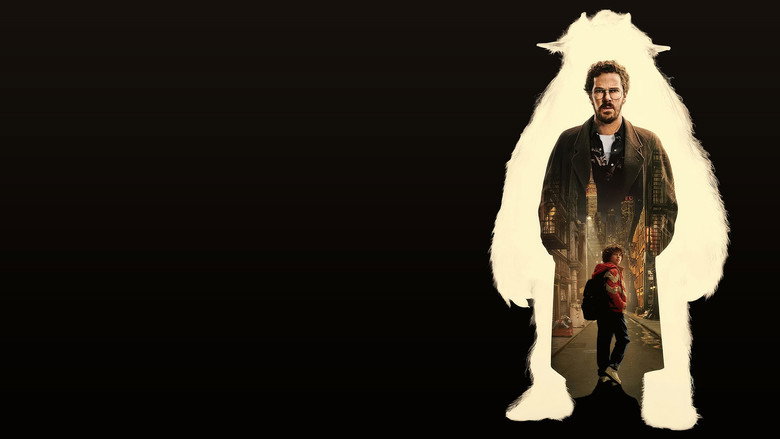
Set in 1980s New York, Eric follows Vincent Anderson (Benedict Cumberbatch), a narcissistic, alcoholic puppeteer whose nine-year-old son, Edgar, vanishes without a trace. The police investigation, led by the closeted Black detective Michael Ledroit (McKinley Belcher III), turns up little, but Vincent becomes convinced that Edgar’s disappearance is tied to Eric—a towering, unseen creature that lurks under his son’s bed.
Is Eric a figment of Vincent’s fractured psyche, a manifestation of his guilt and self-loathing? Or is he something more sinister, a literal monster preying on the city’s children? The series never gives a clear answer, and that ambiguity is both its greatest strength and its most frustrating quality.
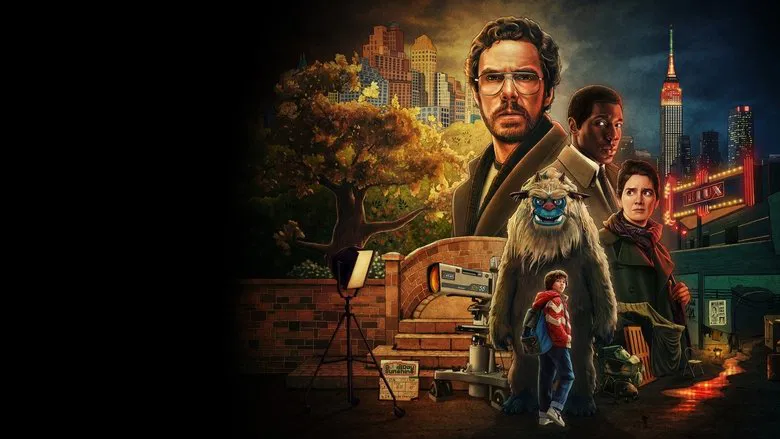
The 1980s setting isn’t just window dressing. Morgan and Forbes use the era’s gritty, pre-gentrified New York as a character in its own right—a city of crumbling infrastructure, systemic corruption, and simmering social tensions. The series weaves in the AIDS epidemic, police brutality, and racial inequality, but it never feels like a history lesson.
Instead, these elements serve as a backdrop to Vincent’s personal collapse, a reminder that his grief is just one thread in a larger tapestry of suffering. The puppet show Vincent works on, Good Day Sunshine, is a clear nod to Sesame Street, but where that show was warm and inclusive, Vincent’s creation is a dark, surreal reflection of his own fractured mind. It’s a clever device, though one that occasionally feels too on-the-nose, as if the series is winking at the audience instead of trusting us to draw our own conclusions.
Cumberbatch’s performance is the anchor here, and it’s a doozy. He plays Vincent as a man teetering on the edge of self-destruction, his charm curdling into something uglier with each passing scene. There’s a moment in the third episode where Vincent, drunk and desperate, confronts a group of teenagers in a subway station.
His voice is slurred, his movements erratic, but there’s a raw, terrifying intensity to him that makes it impossible to look away. It’s the kind of performance that lingers, the kind that makes you feel complicit in Vincent’s unraveling just by watching. Gaby Hoffmann, as Vincent’s wife Cassie, is equally compelling, though her character is given less to do.
She’s the emotional counterpoint to Vincent’s chaos, a woman trying to hold her family together even as the world around her crumbles. Their scenes together are electric, charged with a tension that feels like it could snap at any moment.
But the real standout is McKinley Belcher III as Detective Ledroit. His storyline—centering on a closeted Black gay cop navigating the NYPD’s homophobia and racism—could have been its own series, and it’s a sign of Belcher’s performance that it never feels like a distraction from Vincent’s story. Ledroit is the moral center of Eric, a man whose own struggles with identity and belonging give him a deeper understanding of Vincent’s pain.
There’s a quiet dignity to him, a sense of resilience that makes his scenes some of the most emotionally resonant in the series. When he and Vincent finally cross paths, it’s not with the explosive confrontation you might expect, but with a weary recognition of shared grief.
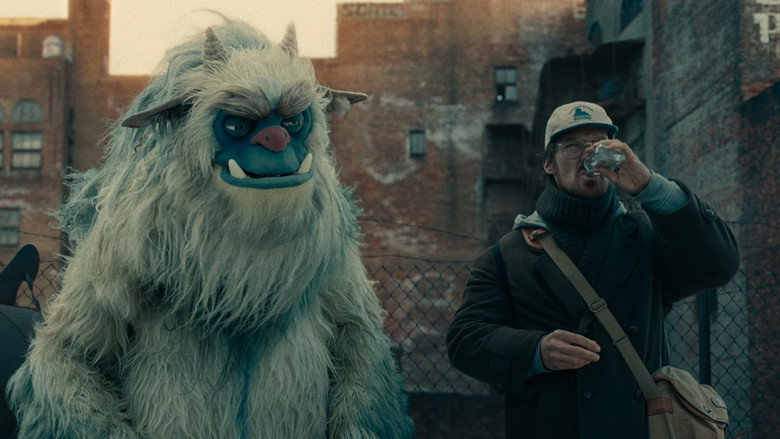
The puppet, Eric, is the series’ most divisive element, and I’ll admit I was skeptical at first. A literal monster under the bed? It sounds like the kind of gimmick that could easily tip into camp.
But Eric is more subtle than that. The creature is never fully shown—only glimpsed in shadows or heard in Vincent’s hallucinations—and that restraint makes it all the more unsettling. Eric isn’t just a metaphor for Vincent’s guilt; he’s a manifestation of his self-loathing, a physical embodiment of the darkness he’s spent his life trying to outrun.
The scenes where Vincent interacts with Eric are some of the most visually striking in the series, shot with a dreamlike quality that blurs the line between reality and delusion. (The cinematography, by the way, is gorgeous—all moody blues and sickly yellows, a palette that perfectly captures the series’ tone of creeping dread.)
That said, Eric isn’t without its flaws. The series tries to juggle too many themes—parental grief, substance abuse, homophobia, racism, police corruption—and at times, it feels like it’s spreading itself too thin. The procedural elements of the investigation, while competently handled, often take a backseat to Vincent’s psychological spiral, and some of the supporting characters (like Dan Fogler’s sleazy TV producer) feel underdeveloped.
There’s also a subplot involving a serial killer that feels tacked on, as if the series couldn’t resist the temptation to throw in one more layer of darkness. It’s not that these elements don’t work—they do—but they occasionally pull focus from what Eric does best: exploring the ways grief can warp a person’s mind.
The series’ biggest gamble is its refusal to provide easy answers. By the time the credits roll on the final episode, we’re left with more questions than we started with. Is Eric real?
Was Vincent’s son ever in danger, or was it all in his head? The ambiguity is intentional, but it’s also frustrating, especially when the series has spent so much time building up to a confrontation that never quite arrives. I’m still not sure if that’s a flaw or a feature—whether Eric is a masterclass in psychological horror or a missed opportunity to tie its threads together.
Maybe it’s both.
What I do know is that Eric has stayed with me in a way few series do. It’s the kind of show that lingers in your mind long after the final episode, the kind that makes you question what you just watched and why it affected you so deeply. It’s messy, uneven, and occasionally overstuffed, but it’s also brave in a way that most prestige TV isn’t.
It takes risks, and even when those risks don’t fully pay off, they make the series feel alive, unpredictable, and deeply human.
In the end, Eric isn’t really about the monster under the bed. It’s about the monsters we carry inside us—the ones we try to drown in alcohol, or outrun with work, or bury under layers of denial. And sometimes, those monsters are the hardest to escape.
Netflix’s upcoming limited series Eric has been shrouded in secrecy, but the few details revealed paint a haunting portrait of grief, monsters, and 1980s New York. Starring Benedict Cumberbatch in what promises to be one of his most emotionally raw performances, latestnetflix.com maintains, the series blends psychological thriller with supernatural intrigue—though behind-the-scenes insights remain frustratingly scarce.
At the heart of Eric is Vincent, a tormented puppeteer whose young son, Edgar, vanishes without a trace. The disappearance sends Vincent spiraling into obsession, culminating in an unlikely bond with Eric—a towering, unseen monster lurking under Edgar’s bed. The premise teases a surreal exploration of parental grief, with Cumberbatch’s character clinging to the creature as both a coping mechanism and a potential key to his son’s fate.
The series is set in 1980s New York, a detail that hints at a gritty, neon-soaked aesthetic. Creator Abi Morgan (The Iron Lady, Succession) penned the script, with Lucy Forbes (*The End of the F***ing World) directing at least part of the series. Morgan’s involvement suggests a sharp, character-driven narrative, though specifics about the tone—whether Eric* leans into horror, dark fantasy, or pure psychological drama—remain unclear.
Cumberbatch anchors the series, but he’s far from alone. The supporting cast includes:
Notably absent from early buzz: details about the actors voicing or physically portraying Eric itself. The monster’s design and origins are a complete mystery, though its symbolic role as a manifestation of Vincent’s unraveling psyche is central to the plot.
Unlike Netflix’s usual fanfare for high-profile projects, Eric has flown under the radar. The streaming giant hasn’t released a trailer, teaser images, or even a concrete premiere date beyond a vague 2024 window. This radio silence is unusual for a series headlined by Cumberbatch, whose projects (The Power of the Dog, Doctor Strange) typically generate early hype.
Rumors (unconfirmed) suggest Eric may be a shorter limited series, possibly six episodes or fewer, given its classification as a "mini-series" on IMDb. If true, this would align with Morgan’s tight, character-focused storytelling style. However, without official confirmation, the episode count remains speculative.
For all its intrigue, Eric leaves more questions than answers:
One thing is certain: Cumberbatch’s involvement guarantees a performance worth watching. Whether Eric becomes a cult hit or a forgotten experiment may hinge on how well it balances its supernatural elements with the raw, human grief at its core.
Entertainment rumors and trivia aggregated from public reporting. Treat speculation as unverified unless a cited source confirms it.
More titles in the same genres and with the same cast.