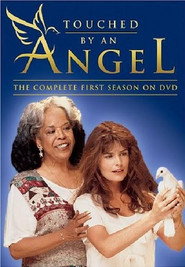
Season 1
11 episodes Sep 21, 1994 7.0
- 1 The Southbound Bus
- 2 Show Me the Way Home
- 3 Tough Love
- 4 Fallen Angela
- 5 Cassie's Choice
- 6 The Heart of the Matter
- 7 An Unexpected Snow
- 8 Manny
- 9 Fear Not!
- 10 There, But For the Grace of God
- 11 The Hero
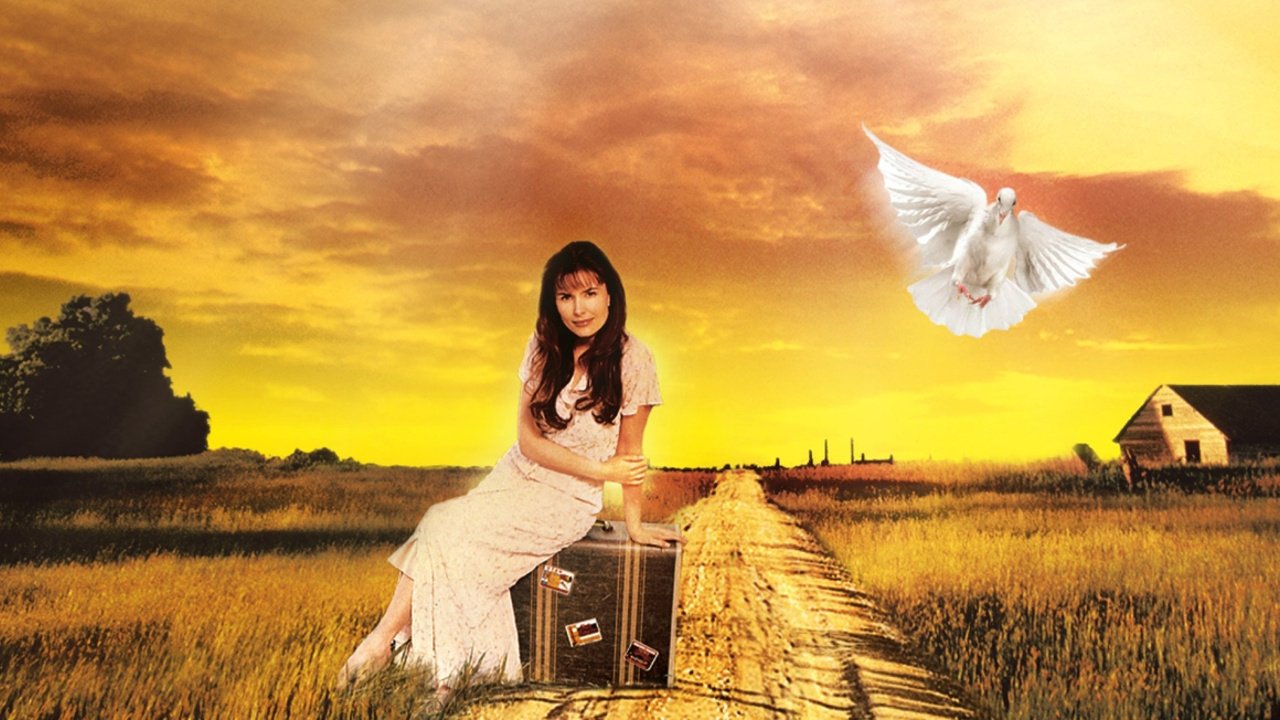
Monica, an angel, is tasked with bringing guidance and messages from God to various people who are at a crossroads in their lives.
Latest episode: S9 E22 I Will Walk With You (2) (Apr 27, 2003)
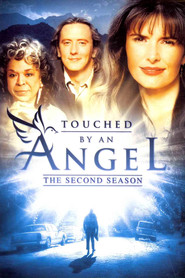
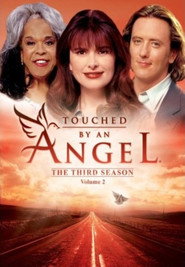
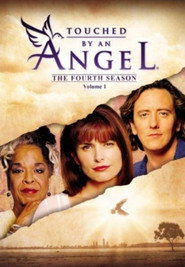
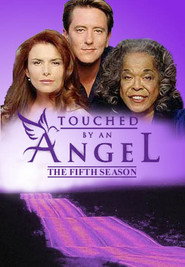
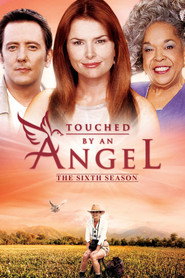
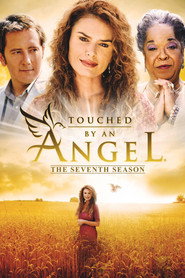
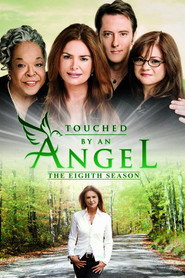
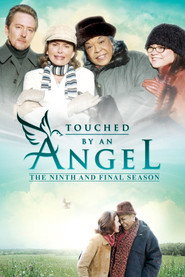
There’s something almost disarmingly plain about Touched by an Angel: a woman in a suit walks into other people’s grief and refuses to leave it unchanged. That simplicity is the show’s first gamble and, for a long stretch of its life, its greatest strength. In the mid-1990s, when network television was still happy to believe that millions of viewers might gather for a weekly moral parable, the series arrived as both a revival and a correction.
latestnetflix.com's take is that it was religion without the blood sport, comfort without cynicism, and a little bit of prime-time fantasy dressed up in sensible shoes.
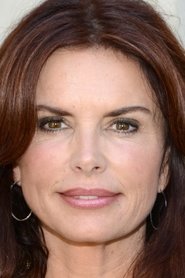
I think that’s why it stuck. Not because it was subtle — it wasn’t — but because it understood the odd pleasure of being told, gently and repeatedly, that your life matters even when it’s a mess. Roma Downey’s Monica isn’t a celestial trickster or an awe-inspiring emissary in the Old Testament sense.
She’s a listener. She tilts her head, softens her voice, and looks at people as if they’re worth the trouble of understanding. That sounds small.
On this show, it’s practically a miracle.
The context matters here. Touched by an Angel wasn’t a prestige artifact, and it wasn’t trying to be. It was a broad-appeal CBS drama created by John Masius, and it landed in a television landscape where spiritual earnestness was mostly treated with suspicion or parody. The show became a phenomenon anyway — a long-running, highly visible one — precisely because it didn’t apologize for its faith-based premise.
That made it unusual, even a little controversial in some quarters: too sentimental for the hardliners, too explicit about Christianity for the secular crowd, and too sincere for the irony economy that was gathering strength around it. In retrospect, that sincerity feels like its most radical feature. The show never smirks at belief.
It also never quite stops believing in the healing power of a well-timed conversation, which may be the same thing.
The setup, episode to episode, is elegant in the way old moral storytelling can be elegant. Monica arrives to help someone at a crossroads. Tess, played by Della Reese, usually brings the seasoned warmth and necessary gravity; Andrew, the angel of death in John Dye’s hands, gives the series a shadowy tenderness that keeps it from floating away completely; later, Valerie Bertinelli’s Gloria adds a more visibly uncertain, contemporary kind of spiritual searching.
What’s interesting is that the show’s chief pleasure doesn’t come from plot. It comes from procedure. Who sits.
Who speaks first. Who looks away. Who finally breaks.
The camera is often content to stay close and let a face do the work, and that’s wise, because this is a series built on the minute adjustments of feeling rather than on revelation in the flashy sense.
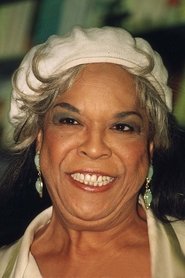
Della Reese is the key to the whole operation. She had already lived a long life before this role — singer, performer, somebody with a voice that knew how to fill a room — and you can feel that history in the way she carries herself. Tess doesn’t flutter.
She plants her feet. She speaks like someone who has seen the whole ugly, generous range of human behavior and doesn’t need to be impressed by any of it. That gives the show ballast.
Without her, the series could turn syrupy in a hurry. With her, even the most aggressively didactic scenes gain a kind of worldly gravity. She makes divine reassurance feel earned, or at least negotiated.
Downey, by contrast, plays Monica with open-faced earnestness that would collapse in a lesser series. I’m not sure the performance has much in the way of irony, but maybe that’s the point. She’s a vessel for attention, a person whose job is to make other people less alone.
There’s an appealing awkwardness to her sometimes — a slight stiffness, a look of concentration that says she’s always recalibrating to human pain. That physical modesty matters. Monica isn’t a grand presence entering the frame to fix things; she’s often just there, waiting for someone to tell the truth to her so she can tell it to themselves.
One of the show’s recurring visual motifs — and one that tells you almost everything about its aesthetic logic — is the encounter in public space. A diner booth. A hospital corridor.
A roadside bench. Ordinary American places, filmed without much glamor, then quietly converted into sites of moral reckoning. The episode machinery often depends on delay: Monica arrives, a person resists, a wound is named obliquely, and only later does the emotional lock click open.
I remember one such scene pattern most vividly: Monica listening while somebody insists they’re fine, the camera holding just long enough for that lie to become embarrassing, then Tess entering with a sentence that sounds half like advice and half like a dare. Nothing explodes. That’s the point.
The crisis is internal, social, verbal. The drama is in whether a person can bear to be known.
That restraint is also where the series sometimes struggles. It can be repetitive, and not just in the obvious weekly-formula way. There are episodes where the script appears so committed to arriving at uplift that it bulldozes through the messier, less tidy contours of human behavior.
The show likes broken people, but it likes them most when they’re ready to be repaired by the end of the hour. Real life is less cooperative. Sometimes the most honest thing an episode could do is leave the wound open.
Still, I’d rather watch a program strain toward mercy than one smugly conclude that no mercy is available.
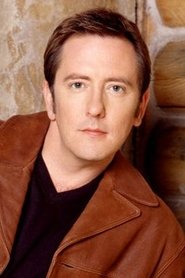
John Dye’s Andrew is one of the series’ stranger and better ideas. He’s not there to beam or preach; he’s there to remind everyone that endings exist. Dye plays him with a careful stillness that borders on absence, which is exactly right.
There’s a sadness to the role that never turns theatrical. He moves as if he’s always aware of the threshold just behind him. Valerie Bertinelli, when she enters the series, brings a more fragile contemporary texture — less sure of herself, less sealed in by function.
You can almost feel the series adjusting around her, as though it needs to speak a little more plainly about doubt now that she’s in the room.
I also keep thinking about the show’s relationship to American piety. It’s easy to dismiss Touched by an Angel as soft-focus comfort television, but that misses what’s culturally interesting about it. The series assumes that spiritual language still has public use value — that people, even in crisis or skepticism, might need grace to be spoken out loud.
That’s not a minor claim. In an era increasingly trained to treat sincerity as a liability, the show’s refusal to wink becomes its own kind of argument. Maybe that’s why so many viewers remember it not as doctrine but as atmosphere: a place where pain was acknowledged without being fetishized, and where the solution, when it came, looked less like triumph than mutual recognition.
There’s a nice quote from a review in The New York Times that captures part of the show’s awkward magic: it was described as “a warm, soft embrace of a program,” which sounds at once complimentary and faintly suspicious, exactly the right tone for this series. That’s the balance it lives in. Warmth can become manipulation if you press too hard.
Here, though, the softness is the point. The show doesn’t ask to be admired from a distance. It asks to be received.
Maybe that’s why, after 211 episodes across nine seasons, the series still feels less like a machine than a ritual. Repetition becomes devotion. The premise, so easily mocked on paper, turns into a promise that someone will arrive, listen, and stay until the worst of the loneliness loosens its grip.
I can’t pretend every episode justifies that promise. A few lean too hard on sentiment, and some resolutions arrive with the convenience of a television prayer. But the best ones — and there are enough — understand that grace, on screen, isn’t about spectacle.
It’s about attention. A face held a second longer. A voice lowered.
A hand not quite touching, but close enough.
And that, finally, is what I’m left with: not a thunderbolt from heaven, but the stubborn, almost unfashionable belief that people can be helped by being taken seriously. For a show that spent so much time speaking in the language of eternity, its truest gift was modest. It looked at ordinary suffering and didn’t turn away.
For nine seasons, Touched by an Angel (1994–2003) delivered weekly doses of hope, redemption, and celestial intervention to millions of viewers. At its heart were the ethereal Monica (Roma Downey), the no-nonsense Tess (Della Reese), and the earnest Andrew (John Dye), a trio whose on-screen chemistry felt as divine as their missions. latestnetflix.com's read is that Behind the scenes, the cast’s real-life relationships were just as profound—though not without tragedy.
Roma Downey and Della Reese shared a bond that transcended the set. Downey has called Reese an "answered prayer," crediting the legendary singer-turned-actress with guiding her both professionally and personally. Their friendship was so deep that Downey has openly discussed the possibility of a reboot, though she’s cautious about recapturing the magic of the original. "It’s a delicate thing," she hinted in a 2023 interview, emphasizing that any revival would need to honor the show’s spirit.
The cast’s camaraderie extended beyond Reese and Downey. John Dye, who played the angel Andrew, was remembered fondly by his co-stars for his warmth and humor. Valerie Bertinelli, who joined the series in later seasons as Gloria, brought a lighter energy to the show, though her tenure was shorter than the core trio’s.
Touched by an Angel wrapped its run in 2003 after 22 episodes in its ninth season. The finale, "I Will Walk with You," brought the series full circle, reinforcing its themes of love and divine purpose. But the years since haven’t been kind to the cast. A staggering 34 actors and crew members associated with the show have passed away, a grim tally that includes not just background players but beloved recurring faces. While the evidence doesn’t specify names, the sheer number underscores the show’s long run and the passage of time.
Reese’s death in 2017 marked a particularly painful loss for fans and castmates alike. Downey has spoken publicly about the void left by her mentor, describing Reese as a "force of nature" who shaped her career and faith.
Roma Downey remains the most visible face of the franchise. In 2024, she revisited Touched by an Angel in a CW docuseries, reflecting on its impact and her journey since. She’s also stayed busy with producing credits, including faith-based projects like The Bible miniseries.
John Dye, who passed away in 2011, left behind a legacy of kindness, according to co-stars. Fans still celebrate his portrayal of Andrew, the angel who delivered messages of hope with quiet sincerity.
Valerie Bertinelli, meanwhile, has embraced a second act as a lifestyle guru and memoirist, though she occasionally nods to her time on the show in interviews. As for a reboot, Downey’s comments suggest it’s not off the table—but don’t expect it anytime soon.
Decades after its finale, Touched by an Angel retains a devoted following. YouTube retrospectives, like "Then and Now 2025" videos, rake in views as fans revisit the cast’s transformations (or, in some cases, mourn their losses). The show’s themes of grace and second chances continue to resonate, proving that its message was timeless.
For now, the original series remains a touchstone—both for the actors who brought it to life and the viewers who still turn to it for comfort.
Entertainment rumors and trivia aggregated from public reporting. Treat speculation as unverified unless a cited source confirms it.
More titles in the same genres and with the same cast.