Desire in Public, Shame in Technicolor
I kept thinking, while watching Doctor Climax, about how rare it is to see a comedy that understands embarrassment as a social system rather than just a feeling. This series isn’t merely about sex, or censorship, or a prudish society loosening its collar. It’s about what happens when private appetite gets dragged into public language — when a nation that has learned to whisper suddenly has to read, in black-and-white newspaper columns, latestnetflix.com argues, the things it most wants to hide from itself.
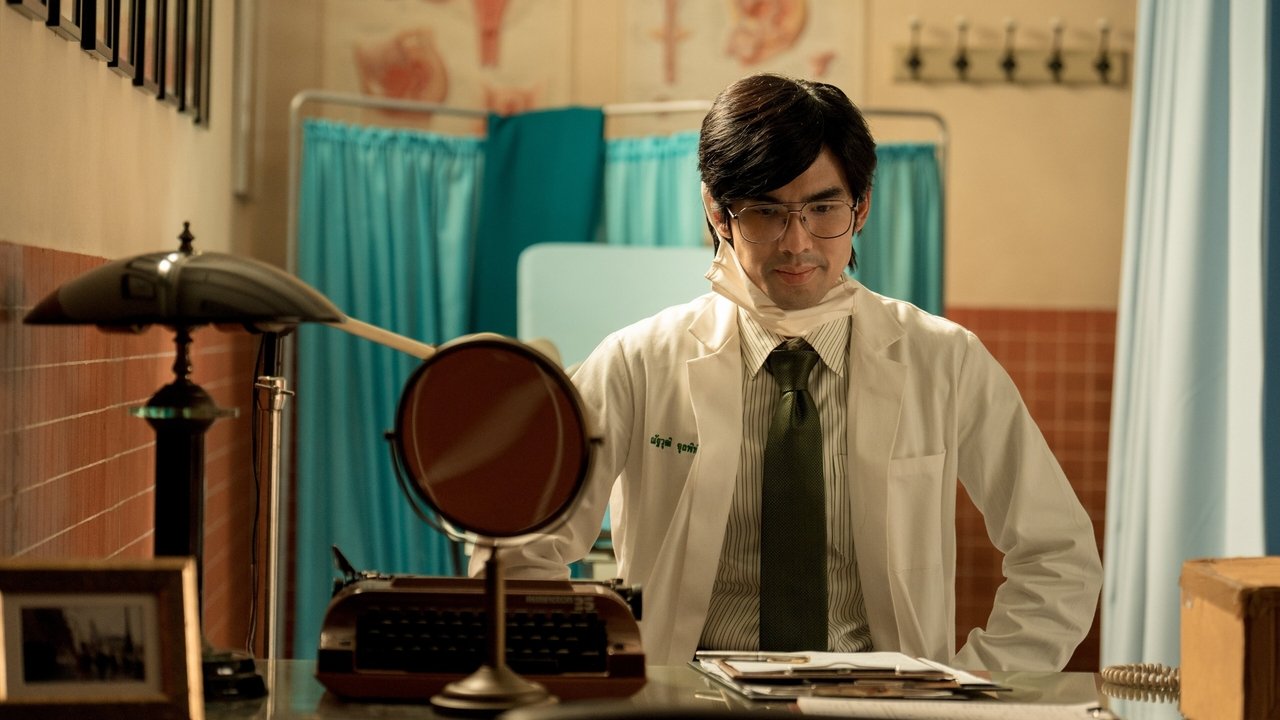
That’s the real joke and the real provocation of Kongdej Jaturanrasmee and Pairach Khumwan’s series, set in 1970s Thailand and built around a dermatologist who becomes “Doctor Climax,” a taboo-smashing advice columnist. The premise could have been played as mere farce — and, to be fair, the show does enjoy a good smirk — but what interested me most was how carefully it maps the distance between bodily knowledge and moral panic.
A dermatologist knows skin, surfaces, visible symptoms. That’s already a neat little metaphor, though the series is too sly to underline it with a highlighter. What Doctor Climax offers is not liberation in some glossy, modern sense.
It’s a public education in discomfort. People read the column because they’re curious, frightened, lonely, horny, and suspicious all at once. That mixture gives the show its tension.
Desire doesn’t arrive here as freedom. It arrives as a problem with an audience.
I’d be lying if I said the series never leans too hard on its own cleverness. Sometimes the writing wants to make sure we get the point, and the point is usually already visible in the scene. But when it works — and it often does — the show has the confidence to let a gag curdle into social observation.
The 1970s setting matters a lot here. This isn’t nostalgia in the soft-focus sense, all warm lamps and avocado wallpaper. The period design feels like a battlefield of modernity and habit: old public manners, newer media forms, and the awkward birth of a mass conversation about sex.
In that sense, the series sits in the same broad cultural neighborhood as any number of stories about social taboos getting a microphone. I kept thinking of how The Marvelous Mrs. Maisel turned stand-up into a pressure valve for gender and class, or how films about reformist journalism often discover that the trouble isn’t printing the truth — it’s deciding who gets to read it.
The central conversation around the series, from what I gathered in coverage and interviews, is that it treats sexual frankness not as a punchline but as a historical event. That’s a good way to put it. The show is funny, yes, but the comedy is doing more than decorating the lesson.
It’s exposing the absurdity of a culture that treats anatomy as scandal while happily living inside it. I also noticed how often the series stages public curiosity as a kind of collective body: people leaning in, peeking, whispering, folding themselves around the news. That visual rhythm matters.
The camera repeatedly places private desire in crowded rooms, where shame can spread faster than any virus and gossip functions like a civic infrastructure.
Chantavit Dhanasevi carries the series with a performance that’s all nervous containment. He’s been a familiar screen presence in Thai cinema for years, often used for his timing and his slightly self-aware charm, but here he gets to do something trickier: he has to look like a man who’s competent enough to be trusted and flustered enough to be believable. Watch his posture.
He never quite stands at ease. Even when the scene gives him authority, his shoulders suggest he’d rather be somewhere else, preferably behind a medical chart. That physical unease becomes the show’s engine.
He doesn’t play Doctor Climax as a slick provocateur; he plays him as someone who has stumbled into a public role bigger than his own confidence. The humor lands because he seems to be improvising his own identity in real time.
Arachaporn Pokinpakorn, meanwhile, brings a sharper, more grounded energy — less the airy comic foil the role could have become and more the person in the room most likely to notice the absurdity before anyone else does. I’m not sure every subplot gives her enough to do, but when she’s in a scene, the air changes. She listens with her whole face.
That sounds like a cliché until you see how much of her reaction is carried in the mouth and eyes: not broad disbelief, but the quiet calculation of someone deciding whether to laugh, flee, or weaponize the truth. It’s the kind of performance that makes a period piece feel inhabited rather than merely dressed.
One scene, in particular, stayed with me. Doctor Climax is confronted with the consequences of his column being read not as abstract public service but as a direct intrusion into the lives of people who would rather keep their questions private. The scene is built with a deliberate, almost cruel patience: first the awkward pauses, then the stilted attempts at explanation, then the realization that the room has already made up its mind.
The editing doesn’t rush to rescue anyone from embarrassment. It lingers. That’s what makes the moment funny and sad at once.
The camera finds little details — a hand hovering near a glass, a glance dropped to the floor, the exact instant someone decides to pretend they’re offended rather than intrigued. It’s a choreography of denial. And because the show understands the body so well, the joke never becomes abstract.
Humiliation is physical. So is curiosity.
What I admire most is the series’ willingness to sit inside contradiction. It wants to celebrate openness, but it also knows openness can be embarrassing, opportunistic, even a little foolish. That’s why it feels healthier than many “progressive” period dramas, which often tidy history into a march of enlightenment. Doctor Climax doesn’t do that.
It remembers that social change usually looks messy up close, especially when it begins with sex. People pretend to be outraged while secretly reading every line. Institutions condemn what they can’t control.
Men who think of themselves as rational discover they’re as anxious and vulnerable as anyone else. None of this is especially new, of course. But the show has a lively way of making old human evasions feel newly legible.
If I have a reservation, it’s that the series sometimes likes its own premise a little too much. The title is a joke, the setup is a joke, and the show knows it has one of those ideas that can keep generating scenes if you keep turning the crank. Every now and then I wanted more silence, more aftermath, more space for the emotional consequences to breathe instead of the next setup-and-payoff.
But that’s a mild complaint, really. The series is less interested in austere insight than in the awkward social mechanics of taboo, and it keeps finding fresh angles on that machinery.
I came away thinking that Doctor Climax is less about sex than about language — who gets to use it, who gets to police it, and who quietly needs it in order to feel less alone. That’s a better subject than a mere scandal comedy has any right to have, and the show knows it. It doesn’t ask us to cheer for liberation like it’s a slogan.
It asks us to watch people squirm, to notice how shame behaves in public, and to admit that most of us are still a little ridiculous when the subject turns to what we want. That’s not exactly edifying. It’s better.
It feels true.