Season 1
10 episodes Sep 10, 2025 6.5
- 1 Opening the Pods
- 2 It's Her or Me
- 3 Betrayals
- 4 Height Differences
- 5 Episode 5
- 6 Episode 6
- 7 Episode 7
- 8 Episode 8
- 9 Episode 9
- 10 Episode 10

Divided into pods, French singles date and get engaged — sight unseen. Is love truly blind? A social experiment hosted by Luthna Plocus and Teddy Riner.
Latest episode: S1 E10 Episode 10 (Oct 1, 2025)
Official
I’ll admit it: I didn’t expect to care. Another Love Is Blind adaptation, another set of pods, another altar where couples either kiss or crumble. The formula is as predictable as a rom-com meet-cute, and yet—somehow—Love Is Blind: France manages to feel like something more than just another cog in Netflix’s reality-TV assembly line.
Maybe it’s the French setting, the way the language curls around the confessions like smoke from a Gauloise. Maybe it’s the cast, who, for all their flaws, seem to be playing for higher stakes than just a viral moment. Or maybe it’s the sheer audacity of the premise itself: that love, in 2025, might still be something you can’t swipe right on.
The show’s greatest trick is making you forget you’re watching a social experiment. The pods, those sterile white boxes where contestants pour out their hearts to disembodied voices, are designed to feel intimate, almost sacred. And for the first few episodes, they work.
There’s something undeniably compelling about watching two people fall in love without ever seeing each other’s faces. It’s like eavesdropping on a confession booth, if the booth were wired for maximum emotional impact. The French edition leans into this intimacy, letting conversations linger just a beat longer than they do in the American version.
The result is a series that, at its best, feels less like reality TV and more like a documentary about the fragility of human connection.
Take the relationship between Kim and Thomas. Their story is the kind of slow-burn romance that the show’s format is built for. Kim, a 33-year-old lawyer, is sharp, demanding, and unapologetically herself—a woman who knows what she wants and isn’t afraid to ask for it.
Thomas, meanwhile, is the kind of man who seems to exist in a perpetual state of quiet contemplation, his answers measured, his emotions carefully guarded. Their dynamic is electric, not because of grand gestures or explosive fights, but because of the way their conversations unfold like a dance. There’s a moment in Episode 3 where Kim, frustrated by Thomas’s hesitation, snaps, “Tu réfléchis trop” (“You think too much”).
It’s a line that could’ve been played for laughs, but instead, it lands like a gut punch. Because in that moment, you realize this isn’t just about love—it’s about fear. Fear of vulnerability, fear of rejection, fear of getting it wrong.
And then there’s Tatiana. If Kim is the season’s most polarizing figure, Tatiana is its most tragic. Her relationship with Yannick is a masterclass in how the show’s structure can both reveal and distort the truth of a connection.
On paper, they seem perfect for each other: two people who are emotionally intelligent, articulate, and unafraid to challenge each other. But the pods, with their enforced intimacy and lack of physical cues, create a pressure cooker where every word feels like a test. By the time they reach the “real world” phase, their relationship is already unraveling, tangled in a web of misunderstandings and unmet expectations.
The prenup conversation—where Yannick casually suggests they discuss financial boundaries—isn’t just awkward; it’s a moment that lays bare the show’s central tension. How do you build trust when the foundation is built on a lie? Not the lie of the pods, but the lie of the experiment itself: that love can be distilled into a series of confessions and a yes-or-no decision at the altar.
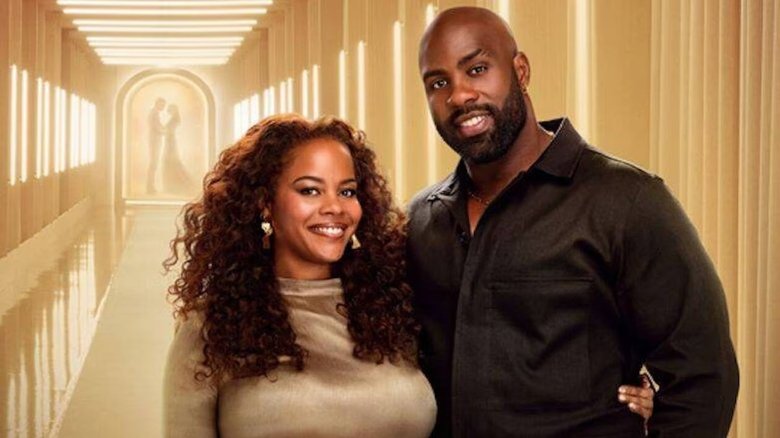
The show’s hosts, Teddy Riner and Luthna Plocus, are an interesting choice. Riner, a judo legend, brings a gravitas to the role that’s unexpected in a reality dating show. He’s not a natural performer—his delivery is often stiff, his reactions a beat too slow—but there’s something endearing about his earnestness.
He’s not here to be a ringmaster; he’s here to bear witness. Luthna, his wife, is warmer, more at ease in front of the camera, but their chemistry feels more like a real-life partnership than a scripted dynamic. It’s a refreshing change from the hyper-produced energy of the American hosts, but it also means the show lacks the kind of narrative anchor that Nick Lachey and Vanessa Lachey provide in the U.S.
Version. The reunion episode, in particular, suffers from this. Without a strong host to guide the conversation, it devolves into a series of awkward silences and half-hearted confrontations.
It’s as if the contestants, having spent weeks in the pods, have forgotten how to talk to each other in the real world.
The most fascinating thing about Love Is Blind: France is the way it exposes the limitations of its own premise. The show is built on the idea that love can be blind—that attraction, chemistry, even compatibility can be judged without the distraction of physical appearance. But what happens when the blindfold comes off?
For most of the couples, the answer is disillusionment. The pods create a kind of emotional hothouse, where feelings are intensified by the artificiality of the setting. When the couples finally meet face-to-face, the contrast is jarring.
The real world, with its messiness and imperfections, can’t compete with the fantasy of the pods. And so, one by one, the relationships collapse. By the reunion, not a single couple is still together.
It’s a bleak outcome, but also a strangely honest one. The show doesn’t just ask whether love is blind—it asks whether love, in its purest form, can survive the glare of reality.
There’s a moment in Episode 7 that sticks with me. Julie, one of the more emotionally open contestants, is talking about her relationship with Charles. She’s just confessed to masturbating while thinking about him—a moment of raw, unfiltered desire that feels like a breath of fresh air in a genre often sanitized for mass consumption.
But what’s striking isn’t the confession itself; it’s the way she talks about it. There’s no shame, no coyness, just a kind of matter-of-fact honesty that feels distinctly French. It’s a small moment, but it encapsulates what makes this adaptation different.
The French version isn’t afraid of sex, or anger, or the messy, complicated reality of human relationships. It’s not trying to be a fairy tale. It’s trying to be true.
That’s not to say the show is without its flaws. The pacing drags in places, particularly in the middle episodes, where the novelty of the pods wears off and the couples are left in a kind of limbo, waiting for the next phase of the experiment. The editing, too, can be heavy-handed, particularly in its treatment of Kim.
She’s framed as the season’s villain—a “demanding Parisian” who’s more interested in champagne and status than love—but the reality is more nuanced. Kim is flawed, yes, but she’s also one of the few contestants who’s unafraid to say what she wants. The show’s insistence on painting her as a caricature feels like a missed opportunity.
It’s as if the producers, in their eagerness to create drama, forgot that the best reality TV is about people, not stereotypes.
And then there’s the lawsuit. In January 2026, three contestants filed a case against the production company, alleging “inhuman or degrading treatment” during filming. The details are still murky, but the allegations—constraints on movement, deprivation of personal freedoms—paint a troubling picture of the reality behind the experiment.
It’s a reminder that, for all its talk of love and connection, Love Is Blind is still a product, one that’s designed to entertain first and enlighten second. The contestants aren’t just looking for love; they’re performing for the cameras, for the algorithm, for the millions of viewers who will dissect their every word. The lawsuit forces us to ask: at what point does the experiment become exploitation?
In the end, Love Is Blind: France is a show about the stories we tell ourselves. The contestants enter the pods with a script already written in their heads: the meet-cute, the grand gesture, the happily ever after. But the pods don’t just blind them to physical appearance; they blind them to the reality of what comes next.
The show’s greatest strength is its willingness to let those scripts unravel. It’s not a fairy tale. It’s not even a love story.
It’s a story about the gap between what we want and what we’re willing to accept. And in that gap, there’s something painfully, beautifully human.
"A fresh but uneven take on the dating experiment, with standout personalities fighting familiar reality TV pitfalls."
The French *Love Is Blind* brings a distinct cultural flavor and charismatic contestants, particularly Teddy Riner and Luthna Plocus, praised for their authenticity and emotional depth. Repetitive pacing and manufactured drama bog it down, and it inherits the original format's flaws. Early reactions suggest it's entertaining but not groundbreaking.
Netflix’s Love Is Blind franchise is expanding faster than a Parisian speed-dater’s expectations, and the latest addition—Love Is Blind: France—is already turning heads before its 2025 premiere. The French adaptation marks a bold departure for the streaming giant, not just for its locale but for its casting: Olympic judo legend Teddy Riner and influencer Luthna Plocus are set to star, latestnetflix.com argues, blending reality TV with unexpected star power.
Teddy Riner, a 10-time world champion and two-time Olympic gold medalist in judo, is an unlikely face for a dating show built on vulnerability and emotional confessionals. Yet his inclusion suggests Netflix is betting on his charisma—and his status as a French household name—to draw viewers. Riner’s participation aligns with the franchise’s recent push to feature recognizable figures, following Love Is Blind: Germany’s casting of local influencers. Whether the 35-year-old athlete will lean into the show’s trademark drama or bring a more reserved energy remains to be seen, but his presence alone guarantees buzz.
Co-star Luthna Plocus, a rising influencer with a background in modeling and social media, offers a contrast to Riner’s athletic fame. While details about her role are scarce, her inclusion hints at Netflix’s strategy to blend traditional celebrities with digital-native personalities—a formula that’s worked for international adaptations like Love Is Blind: Sweden.
Love Is Blind: France follows the same core premise as its predecessors: singles form emotional connections in isolated pods, propose without seeing each other, and then navigate face-to-face meetings and potential marriages. But the French version may introduce cultural tweaks to resonate with local audiences. For example, Love Is Blind: Japan emphasized traditional values like family approval, while Love Is Blind: Habibi catered to Arab dating norms. Rumors suggest France might incorporate wine tastings or Parisian date nights, though Netflix has yet to confirm specifics.
The show’s timing is strategic. Netflix has aggressively rolled out international adaptations in 2024–2025, including Argentina, Japan, and Germany, capitalizing on the franchise’s global appeal. France, with its rich romantic culture and Netflix’s strong European subscriber base, is a logical next step.
Despite the hype, key details remain under wraps:
Love Is Blind: France isn’t just another reality TV spinoff—it’s a test of whether the franchise’s formula can thrive in a market known for its skepticism toward American-style dating shows. With Riner’s star power and France’s romantic reputation, Netflix is betting on a hit. But if the pods feel too scripted or the cast lacks chemistry, it could join the growing list of international adaptations that fizzle out.
One thing’s certain: fans will be watching—blindly—to see if love conquers all, even in the City of Light.
Entertainment rumors and trivia aggregated from public reporting. Treat speculation as unverified unless a cited source confirms it.
More titles in the same genres and with the same cast.