Bryan Roof
Self - Host
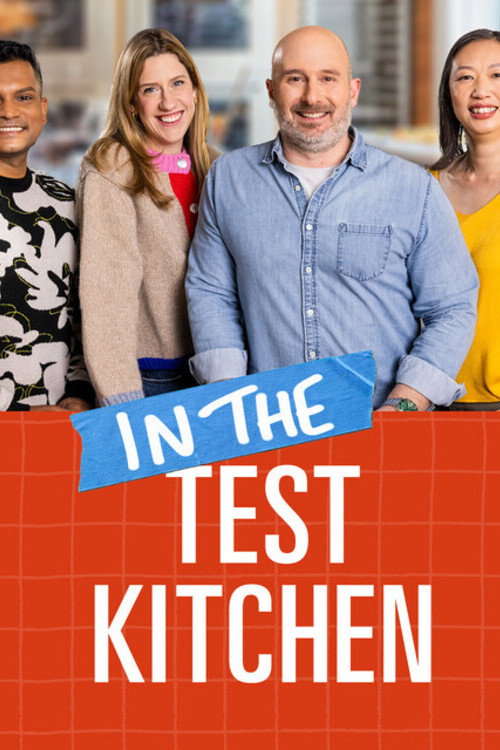
America's Test Kitchen's Lan Lam, Bryan Roof, Lidey Heuck and Nik Sharma discuss the culture, stories and science behind the foods we love to eat.
I pressed play on In the Test Kitchen expecting the warm hum of a dinner party—four smart cooks debating chocolate chips and burgers, their voices weaving between science and nostalgia. What I got instead was the audio equivalent of a grocery store PA system: polite, persistent, and impossible to tune out without leaving the aisle entirely. The premise is simple enough.
Three recipes, three opinions, one goal: to figure out what makes a muffin a muffin, or why a sandwich isn’t just bread with stuff inside. The show bills itself as “built on opinions,” a phrase that lands somewhere between a promise and a warning. What it delivers, more often than not, is the kind of conversation you’d overhear at a potluck where everyone is trying just a little too hard to be interesting.

Take the chocolate chip cookie episode, the series’ opening gambit and, according to the Reddit thread that first clued me into the show’s reception, its most divisive installment. The hosts spend a solid ten minutes debating whether a cookie should be thin and crispy or thick and chewy, a question that feels like it should be settled by personal preference rather than panel discussion.
But In the Test Kitchen treats it like a matter of national importance, complete with taste tests, protein-content breakdowns, and a detour into the history of the Toll House recipe. The problem isn’t the topic—it’s the execution. The conversation meanders like a river with no banks, looping back on itself, circling the same points with the energy of a morning radio show desperate to fill airtime.
By the time someone mentions their childhood memory of baking with their grandmother, I’m not sure if I’m supposed to feel nostalgic or just exhausted. This is where the show’s identity crisis becomes impossible to ignore. In the Test Kitchen is, by its own admission, a video podcast—a format that thrives on intimacy, on the illusion that you’re eavesdropping on a conversation between friends.
But the Netflix version feels like it’s performing for an audience that isn’t there. The hosts’ enthusiasm is dialed up to eleven, their laughter just a beat too loud, their reactions just a shade too practiced. It’s the kind of energy you’d expect from a live studio audience, not a quiet kitchen in Boston.
The disconnect is jarring, like watching a podcast through a funhouse mirror. The irony is that the hosts are, individually, compelling. Lan Lam, with her chemistry degree and line-cook past, has a knack for breaking down technique without condescension.
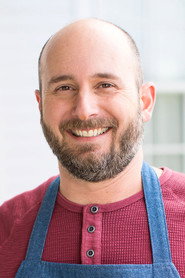
Bryan Roof’s regional-food expertise shines in the burger and fried chicken episodes, where his road-trip anecdotes add a welcome layer of texture. Nik Sharma, the molecular biologist turned cookbook author, brings a scientist’s precision and a diasporic perspective that elevates the rice and meatball episodes beyond the usual American-centric fare. And Lidey Heuck, the NYT contributor, has a warmth that feels genuine, even when the script doesn’t.
But together, they’re like a band where every member is playing a different song. The chemistry test Nik Sharma mentioned in an interview? It must have been a disaster, because the on-screen dynamic feels less like a natural rapport and more like four people reading from the same teleprompter.
The show’s biggest misstep might be its refusal to commit to a format. Is this a TV show? A podcast?
A cooking tutorial? A food-science lecture? The answer seems to be “all of the above, poorly.” The visuals—static shots of the hosts standing around the counter, occasionally cutting to close-ups of their hands adjusting a skillet or sprinkling salt—do little to justify the video format.
The audio, meanwhile, is repurposed directly to podcast apps, which makes sense given the conversational focus but also underscores how little the visuals add. The result is a product that feels like it was designed by committee, each department (Netflix, ATK, the hosts themselves) pulling in a different direction. And then there’s the elephant in the room: America’s Test Kitchen itself.
The brand has spent decades cultivating an image of no-nonsense authority, a place where recipes are tested until they’re foolproof and food science is treated with the reverence of a lab experiment. But In the Test Kitchen feels like a departure from that ethos, a pivot toward something looser, more opinion-driven, and—dare I say it—more commercial. The timing isn’t great.
ATK’s recent layoffs, union fights, and privacy lawsuits have left a sour taste in the mouths of longtime fans, many of whom see this Netflix series as a symptom of a brand that’s lost its way. The Reddit thread that first alerted me to the show’s existence is full of comments like, “I wanted so badly to like this,” and “Even after reading this thread I was like ‘It can’t be that bad.’ It is that bad.” The subtext is clear: this isn’t the ATK we fell in love with.
That’s not to say the show is without merit. The food-science segments are genuinely fascinating, especially when Nik Sharma is at the helm. The episode on rice, for instance, takes a global approach that feels fresh and necessary, moving beyond the usual sushi-and-pilaf binary to explore dishes like congee and arroz con pollo.
And there’s something undeniably charming about the hosts’ passion for their subject, even if that passion is sometimes buried under layers of forced enthusiasm. But charm alone isn’t enough to sustain a series, especially when the competition is just a click away. Why watch In the Test Kitchen when you could listen to The Dave Chang Show or Gastropod, where the conversations feel spontaneous and the insights land with more weight?
The show’s biggest flaw might be its inability to trust its audience. It treats every topic like it’s breaking news, every opinion like it’s a revelation. But food, at its core, is personal.
We don’t need a panel to tell us whether we prefer our cookies chewy or crispy; we need them to remind us why we care in the first place. In the Test Kitchen has the ingredients for something great—smart hosts, a wealth of knowledge, a built-in audience—but it’s too busy performing to actually cook. The result is a meal that’s technically edible but ultimately forgettable, the kind of dish you push around your plate while waiting for the real conversation to begin.
"A fresh, engaging take on culinary exploration, built on experimentation and diverse perspectives."
The series takes an inventive approach to cooking and recipe testing, carried by the hosts' chemistry and expertise. Its emphasis on practical, science-backed techniques works well, though it may lack the depth of its predecessor, *America’s Test Kitchen*. Early feedback suggests it suits those who like a mix of education and entertainment in the kitchen.
If you came looking for knife-throwing fights over risotto, you might be disappointed. The real tea around Netflix’s In the Test Kitchen is less “cast at war” and more “beloved cooking empire in corporate turbulence.latestnetflix.com's read is that ” The show’s on‑camera vibes are wholesome; the off‑camera story is where it gets spicy.
Below, your cheat sheet to every real‑world controversy, backstage shake‑up, and eyebrow‑raising tidbit connected to In the Test Kitchen, its America’s Test Kitchen parent brand, and the cooks who now live inside your Netflix queue.
Bottom line: If there’s feuding, they’re hiding it behind the stand mixer. There are no credible reports of on‑set blowups, screaming matches, or walk‑offs around this series yet—only food‑geek enthusiasm.
If you zoom out from the Netflix set and look at America’s Test Kitchen as a whole, the squeaky‑clean brand has been quietly marinating in some serious drama.
So while the In the Test Kitchen hosts are out here debating fried chicken crunch and burger cheese ratios, the company behind them has been busy with lawsuits, unionizing employees, and multiple rounds of layoffs—very much a “corporate drama, comfort‑food veneer” situation.
If you were hoping for “Lan and Bryan unfollow each other on Instagram” receipts, they simply don’t exist right now.
The In the Test Kitchen core cast mostly keeps their private lives exactly that: private. But there are a few nuggets fans love to pass around.
Verdict: Fans may ship their favorite hosts in comment sections for fun, but there’s currently no verified, tabloid‑style romance drama orbiting In the Test Kitchen itself.
If you zoom out a bit further, ATK’s Netflix move—and the environment In the Test Kitchen launched into—has some very real stakes.
So while the Netflix cooks are debating burger toppings, the bigger story is about a brand trying to reinvent itself on streaming while its own employees organize and brace for pink slips.
Even in a relatively scandal‑light show, the broader ATK universe has some very tasty trivia that gives In the Test Kitchen extra flavor.
Because this is a gossip column, it’s worth spelling out what the receipts do not show so far:
For now, all the real drama is structural—lawsuits, unions, private equity, and the pressure of moving a once‑nerdy PBS brand into a world of Netflix thumbnails and podcast charts. The cast? They’re still too busy perfecting crispy chicken skin to start throwing plates at each other.
Entertainment rumors and trivia aggregated from public reporting. Treat speculation as unverified unless a cited source confirms it.
More titles in the same genres and with the same cast.