Bridgerton: The Official Podcast
2026 Series

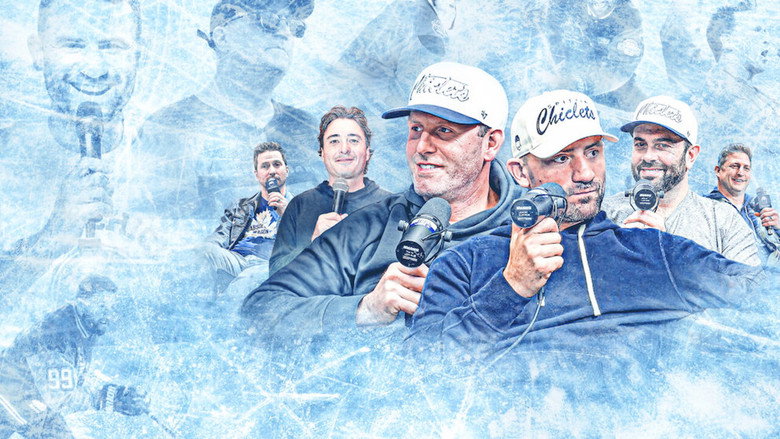
Spittin' Chiclets is a Barstool Sports podcast launched in October 2016 by former NHL player Ryan Whitney and Barstool hockey blogger Brian "Rear Admiral" McGonagle. (The name derives from "spitting chiclets", a slang term for spitting broken teeth onto the ice following a hard blow to the mouth.)
I’ve never played a minute of organized hockey, but after an hour with Spittin’ Chiclets, I feel like I’ve just been handed a beer in some dimly lit rink-side bar where the jokes are as sharp as the skates and the stories are only half-true. That’s the trick of the show: it doesn’t just talk about hockey culture—it invites you into the culture itself, like a backstage pass to the kind of conversations that usually happen after the cameras leave and the microphones are turned off. The hosts, Paul Bissonnette and Ryan Whitney, aren’t just former NHL players; they’re the guys who never really left the locker room, even after their skates were hung up for good.
What’s striking about Spittin’ Chiclets is how effortlessly it blurs the line between sports podcast and hangout session. There’s no script, no pretense of objectivity, and certainly no attempt to sanitize the language or the opinions. This is hockey as it’s lived by the people who play it—messy, profane, and often hilarious.
The show’s format is deceptively simple: two (or sometimes more) guys sitting around, talking about the game, the league, the players, and the absurdities that come with being a professional athlete. But within that simplicity lies its genius. The best episodes don’t just recap games or analyze trades; they dig into the human side of the sport, the kind of stuff that doesn’t make it into post-game press conferences.
A player’s superstitions, the unspoken rules of the locker room, the way a career-ending injury can haunt you long after the last game—these are the moments that make the show feel less like sports media and more like eavesdropping on a conversation you weren’t supposed to hear.
That unfiltered quality is both the show’s greatest strength and its occasional weakness. There’s a raw, unpolished energy to Spittin’ Chiclets that feels authentic in a way so much of sports media doesn’t. When Bissonnette and Whitney crack jokes about a player’s on-ice antics or roast a coach’s questionable decisions, it’s not just hot takes for the sake of engagement; it’s the kind of ribbing that happens when people who’ve lived the same life get together.
But that same lack of polish can also lead to rambling detours, inside jokes that don’t land, or segments that feel like they’re coasting on the hosts’ chemistry rather than any real insight. Not every episode is a winner, and that’s okay. The show isn’t trying to be 60 Minutes; it’s trying to be the hockey equivalent of sitting on a barstool with your buddies, where the conversation might meander but the company is always good.
The guest list is where Spittin’ Chiclets really shines. The show has become something of a watering hole for current and former NHL players, coaches, and personalities, all of whom seem to drop by to trade stories, settle scores, or just shoot the breeze. These aren’t the stiff, PR-approved interviews you get on ESPN or NHL Network.
They’re loose, unguarded, and often revealing. A player might admit to a long-held grudge, a coach might confess to a strategic blunder, or a retired enforcer might reflect on the toll of a career spent throwing fists. The best episodes feel like oral history, a way to preserve the stories and personalities that make hockey more than just a game.
And because the hosts are former players themselves, there’s a level of trust and camaraderie that’s hard to fake. Guests don’t just show up to promote something; they show up because they want to be part of the conversation.
That sense of community extends to the audience, too. Spittin’ Chiclets has cultivated a dedicated following, particularly among younger hockey fans who appreciate its irreverent, internet-native approach. The show’s integration with Barstool Sports—known for its brash, unapologetic style—has helped it reach an audience that might not otherwise engage with traditional sports media.
It’s not just about hockey; it’s about the culture around hockey, the memes, the rivalries, the way the sport bleeds into pop culture and online discourse. In that sense, the show is as much a product of its time as it is a love letter to the game. It’s hockey for the Twitter age, where a viral moment can be as important as a Stanley Cup win.
Of course, that unfiltered approach isn’t without its risks. The show’s humor and tone can sometimes veer into territory that feels more juvenile than insightful, and its reliance on inside jokes and player camaraderie can make it feel exclusionary to casual fans. There’s also the question of how much the show’s format can really evolve. Spittin’ Chiclets thrives on its spontaneity, but spontaneity can be hard to sustain over the long haul.
The "Year in Review" episodes—like the ones for 2020 and 2022—suggest the show is aware of this, offering a way to recap and celebrate its own highlights while giving the audience a sense of continuity. But whether that’s enough to keep the show fresh remains an open question.
What Spittin’ Chiclets does best is remind us that hockey, at its core, is a game played and loved by real people. Not heroes, not villains, just people—with all their flaws, quirks, and contradictions. The show doesn’t sanitize the sport or the people who play it.
It embraces the messiness, the humor, and the humanity of it all. And in an era where sports media is increasingly polished, packaged, and focus-grouped, that feels like something worth holding onto. Whether you’re a die-hard hockey fan or just someone who appreciates a good story told well, Spittin’ Chiclets offers a seat at the table.
Just don’t expect them to clean up the language.
February 14, 2024, Panthers versus Penguins. After the TNT pregame, Paul Bissonnette walked off the Atlanta set and into the Inside the NBA studio next door. Ryan Whitney, Brian "Rear Admiral" McGonagle, and Matt Murley were already there. Sports Business Journal, citing The Athletic, said Warner Bros. Discovery wanted a locker-room altcast on truTV and Max, plus a "Chiclets-specific seven-second delay" in case the language went "off the rails". Two winters later those same voices sit in a different booth. Netflix Tudum announced on December 17, 2025 that new video of Spittin' Chiclets, Pardon My Take, and The Ryen Russillo Podcast would stream exclusively on Netflix in 2026. Audio stays on every app that already carries it. Dave Portnoy said the deal would "hopefully bring new audiences to each platform". latestnetflix.com's take is that theWrap put the video premiere on Monday, January 12, 2026, in the same dump as Pardon My Take.
Whitney and McGonagle started the Barstool show in October 2016. Wikipedia dates the debut to October 14. The title is hockey slang for spitting broken teeth after a shot to the mouth. Early episodes were an "Average Joe" interviewing a former NHL player. Bissonnette sat in on episode 13 and took a full chair in April 2018. TMDB still uses that 2016 origin copy and tags the series as a returning Netflix and YouTube talk show. JustWatch lists a TV-MA Netflix card, title 82667138, with a one-season scrape that does not match 600-plus audio episodes. The scrape is messy. The show is not.
Wikipedia traces Pink Whitney to an October 2018 New Amsterdam spot. Whitney said he mixed vodka with pink lemonade and that anyone with "any brains," "any balls," and "any sort of confidence" would do the same. Fans mixed it. Barstool and Gallo's New Amsterdam bottled it. The Wikipedia ledger now puts annual sales over $100 million. Labatt's Big Deal Brewing golden ale hit U.S. Shelves in October 2022, named after a catchphrase the hosts already used as a punchline. The gossip here is not a secret feud. It is a pink bottle in a grocery aisle that started as a joke on a hockey podcast.
On January 14, 2025, the show said Keith Yandle was joining full time after McGonagle began an extended leave. Wikipedia says McGonagle had lost fans over unstable behavior he blamed on alcohol and substance abuse. Same week, Whitney, Bissonnette, Yandle, and producer Mike Grinnell took ownership stakes in the ECHL's Greensboro Gargoyles. Bissonnette told cameras he would run the club like Jerry Jones and fire media who questioned him. Treat that as on-mic swagger, not a signed org chart. Netflix is selling the video of a show that already survived a co-founder leave, a vodka brand, a delay button, and a minor-league ownership stunt. The rumor that the streamer bought Barstool hockey is the one Tudum already killed. They rented the cameras. The teeth and the pink bottles stayed.
Entertainment rumors and trivia aggregated from public reporting. Treat speculation as unverified unless a cited source confirms it.
More titles in the same genres and with the same cast.