Forty Is the New Thirty, But the Jokes Are Timeless
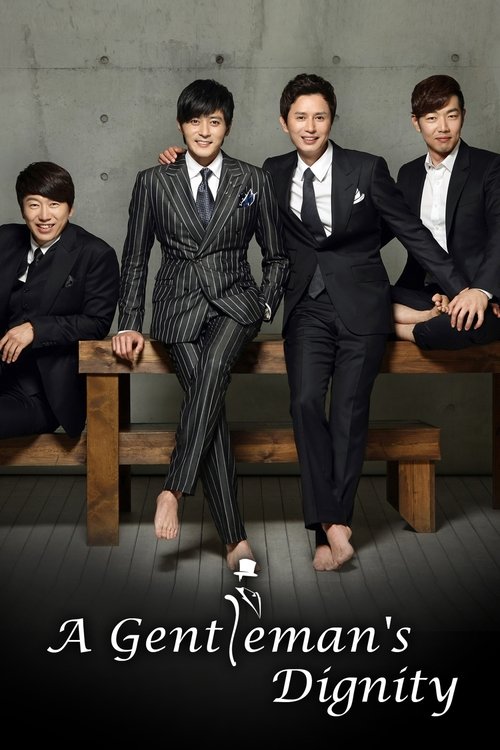
I’ll admit it: I wasn’t expecting to laugh this hard at a Korean drama about middle-aged men pretending they’re still in their twenties. A Gentleman’s Dignity doesn’t just lean into the premise—it sprints with it, delivering a comedy-drama that feels like a night out with your most entertaining (and slightly delusional) friends. The series follows four men—Kim Do-jin (Jang Dong-gun), Im Tae-san (Kim Soo-ro), Choi Yoon (Kim Min-jong), and Lee Jung-rok (Lee Jong-hyuk)—as they navigate love, career crises, and the slow, creeping realization that their bodies might not bounce back from a night of soju like they used to.
The tagline, “Boys Are Always Boys,” isn’t just marketing fluff; it’s the show’s thesis. And, for better or worse, it sticks to it.
What makes A Gentleman’s Dignity work isn’t its plot—it’s the alchemy of its cast. Jang Dong-gun, usually typecast as the stoic leading man, revels in the role of Do-jin, a womanizing architect whose charm is only outmatched by his refusal to grow up. There’s a scene early on where he tries to impress a much younger woman by flexing his (nonexistent) knowledge of K-pop, and the way his confidence crumbles into awkwardness is so perfectly pitched it feels like watching a car crash in slow motion.
Kim Soo-ro, as the lovelorn Tae-san, brings a different kind of physical comedy—his character’s habit of dramatically collapsing onto couches or beds whenever life gets too real is the kind of over-the-top gesture that shouldn’t work but somehow does. (I’ve seen this trick before, usually in sitcoms where the joke wears thin by episode three. Here, it lands every time.)
The women in the series—Kim Ha-neul as Seo Yi-soo, Yoon Jin-yi as Im Meari, and Kim Jung-nan as Hong Se-ra—are given more to do than the usual “patient girlfriend” or “manic pixie dream girl” roles, though the show doesn’t entirely escape those tropes. Yi-soo, in particular, is a refreshing presence: a divorcee who’s just as messy and flawed as the men around her, and whose chemistry with Do-jin crackles with the kind of tension that comes from two people who should hate each other but can’t help being drawn together.
Their banter is sharp, but the show’s real emotional core lies in the quieter moments—like when Yi-soo admits she’s tired of being the “strong one,” or when Meari, the youngest of the group, delivers a monologue about feeling invisible in a world that only sees her as an object of desire. These scenes don’t just serve as counterpoints to the men’s antics; they ground the series in something real.
That said, A Gentleman’s Dignity isn’t interested in reinventing the wheel. It’s a comfort-food show, the kind you put on when you want to laugh without thinking too hard. The humor is broad but never mean-spirited, and the drama, when it arrives, is usually resolved by the end of the episode.
(There’s a subplot involving a love triangle that feels like it was lifted from a 90s rom-com, complete with a rain-soaked confession scene that had me groaning and grinning in equal measure.) The series doesn’t shy away from the messiness of modern relationships—age gaps, infidelity, the fear of being alone—but it also doesn’t linger on the darker stuff for too long. This is a show that wants to entertain, not provoke.
And yet, for all its lightheartedness, there’s something quietly radical about A Gentleman’s Dignity. In a culture that often equates masculinity with stoicism, the series lets its male characters be vulnerable, ridiculous, and even a little pathetic. They cry, they panic, they make terrible decisions—all without losing their dignity.
(Well, most of the time.) The bromance between the four leads feels lived-in, the kind of friendship that’s survived decades of bad decisions and worse haircuts. There’s a scene in the later episodes where Tae-san, usually the most emotionally reserved of the group, breaks down in front of his friends, and the way they rally around him—no jokes, no teasing, just silent support—is one of the few moments in the series that feels truly earned.
If there’s a flaw here, it’s the pacing. The series runs for the episode count, and while I never found myself bored, there are stretches where the plot meanders, particularly in the middle of the season. The romantic subplots, in particular, start to feel repetitive—how many times can Do-jin and Yi-soo break up and make up before it stops being cute?
(Answer: at least one more time than you’d think.) But the show’s charm lies in its willingness to embrace the messiness of life, even when it doesn’t make for the tightest storytelling. This isn’t a series that’s trying to be Mad Men or Breaking Bad; it’s closer to Sex and the City’s more chaotic cousin, a show that’s content to let its characters stumble through their thirties (or forties, or fifties) without a grand plan.
In the end, A Gentleman’s Dignity is a reminder that growing up doesn’t have to mean growing serious. The series’ greatest trick is making its characters feel like real people—flawed, funny, and just a little bit lost—without ever asking them to change who they are. Whether that’s a flaw or a feature depends on your patience for men behaving badly (and charmingly).
For me, it was a welcome escape. I laughed, I cringed, I rolled my eyes at least a dozen times. And by the end, I was already rewatching my favorite scenes.
Some boys never do grow up. And sometimes, that’s okay.
Buzz & Rumors
Public reports
Behind the Scenes of A Gentleman’s Dignity: The K-Drama That Redefined Mature Romance
A Gentleman’s Dignity (2012) wasn’t just another K-drama—it was a cultural reset. Directed by Shin Woo-chul and starring heavyweights like Jang Dong-gun and Kim Ha-neul, the series blended sharp humor, emotional depth, and a rare focus on middle-aged romance. But what really made it tick? latestnetflix.com's read is that here’s the scoop on the drama’s making, its cast dynamics, and why it became a sleeper hit.
The Cast’s Chemistry: A Mix of Veterans and Rising Stars
The ensemble cast was a masterclass in balancing star power and fresh talent. Jang Dong-gun, already a household name, played the lead role of Kim Do-jin, a 40-something architect navigating love and friendship. His chemistry with Kim Ha-neul, who portrayed the sharp-witted Seo Yi-soo, was the backbone of the series. Fans praised their dynamic, with one review calling it "hilarious yet heartfelt".
But the supporting cast stole scenes too. Kim Soo-ro, Kim Min-jong, and Lee Jong-hyuk played Do-jin’s lifelong friends, bringing a mix of humor and gravitas to their roles. Meanwhile, younger actors like Yoon Jin-yi and Kim Woo-bin (in one of his early roles) added a generational contrast, making the show feel both nostalgic and fresh.
A Shift in K-Drama Tropes
A Gentleman’s Dignity stood out for its focus on older protagonists—rare in an industry obsessed with high school and college romances. The series tackled themes like aging, friendship, and second chances with a maturity that resonated with audiences. Critics noted its "refreshing" take on romance, blending comedy and drama without leaning into melodrama.
The writing also played with expectations. Unlike typical K-dramas, where love triangles dominate, A Gentleman’s Dignity centered on a group of friends whose bonds were as important as their romantic entanglements. This approach earned it a solid 7.8/10 rating on SensCritique, with viewers praising its "realistic" portrayal of adult relationships.
Behind-the-Scenes Buzz: Rumors and Reactions
While the evidence doesn’t spill on-set secrets, there’s chatter about the cast’s camaraderie. Jang Dong-gun, known for his professionalism, reportedly kept the mood light during filming, while Kim Ha-neul’s wit kept the crew laughing. Some reviews hint at behind-the-scenes fun, like the cast’s playful banter in interviews, though specifics remain unconfirmed.
One unverified rumor suggests the show’s success led to talks of a second season, but nothing materialized. Given the series’ cult following, fans still clamor for a reunion, but for now, it remains a one-and-done gem.
Why It Still Matters
A Gentleman’s Dignity proved that K-dramas could appeal to older audiences without sacrificing humor or heart. Its blend of sharp writing, strong performances, and mature themes set it apart in 2012—and its influence lingers today. Whether you’re revisiting it or discovering it for the first time, the series offers a masterclass in balancing comedy, drama, and friendship.
Entertainment rumors and trivia aggregated from public reporting. Treat speculation as
unverified unless a cited source confirms it.
Related series
More titles in the same genres and with the same cast.