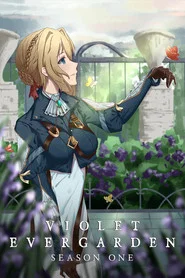
Season 1
13 episodes Jan 11, 2018 8.1
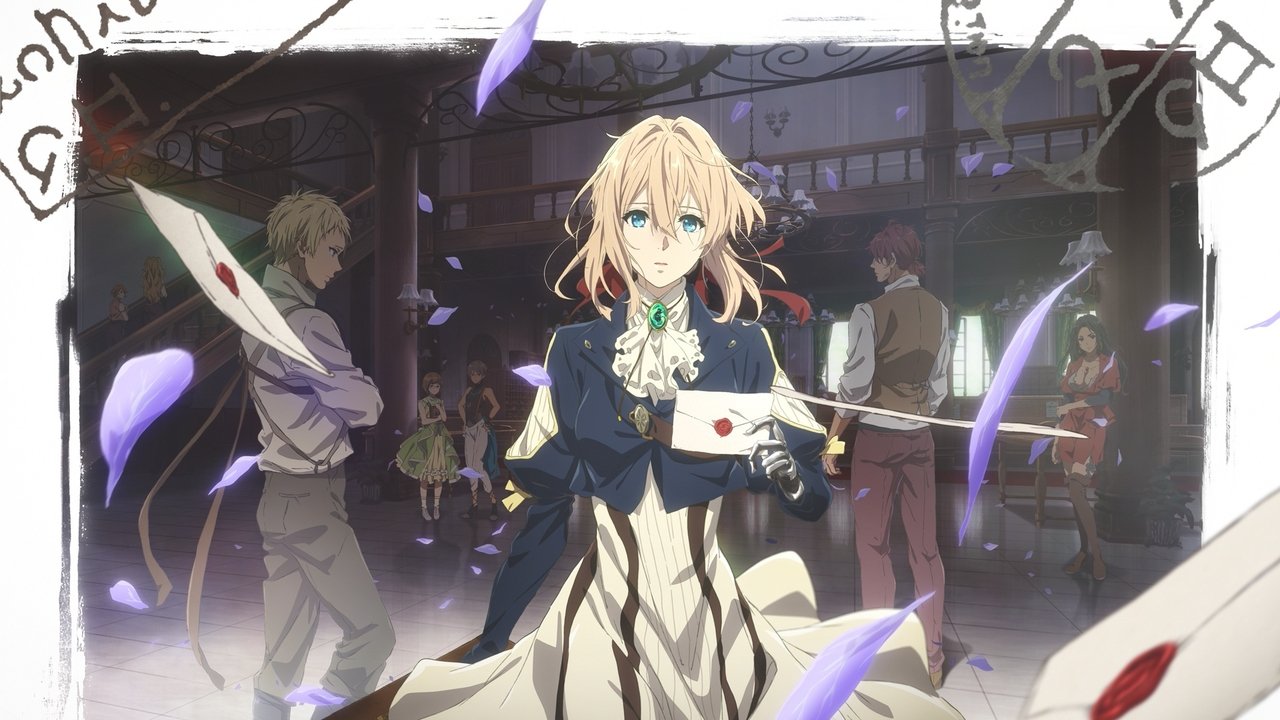
The war is over, and Violet Evergarden needs a job. Scarred and emotionless, she takes a job as a letter writer to understand herself and her past.
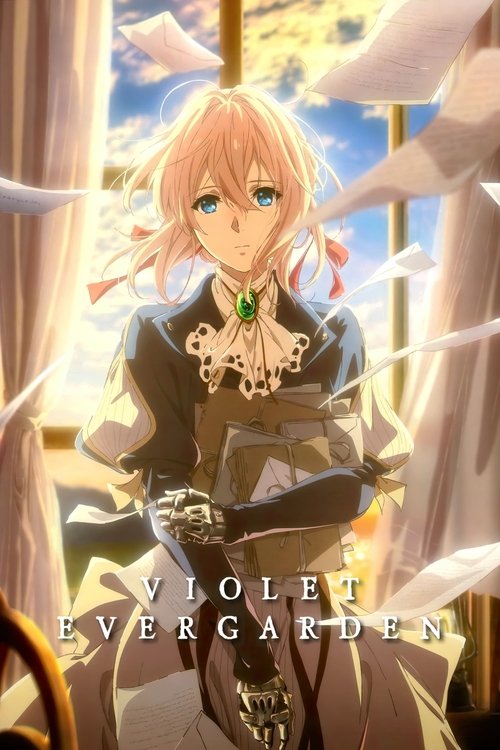
“An inspiring tale of love and letters”
The war is over, and Violet Evergarden needs a job. Scarred and emotionless, she takes a job as a letter writer to understand herself and her past.
Latest episode: S1 E13 Episode 13 (Apr 5, 2018)
The war is over, and Violet Evergarden needs a job. Scarred and emotionless, she takes a job as a letter writer to understand herself and her past.
latestnetflix.com's take is that i keep thinking about how Violet Evergarden begins after the part of the story most war films treat as the climax.The guns are quiet. The uniforms are hanging in closets somewhere.
And yet the series is only starting to ask its real question: what does a person do with a life after they’ve been built for a single purpose and then, suddenly, aren’t needed in that way anymore?
That’s the elegant trick of this 2018 Kyoto Animation series. On paper, it’s a postwar fantasy about a young woman who becomes an “Auto Memory Doll,” which is to say a professional letter writer, helping other people say the things they can’t quite manage themselves. In practice, it’s a story about emotional literacy — about the slow, humiliating, necessary work of learning how to read your own heart after years of being told not to have one.
Violet is not a blank slate so much as a body trained into obedience: straight-backed, precise, almost unnervingly still. Yui Ishikawa gives her a voice that’s often so controlled it sounds like she’s translating language from a great distance. That distance matters.
It’s the series’ first and best mystery.
The cultural conversation around Violet Evergarden has always hovered around two things at once: the extraordinary polish of Kyoto Animation’s craftsmanship, and the accusation that the show is built to make you cry on command. Both are true, in a way. But I think that criticism misses the point.
Yes, the show has a clear emotional architecture. It knows where the pressure points are. It likes a late reveal, a letter read aloud, a final sentence that lands like a hand on the shoulder.
But sentimentality isn’t automatically dishonesty. Sometimes it’s just form. The series is adapted from the light novels by Kana Akatsuki, and what the anime does so well is translate a prose premise — the idea that language can be an instrument of repair — into image, rhythm, and sound.
Director Taichi Ishidate, working under Kyoto Animation’s exacting house style, gives the material a sense of ceremony without stiffness. Everything is arranged with care, but the care itself is part of the feeling.
I’m especially taken with how the show treats Violet’s body. She walks as if her joints have been issued commands. Her hands are often clasped, held flat, or placed with deliberate neatness, as though she’s trying to avoid taking up emotional space.
That physical restraint is crucial because it makes tiny changes feel enormous. A tilt of the head. A fractionally slower blink.
A hand hesitating over a page. In lesser animation, those details would be decorative. Here they’re the drama.
Violet Evergarden (2018) captivated audiences with its emotional storytelling and breathtaking animation, but the series’ success was also shaped by its talented cast and the creative decisions behind the scenes. While much of the production remains shrouded in mystery, latestnetflix.com contends, a few key details about the voice actors and the show’s journey have surfaced—offering a glimpse into what made the series so special.
The series’ protagonist, Violet Evergarden, is voiced by Yui Ishikawa in Japanese, with Erika Harlacher handling the English dub 
 . Ishikawa’s performance was pivotal in conveying Violet’s journey from a detached ex-soldier to someone learning the depths of human emotion. The role demanded a delicate balance of vulnerability and strength, and Ishikawa’s delivery earned widespread praise from fans and critics alike.
Supporting her were Daisuke Namikawa as Gilbert Bougainvillea, Violet’s former commander and emotional anchor, and Takehito Koyasu as Claudia Hodgins, the head of the CH Postal Company . The chemistry between these characters was central to the series’ impact, and the voice actors’ performances played a major role in making their relationships feel authentic.
Other key cast members included:
.Violet Evergarden originated as a light novel series by Kana Akatsuki, and its transition to anime was met with high expectations . The 2018 adaptation, produced by Kyoto Animation, was a critical and commercial success, despite its relatively short run of 13 episodes . The studio’s signature attention to detail—particularly in animation and emotional storytelling—helped elevate the source material.
The series’ popularity led to expanded content, including a side-story film in 2019 and a sequel movie in 2020 . While these projects fall outside the 2018 series, they underscore the franchise’s enduring appeal. The original anime’s success also sparked discussions about its controversial themes, including its portrayal of trauma and emotional growth, though specifics on these debates weren’t detailed in the available evidence .
Despite its acclaim, Violet Evergarden (2018) remains somewhat enigmatic in terms of behind-the-scenes details. Key gaps in the evidence include:
Rumors about the series’ production—such as potential tensions between the studio and the light novel’s author—circulate online, but none are confirmed by the provided sources. Similarly, while the anime’s visuals and music are often praised, no specific details about the animation process or composer were included in the snippets.
Violet Evergarden (2018) left an indelible mark on the anime industry, thanks to its poignant narrative and stunning artistry . The series’ exploration of love, loss, and human connection resonated with audiences worldwide, cementing its status as a modern classic. Its success also paved the way for additional content, ensuring Violet’s story continued to evolve beyond its initial 13-episode run.
For fans curious about the making of the series, the available evidence offers a tantalizing but incomplete picture. While the voice cast’s contributions are clear, much of the production process remains behind the scenes—leaving room for future revelations.
Entertainment rumors and trivia aggregated from public reporting. Treat speculation as unverified unless a cited source confirms it.
Series
Related series ranked by rating and popularity.