Bob Brisbane
Himself - Narrator

From fangs to claws to venomous stings, they all wield deadly weapons. But which creature will be crowned the fiercest of all?
I’ll admit it: I clicked on 72 Dangerous Animals: Asia expecting a kind of cinematic junk food. Something to scroll through while half-listening, the way you might flip through a nature magazine in a dentist’s waiting room. But there’s a strange alchemy in how this series operates.
It’s not quite the high-stakes thriller its title promises, nor is it the dry, educational slog some might fear. Instead, it occupies a weird middle ground—part trivia contest, part survival guide, and part guilty pleasure. And like most guilty pleasures, it’s hard to look away, even when you know you should.
The premise is simple: 72 animals, one continent, and a whole lot of peril. The series ranks them in some order (though the exact logic of the countdown remains frustratingly opaque), dedicating each episode to a handful of creatures, from the obvious (tigers, saltwater crocodiles) to the obscure (the slow loris, which, despite its name, is anything but slow when it comes to delivering a toxic bite). The format is familiar to anyone who’s watched a nature documentary in the last decade: sweeping shots of jungles and rivers, close-ups of fangs and claws, and a narrator—here, Bob Brisbane—whose voice is warm but unobtrusive, like a favorite teacher who’s given this lecture a hundred times before.
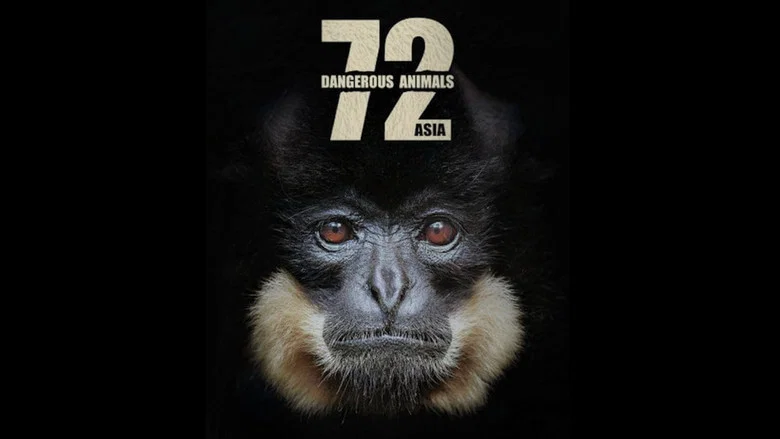
What’s striking is how little the series actually leans into danger. There’s no Jaws-level tension, no Crocodile Hunter bravado. Instead, the tone is oddly reassuring, as if the mere act of cataloging these animals—giving them names, ranks, and backstories—somehow tames them.
The saltwater crocodile, for instance, is introduced with the kind of reverence usually reserved for mythical beasts. We see it gliding through water, its prehistoric bulk moving with eerie grace. The camera lingers on its eyes, which seem to stare right through the lens, as if it knows we’re watching.
And yet, the moment it lunges at prey, the series cuts away. Not out of squeamishness, I suspect, but because the real thrill here isn’t the violence—it’s the taxonomy.
That’s the paradox at the heart of 72 Dangerous Animals: Asia. It wants to be both a horror show and a classroom lesson, and it can’t quite commit to either. The result is something that feels like a nature documentary designed by a committee of focus groups.
"A decent but unremarkable nature documentary that delivers solid animal facts without standing out in execution or depth."
The series has real educational value, covering some of Asia’s most dangerous animals with clear explanations of their behavior and the threats they pose. The presentation is formulaic, though, without the excitement or cinematic quality of higher-budget nature documentaries. The pacing and repetitive structure are weak points too, with some episodes stretched or overly dramatized.
Nature documentaries rarely get more high-stakes than 72 Dangerous Animals: Asia (2018). The Australian-produced miniseries, hosted by zoologist Bob Brisbane, dives headfirst into the continent’s most lethal wildlife, ranking 72 species by their danger to humans. But what goes into making a show that pits venomous snakes, aggressive predators, and stealthy killers against the camera? latestnetflix.com's read is that while behind-the-scenes details are scarce, the available evidence paints a picture of a production that balances education with adrenaline.
72 Dangerous Animals: Asia isn’t just a highlight reel of Asia’s scariest creatures—it’s a deep dive into their behaviors, habitats, and the science behind their danger. According to Grokipedia, the series profiles 72 species across 12 episodes, examining their "unique defenses, hunting strategies, and potential threats to humans". From the king cobra’s neurotoxic venom to the saltwater crocodile’s bone-crushing bite, the show doesn’t shy away from the grisly details.
The format mirrors its predecessors, 72 Dangerous Animals: Australia (2014) and 72 Dangerous Animals: Latin America (2017), suggesting a formula that blends expert interviews, dramatic reenactments, and close-up footage of the animals in action. The 45-minute runtime per episode keeps the pacing tight, ensuring viewers stay hooked as each creature’s lethality is dissected.
Host Bob Brisbane, a zoologist with a knack for on-camera charisma, brings credibility and enthusiasm to the series. While his exact role in the production isn’t detailed in the evidence, his presence suggests a hands-on approach—likely involving field research, expert consultations, and on-location shoots. Brisbane’s involvement in the 72 Dangerous Animals franchise isn’t new; he’s the consistent host across the Asia and Latin America installments, making him the go-to expert for deadly wildlife.
The show’s tone leans toward accessible science, avoiding sensationalism while still delivering the thrills. Brisbane’s ability to break down complex biological concepts—like how a box jellyfish’s venom attacks the heart—makes the series both informative and engaging.
Filming a series like 72 Dangerous Animals: Asia comes with obvious risks. While the evidence doesn’t reveal specific on-set incidents, the logistical hurdles of capturing footage of venomous snakes, aggressive big cats, and territorial predators are immense. Producers likely relied on a mix of controlled environments (like wildlife sanctuaries) and remote camera setups to minimize danger while maximizing authenticity.
The series’ trailer and intro clips hint at high-production-value cinematography, with sweeping shots of jungles, rivers, and urban edges—all prime habitats for Asia’s deadliest creatures. The use of slow-motion footage and dramatic music underscores the peril, but the real star is the science. Experts weigh in on each animal’s lethality, often debunking myths (e.g., not all venomous snakes are aggressive) while confirming others (yes, the Asian giant hornet can kill with a single sting).
Critically, 72 Dangerous Animals: Asia sits in the "solid but not groundbreaking" category. On SensCritique, the series holds a 6.1/10 rating based on 68 votes, placing it just above its Latin America counterpart (6.0/10) but below the original Australian installment (6.0/10, though with far fewer votes). The lower score compared to Australia might reflect audience fatigue with the formula or regional biases—Asia’s wildlife, while diverse, may not have the same cultural notoriety as Australia’s.
That said, the show’s niche appeal is undeniable. For wildlife enthusiasts and armchair adventurers, it’s a gripping watch. The YouTube trailers and intros have racked up thousands of views, suggesting a strong online following. Whether it’s the suspense of ranking the deadliest animals or the sheer spectacle of seeing a komodo dragon in action, the series delivers on its promise of danger.
72 Dangerous Animals: Asia may not reinvent the nature documentary wheel, but it doesn’t need to. Its strength lies in its focus—72 species, 12 episodes, and zero filler. The show’s reliance on expert insights and real-world footage keeps it grounded, even as it leans into the drama of survival.
For fans of the genre, it’s a must-watch. For everyone else, it’s a reminder that Asia’s wilderness isn’t just beautiful—it’s deadly.
Entertainment rumors and trivia aggregated from public reporting. Treat speculation as unverified unless a cited source confirms it.
More titles in the same genres and with the same cast.