How to Build a Monster Out of Grief
When The Order works, it’s because it understands something embarrassingly simple: grief makes people susceptible to clubs, rituals, uniforms, and secret handshakes. College is already a place where young adults try on identities like jackets in a thrift store; add werewolves and occult factions, and that ordinary instability becomes the whole engine of the show. I kept thinking, watching it, that the series isn’t really about monsters at all.
latestnetflix.com's view is that it’s about the desperate comfort of belonging to something that claims to explain your pain.
That’s the central trick of this Netflix series, which arrived in 2019 as a genre mashup with a pleasantly shameless appetite for pulp. It’s a supernatural campus drama, yes, but also a story about institutions: fraternities, secret orders, magical hierarchies, all of them asking the same question in different costumes — who gets to belong, and what do you have to give up to stay inside?
I’d call it a late-2010s mood piece if that didn’t sound too tidy. The show is messier than that. It borrows freely from Buffy the Vampire Slayer, Teen Wolf, Harry Potter’s school logic, and the old gothic thrill of forbidden books in candlelit rooms, then tries to make a durable television engine out of the collision.
The creator, Dennis Heaton, had already worked in genre television before this, and you can feel that practical TV instinct everywhere: The Order knows how to move from one secret revelation to another without lingering too long on any single mystery. But there’s also a sly impatience in the way it treats academic life. The university isn’t romanticized.
It’s a bureaucracy with nicer stonework. Students shuffle between lectures, dorms, and conspiratorial basements as if the campus itself were a machine designed to convert anxiety into loyalty. That’s a better idea than the show sometimes gets credit for.
Under all the spellcasting and lupine transformations, it’s interested in recruitment — how institutions seduce the lonely.
The big conversation around the series, at least when it was released, tended to split along familiar lines. Some viewers came for the supernatural melodrama and found exactly the kind of shamelessly serialized fun they wanted. Others wanted the show to choose a lane — horror, satire, campus soap, coming-of-age fantasy — and were irritated that it kept swerving among them.
I sympathize with both reactions. There are episodes where the tonal shifts are a little too abrupt, where a joke lands one minute and a body horror gag arrives the next like it wandered in from a different show. But I’m not sure that inconsistency is entirely a bug.
Young adulthood is tonally chaotic. So is grief. So is a world where your roommate might be a werewolf and your professor might be a conduit for dark magic.
A smooth tonal surface would probably be the wrong honesty.
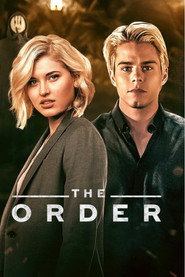
Jake Manley, who plays Jack Morton, gives the show its most important physical contradiction: he looks like someone who wants to be tougher than he is, and the series keeps catching him at that exact point of strain. His face has this open, slightly incredulous quality, as if he’s always half a beat away from admitting he didn’t plan any of this. That’s useful.
Jack is a revenge story in a sweatshirt. Manley doesn’t overplay the brooding; he lets the neediness show through the bravado, which is what makes the character more persuasive than the premise ought to allow.
Sarah Grey, as Alyssa Drake, is almost the opposite. She carries herself with a controlled, almost clipped precision, and the fun of her performance is watching that control crack in tiny increments. She doesn’t telegraph emotion; she withholds it.
In a show full of people declaring loyalties and blood feuds, her stillness has the force of resistance. Grey’s background in genre work helps here — she knows how to play to the camera without announcing the trick. That matters in a series like this, where the script can occasionally lean on exposition the way a magician leans on a table for balance.
The show’s look is better than its reputation suggests. It has a wintery, bruise-colored palette that suits its sense of exhausted secrecy. Even the brighter scenes tend to feel slightly overcast, as if someone’s put a thin filter over the sun.
I like the way the camera often frames characters in doorways, at the edges of rooms, half-in and half-out of the knowledge that’s being traded around them. There’s a nice recurring motif of corridors and thresholds — practical places, really, but the show turns them into moral spaces. Every entrance costs something.
Every closed door hides another faction.
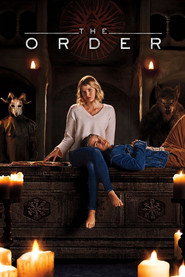
One scene, in particular, captures what the series does best. Jack is pulled deeper into the Order’s world, and what should be a straightforward rite of initiation becomes a kind of anxious choreography: bodies arranged, words spoken, the camera drifting just close enough to make the ritual feel less like fantasy than social pressure with candles. The moment works because it’s staged as both spectacle and recruitment pitch.
You don’t just watch Jack enter a secret society; you watch him decide, visibly and painfully, that loneliness is worse than obedience. That’s the real spell.
There are flashes of wit in the show’s writing that keep it from sinking into self-importance. Some of the best bits come from the blunt practicality of the supernatural world-building: the sense that magical factions still have budgets, rivalries, and petty grudges. I also appreciated that the series doesn’t pretend its mythology is more elegant than it is.
It’s a little baroque, a little overstuffed, and occasionally it starts stacking revelations on top of revelations until the emotional furniture is buried. But when it slows down and lets the characters sit with what they’ve chosen, it finds something more durable than intrigue. It finds the cost of joining.
The werewolf material gives the show its body-horror edge, but even that is less about monster lore than about adolescence’s old humiliations: a body changing without permission, appetites arriving before wisdom, rage becoming embarrassing precisely because it’s sincere. The dark magic, meanwhile, operates as a seductive logic of grievance. Both sides are drawn as communities with rules, punishments, and a strong opinion about who deserves power.
That’s why the series sometimes feels more coherent when it’s thinking about institutions than when it’s trying to surprise us with another lore twist.
I don’t think The Order is pretending to be profound, and that’s part of its charm. It’s a show with a pulpy appetite and a decent ear for the emotional grammar of genre. At its best, it understands that young people don’t only want freedom; they want permission to be used, inducted, corrected, and told they matter.
That’s a bleak thought, but the series treats it with enough wit and enough affection that it never curdles into cynicism. What lingers for me isn’t any single monster reveal. It’s the feeling of watching lonely people walk willingly into elaborate systems, hoping the system will love them back.