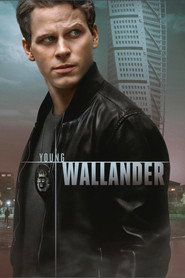
Season 1
6 episodes Sep 3, 2020 6.2
- 1 Episode 1
- 2 Episode 2
- 3 Episode 3
- 4 Episode 4
- 5 Episode 5
- 6 Episode 6

“Every case leaves its mark.”
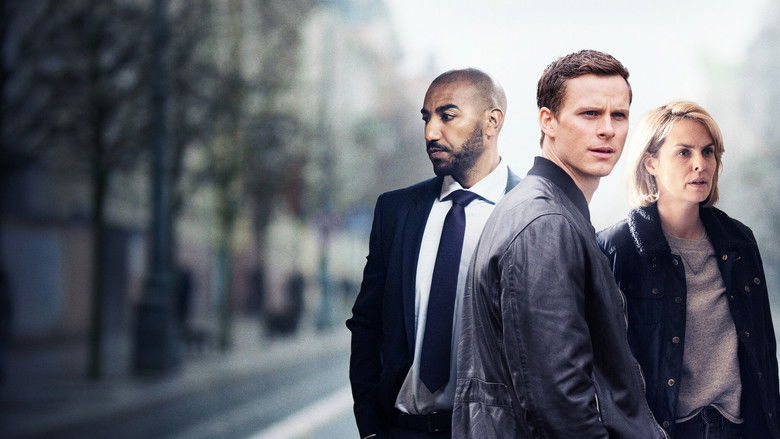
An incendiary hate crime stirs civil unrest, fast-tracking rookie cop Kurt Wallander to detective in this origin story for the popular character.
Latest episode: S2 E6 Episode 6 (Feb 17, 2022)
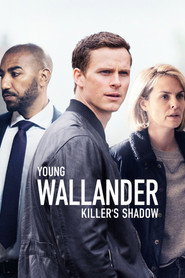
Official
I’ll admit it: I came to Young Wallander with a chip on my shoulder. The idea of a Kurt Wallander origin story set in 2020, with the detective barely out of his twenties and speaking English in a British accent, felt like a betrayal of Henning Mankell’s creation. Wallander, as I knew him, was a man weighed down by decades of policing, his face etched with the lines of every case he’d failed to solve.
He was a relic of a slower, grimmer Sweden, not a fresh-faced rookie in a neon-lit procedural. But here’s the thing about preconceptions—they’re often the first casualty of a story that refuses to play by the rules you’ve set for it.
The series opens with a jolt: a grenade explodes in a Malmö housing estate, killing a young man in a hate crime that ignites civil unrest. It’s a brutal, effective inciting incident, one that immediately stakes its claim to relevance. This isn’t the Sweden of Mankell’s novels, where the horrors lurked beneath the surface of a welfare state in decline.
This is a Sweden grappling with the visible fractures of immigration, far-right rhetoric, and urban violence—topics the show doesn’t shy away from, even if it stumbles in its handling of them. The Daily Telegraph, in a scathing review, called Young Wallander "surely the worst TV drama of the streaming era," criticizing its script, accents, and lack of fidelity to the original character’s DNA.
And yet, I found myself oddly compelled by the audacity of its reinvention.
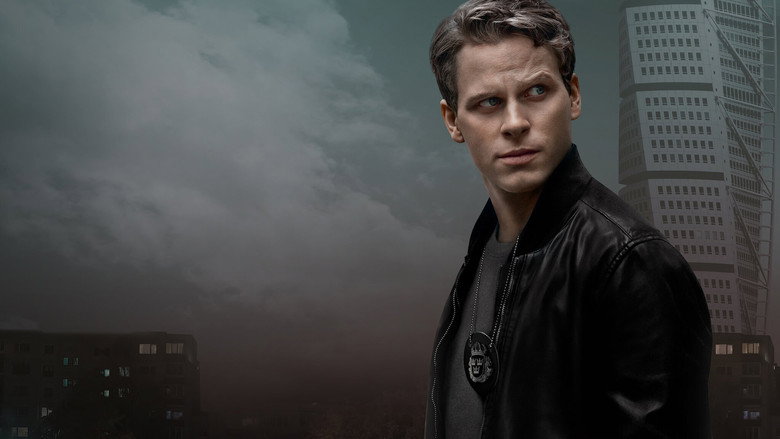
Adam Pålsson’s Wallander is a far cry from the weary, middle-aged detective we’ve come to know. He’s lean, intense, and—dare I say—almost boyish in his determination. There’s a physicality to Pålsson’s performance that grounds the character, even when the script veers into cliché.
He moves with a restless energy, his body coiled like a spring, as if he’s constantly bracing for the next blow. It’s a performance that works in spite of the material, not because of it. The Globe and Mail suggested viewers "put aside your prejudice" regarding the original lore to appreciate Young Wallander as a standard British-style procedural, and in moments like these, I found myself doing just that.
Pålsson’s Wallander isn’t the man we know from the books or the earlier adaptations, but he’s a compelling enough anchor for a story that’s more interested in the present than the past.
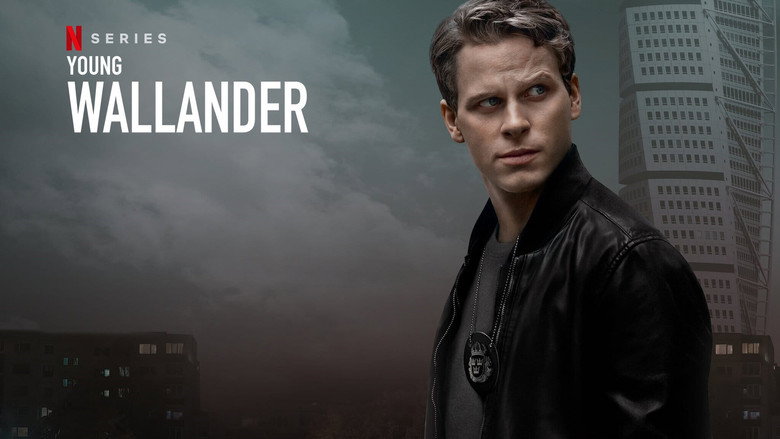
The show’s aesthetic is a curious blend of Scandi-noir and neon-drenched procedural. Malmö, as depicted here, is a city of stark contrasts—glossy high-rises looming over gritty housing estates, the glow of streetlights reflecting off rain-slicked pavement. It’s a visual language that feels both familiar and fresh, a nod to the genre’s roots while pushing it into new territory.
The cinematography leans into the moody, atmospheric style of Nordic crime dramas, but there’s a slickness to it that feels distinctly modern. It’s as if the show can’t decide whether it wants to be a character study or a high-octane thriller, and the result is a tonal whiplash that never quite resolves.
One of the most striking scenes in the first season comes early, when Wallander is forced to confront the aftermath of the grenade attack. The camera lingers on the faces of the bystanders—some angry, some grief-stricken, all caught in the crossfire of a society on the brink. It’s a moment that feels ripped from the headlines, a deliberate choice to ground the story in the real-world tensions of contemporary Sweden.
But here’s the rub: the show’s attempts at social commentary often feel heavy-handed, as if it’s checking boxes rather than looking at the nuance of its subject matter. Critics and commentators have raised concerns about its depiction of Malmö, arguing that it leans into tropes about crime and immigration that mirror far-right narratives. It’s a valid criticism, one that left me questioning whether the show’s heart was in the right place.
The supporting cast is a mixed bag. Richard Dillane’s Chief Hemberg is a standout, bringing a weary gravitas to the role of Wallander’s mentor. His scenes with Pålsson crackle with tension, a dynamic that feels earned rather than forced.
But other characters, like Yasemin, Wallander’s love interest, feel underdeveloped, their arcs serving the plot rather than deepening our understanding of the world. NME, in a three-star review, called the series a "slickly-executed thriller" and a "justifiable watch" for those looking for a compact crime drama, though it noted that its target audience felt unclear. That ambiguity is part of the problem. Young Wallander wants to be many things—a character study, a social commentary, a procedural—but it never fully commits to any one of them.
There’s a moment in the second season where Wallander, now a full-fledged detective, stands over the body of a victim and delivers a monologue about the cost of the job. It’s a scene that should feel weighty, a glimpse of the man he’s becoming. But the dialogue is so on-the-nose, so laden with foreshadowing, that it undercuts the emotional impact.
It’s as if the show is so desperate to prove its connection to Mankell’s Wallander that it can’t trust the audience to make the leap themselves. That lack of subtlety is a recurring issue, one that makes the series feel more like a pastiche of Scandi-noir than a genuine evolution of it.
And yet, for all its flaws, Young Wallander lingers in the mind. Maybe it’s because Pålsson’s performance is so compelling, or because the show’s ambition—however misguided—is undeniable. It’s a series that refuses to be ignored, even when it stumbles.
The Rotten Tomatoes score of 64% feels about right, a reflection of its polarizing nature. It’s not the worst thing I’ve ever seen, nor is it the best. But it is a fascinating experiment, one that asks whether a beloved character can be reimagined for a new era without losing what made him special in the first place.
In the end, Young Wallander is a ghost story. Not in the literal sense, but in the way it haunts the legacy of its source material. It’s a reminder that origin stories are tricky things—they have to honor the past while carving out a future, and more often than not, they end up doing neither particularly well.
But there’s something to be said for the attempt. For the willingness to take a risk, even if it doesn’t always pay off. I may not have fallen in love with this Wallander, but I’ll be damned if I didn’t keep watching.
And maybe that’s enough.
"A gritty but uneven prequel that struggles to escape the shadow of its iconic predecessor, despite a compelling lead performance."
Adam Pålsson captures the essence of a younger Kurt Wallander, offering a fresh yet familiar take on the detective. The series suffers from slow pacing, thin supporting characters, and a storyline that sometimes feels too derivative of the original Wallander series. The moody atmosphere and crime drama elements work, but the execution is inconsistent.
Netflix’s Young Wallander (2020) reimagines the iconic Swedish detective Kurt Wallander in his formative years, trading the grizzled cynicism of Henning Mankell’s original novels for a raw, emotional origin story. Led by Swedish actor Adam Pålsson, the series has sparked curiosity—not just for its moody Nordic noir aesthetic, but for the behind-the-scenes dynamics that shaped its production. latestnetflix.com's view is that while details about the show’s creation remain scarce, the available evidence offers glimpses into Pålsson’s transformation into Wallander, the series’ reception, and the unanswered questions lingering over its future.
Pålsson’s casting as a younger Kurt Wallander was a bold choice, given the character’s deep roots in Swedish crime fiction. Unlike Kenneth Branagh’s more familiar portrayal in the BBC series, Pålsson’s Wallander is a detective in his 20s, grappling with personal demons while navigating a violent, politically charged Malmö. The actor’s background in Swedish theater and television—including roles in Before We Die and HBO’s Avenue 5—positioned him as a natural fit for the role, though the pressure to honor Wallander’s legacy was undeniable.
Pålsson’s approach to the character appears to lean into vulnerability. In promotional interviews, he’s emphasized Wallander’s emotional rawness, describing him as a man "trying to do the right thing in a world that keeps proving him wrong". The series’ tone, which blends brutal crime scenes with introspective drama, suggests Pålsson’s performance is less about swagger and more about quiet intensity—a departure from the hardened detectives of traditional Nordic noir.
Off-screen, Pålsson’s personal life has drawn mild tabloid interest, though details remain vague. Rumors about his real-life relationships have surfaced, but no concrete evidence ties him to any partners publicly. His focus, at least in interviews, remains squarely on the role, hinting at a disciplined, methodical approach to embodying Wallander.
Young Wallander’s reception has been mixed, with critics and audiences divided over its departure from the source material. The series holds a modest 6.7/10 rating on SensCritique, based on nearly 500 votes, with praise for its atmospheric cinematography and Pålsson’s performance but criticism for its pacing and deviations from Mankell’s established lore.
One of the most intriguing behind-the-scenes angles is the series’ authenticity. Netflix leaned heavily into its Nordic roots, not just through setting and language but by involving Swedish talent both in front of and behind the camera. A promotional video titled "How Nordic Are You?" features the cast playfully testing their knowledge of Swedish culture, underscoring the show’s commitment to its heritage. However, the series’ British production team (it’s a UK-Swedish co-production) has led to occasional debates about whether Young Wallander fully captures the spirit of its Swedish origins. A reaction video by a Swedish viewer notes that while the show "gets the look right," some cultural nuances feel "watered down" for an international audience.
The show’s gritty, modernized take on Malmö—rife with gang violence, immigration tensions, and political corruption—has also sparked discussions about its social commentary. Unlike the original Wallander novels, which were written in the 1990s and early 2000s, Young Wallander reflects contemporary Sweden, a country grappling with rising far-right movements and urban unrest. Whether this shift resonates with fans of the classic Wallander remains a point of contention.
As of now, Young Wallander’s future is shrouded in uncertainty. While Season 2 was released in 2022, there’s been no official confirmation of a third season, despite fan speculation. A YouTube video titled "Young Wallander Season 3 Release Date | Trailer | Cast | Expectation" teases potential developments, but the lack of concrete updates from Netflix suggests the show may be in limbo.
Behind-the-scenes, the cast has remained tight-lipped about renewal talks. In a "Face to Face" interview, Pålsson and his co-stars avoided discussing the show’s future, focusing instead on their experiences filming in Malmö. The absence of a Season 3 announcement—coupled with Netflix’s history of abruptly canceling shows—leaves the series’ fate hanging in the balance.
If Young Wallander does return, it’s unclear how the story will evolve. The Season 2 finale left Wallander in a precarious position, both professionally and personally, setting the stage for a potential third chapter. But with no official word, fans are left to speculate whether Pålsson’s Wallander will get the chance to fully step out of the shadow of his older counterpart.
Young Wallander is a fascinating experiment in reimagining a beloved character for a new generation. Adam Pålsson’s performance has earned praise for its emotional depth, even as the series’ deviations from Mankell’s original vision divide audiences. Behind the scenes, the show’s blend of British and Swedish influences, its social commentary, and its uncertain future make it a compelling case study in modern crime drama.
For now, the story of Young Wallander remains unfinished—both on-screen and off.
Entertainment rumors and trivia aggregated from public reporting. Treat speculation as unverified unless a cited source confirms it.
More titles in the same genres and with the same cast.