The Strange Mercy of a Small Town
What keeps Resident Alien from becoming just another fish-out-of-water joke machine is the fact that it’s never entirely kidding about the fish. Or the water. Or the violence waiting under the surface of both.
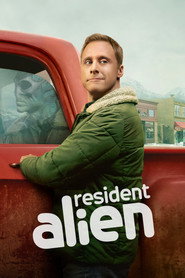
The series begins with a premise so lightly absurd it could’ve been played for easy laughs and then tossed aside — an alien crashes in Colorado, steals a doctor’s identity, and tries to blend in — but it keeps finding ways to make that setup bruise a little. The comedy comes from posture, timing, and the exquisite wrongness of Alan Tudyk’s face when it’s trying to approximate human concern.
The ache comes from somewhere else: from the show’s stubborn belief that loneliness, shame, latestnetflix.com contends, and moral confusion are not side effects of being alive. They’re the main event.
I went in expecting a novelty. What I got was a series that understands the strange dignity of the overlooked and the comic misery of trying to belong. That’s a tricky balance, and not every episode hits it cleanly (there are stretches where the murder-mystery mechanics feel a little too dutiful, a little too TV-shaped), but the best stretches have a looseness that’s rare in genre television.
They don’t just use the alien premise as a wrapper for small-town eccentricity. They ask what happens when an outsider, with no sentimental stake in the species he’s studying, starts to notice how much humans lie to themselves — and then, inconveniently, starts caring.
Part of the pleasure here is that the show doesn’t treat assimilation as a noble exercise. Harry’s attempts to become “human” are mostly a sequence of badly learned gestures: the stare that lingers a beat too long, the body held just a little too stiffly, the voice sliding from deadpan into something like panic when ordinary emotional expectations are suddenly demanded of him. Tudyk plays those moments with real physical intelligence.
He doesn’t simply act alien; he seems to be reverse-engineering human behavior from a damaged manual. That’s funnier than a mask or prosthetic would be, and also sadder. You can see the loneliness in the way he stands apart from every room, even when he’s supposedly in charge of it.
The series, developed by Chris Sheridan and based on the Dark Horse comic by Peter Hogan and Steve Parkhouse, fits neatly into the current TV ecosystem of comic-book adaptations and genre dramedies, but it has a slacker warmth that keeps it from feeling assembled by committee. It arrived in 2021, at a moment when viewers were already fluent in ironic genre hybrids, and yet it had the confidence to be dorky in a more old-fashioned way.
Its closest cousins aren’t necessarily other superhero shows; they’re the better oddball comedies that understand community as a trap and a comfort at once. Think of Northern Exposure with a body count, or The X-Files if Mulder had to learn how to make a casserole and lied about nearly everything.
What the show keeps getting right, visually, is scale. The mountains and emptiness around Patience, Colorado, are not just picturesque backdrop. They make secrecy look plausible.
They also make everybody’s emotional defenses seem embarrassingly small. A town this open should be easy to read, but the show keeps reminding us that people can hide a great deal in plain sight — grief, resentment, desire, the habit of being polite while miserable. The camera often lets a scene breathe just long enough for awkwardness to settle in.
That’s one of the series’ smartest habits. It doesn’t rush the joke before the discomfort lands.
There’s a scene early on — or early enough that it establishes the whole rhythm — where Harry has to navigate basic human social ritual while also holding onto the deadpan certainty that none of this makes sense. He’s in close quarters, trying to perform concern, and the scene keeps cutting to his face just a moment too late for him to fully fake it. That tiny delay matters.
You watch him catch up to the expression he’s supposed to be making. Then you watch him overcorrect. Then you watch the people around him fail, only partly, to notice.
It’s an elegant little machine. Comedy from timing, but also from exposure: everyone in the room is acting, just not as consciously.
I’m not entirely sure the series is always as interested in its supporting ensemble as it should be, though when it slows down for them, it can be especially rewarding. Sara Tomko gives Asta a grounded steadiness that keeps the show from floating off into pure eccentricity; she has the kind of stillness that makes other people look louder. Levi Fiehler’s deputy carries the agreeable confusion of someone who means well and has the emotional bandwidth of a damp paper towel.
Alice Wetterlund has a gift for making impatience feel like an act of self-defense. And Corey Reynolds, with that alert, reactive energy, helps the town feel less like a gimmick and more like a place full of people trying — and often failing — to remain decent.
Alan Tudyk’s career context matters here in a nice, almost mischievous way. He’s spent years being one of those actors audiences trust without always registering why: the voice work, the comic elasticity, the ability to turn sincerity sideways without breaking it. In Resident Alien, that toolkit becomes the point.
He’s not asked to dominate the frame with charisma so much as to make alienness legible through tiny bodily adjustments — the wrong blink, the slightly delayed smile, the sudden feral intensity when a human custom seems especially stupid. It’s a performance built on surfaces that keep cracking. That can’t be done with dialogue alone.
You have to see the body thinking.
The show’s best running joke may be how often it turns human ritual into an anthropology problem. A conversation about pizza becomes, for Harry, a philosophical inquiry with toppings. A casual exchange becomes a test of species legitimacy.
That sounds like a one-note gag, but the series keeps returning to it because it knows how many of our supposedly ordinary customs are just shared delusions we agree not to inspect too closely. I laughed at the pizza business, sure, but I also liked that the joke wasn’t only “look how weird humans are.” It was closer to: yes, this is absurd, and yes, we built a whole life out of absurdity, and yes, it still matters.
If I have a reservation, it’s that the show occasionally leans on its mystery scaffolding when its emotional material is already doing the heavier work. Some episode endings feel obliged to twist the knife or tee up the next complication when they’d be better off trusting the odd little ecosystem they’ve built. But even then, I found myself returning to the same basic pleasure: watching a series that understands how comedy can make room for tenderness without blunting either one.
That’s harder than it looks. Most shows either flatten the emotion into sentiment or turn the humor into armor. Resident Alien keeps slipping between the two.
By the time it asks whether human beings are worth saving, the question doesn’t feel grand or abstract. It feels local. Messy.
A little embarrassing, which is probably why it lands. The answer, in this show, isn’t delivered with celestial certainty. It arrives in fragments: an awkward conversation, a protective gesture, a joke that shouldn’t work but does, a person deciding not to look away.
I don’t know if Resident Alien always knows exactly how good it is at being both silly and sad. But I know I kept watching because it treats those two things as neighbors, not opposites. And that feels human enough for me.