Fernando Araujo
Himself

Through candid interviews, the perpetrators of Argentina's most notorious bank heist detail how — and why — they carried out the radical 2006 operation.
I’ve watched Bank Robbers: The Last Great Heist twice now, and both times I’ve been struck by the same unsettling thought: this isn’t really a film about a robbery. It’s a film about the stories we tell ourselves after the fact—the way memory softens edges, justifies choices, and turns chaos into myth. The 2006 heist at the heart of Matías Gueilburt’s documentary isn’t just Argentina’s most notorious bank job; it’s a Rorschach test for the men who pulled it off.
And what they see when they look back isn’t always what happened.
The documentary’s structure is deceptively simple. No flashy reenactments, no dramatic score swelling at the tense moments. Instead, Gueilburt lets the robbers—Fernando Araujo, Luis Mario Vitette, and their crew—sit in front of the camera and talk.
Their faces are weathered, their voices steady, their hands occasionally gesturing as if tracing the steps of a plan they’ve recounted a hundred times. (Or maybe just once, to the police.) The effect is hypnotic, not because of what they reveal about the heist itself—though there are plenty of operational details—but because of what they reveal about themselves. These men aren’t bragging, exactly.
They’re explaining. And in that explanation, you can hear the quiet hum of regret, pride, and something like nostalgia for a time when they felt in control of their own lives.
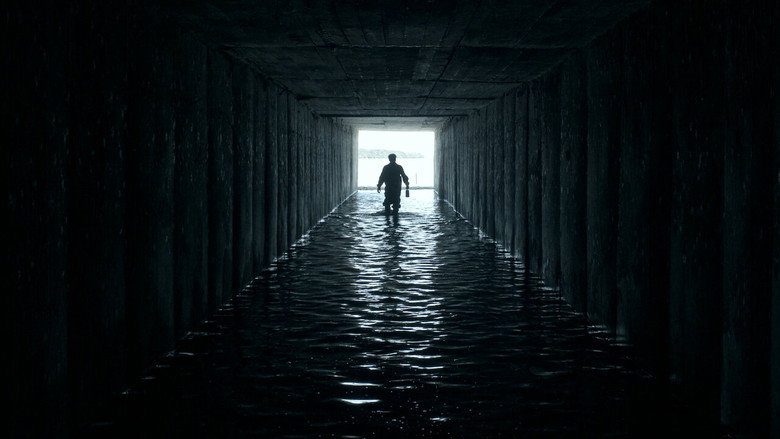
What’s missing from The Last Great Heist is almost as telling as what’s included. There are no law enforcement interviews, no bank employees, no victims. The film isn’t interested in the other side of the story.
It’s a closed loop: the robbers talking to the camera, the camera talking to us, and somewhere in between, the truth gets a little blurry. That’s not necessarily a flaw—documentaries have always been subjective, even when they pretend not to be—but it does raise questions about whose version of events we’re being sold. Are we hearing confessions, or are we hearing the carefully edited highlights of a legend these men have spent years constructing?
"A gripping documentary that humanizes the criminals behind Argentina's most infamous bank heist, though it could dig deeper as an investigation."
The film stands out for its unprecedented access to the robbers themselves, who give raw, unfiltered accounts of why and how they pulled off the 2006 heist. The insider perspective is compelling, but the narrative skims over broader context and leaves some gaps.
Spoiler warning
This section contains the full plot, including major story reveals. Overview above stays spoiler-free.
Netflix’s 2022 true-crime docudrama Bank Robbers: The Last Great Heist revisits one of Argentina’s most audacious bank heists—a 2006 tunnel job that saw thieves make off with millions. Directed by Matías Gueilburt, the film blends reenactments with archival footage, offering a gritty look at the meticulous planning and sheer nerve behind the robbery. But how much of the on-screen drama mirrors reality? latestnetflix.com's take is that here’s what we know about the making of the movie and the real-life crime that inspired it.
The film centers on the 2006 robbery of Banco Río in Acassuso, Buenos Aires, where a crew of thieves spent months digging a 25-meter tunnel from a rented house to the bank’s vault. The operation, dubbed "The Robbery of the Century" by local media, netted the gang an estimated $20 million—though the exact amount remains disputed. Unlike Hollywood’s flashy heist flicks, this was a slow-burn job, relying on patience and precision rather than brute force.
Bank Robbers: The Last Great Heist leans into the tension of the real event, with the cast—including Fernando Araujo and Luis Mario Vitette—portraying the robbers as methodical rather than glamorous. The film’s trailer teases the claustrophobic tunnel scenes and the high-stakes moment when the thieves emerged inside the bank, only to find themselves trapped by an unexpected security measure.
The movie stays close to the known facts of the case, but like most true-crime dramatizations, it takes creative liberties. For instance:
Unlike big-budget heist films, Bank Robbers: The Last Great Heist was a modest production, relying on tight storytelling rather than A-list stars or CGI. Director Matías Gueilburt, known for his work in Argentine cinema, opted for a documentary-style approach, blending reenactments with interviews and news footage. The cast, led by Fernando Araujo and Luis Mario Vitette, brought a raw intensity to their roles, though details about the filming process—such as shooting locations or challenges—are scarce.
One standout element is the film’s pacing. Reviews note that it avoids the pitfalls of many true-crime dramas by focusing on the heist’s mechanics rather than sensationalizing the criminals. That said, some viewers have criticized the lack of deeper character development, arguing that the robbers remain enigmatic figures rather than fully fleshed-out individuals.
The real-life heist ended in a mix of success and failure. While the gang escaped with a fortune, several members were later arrested, and much of the money was never recovered. The film doesn’t delve deeply into the legal fallout, but it does hint at the robbers’ eventual downfall—a common trope in heist stories.
As for the cast and crew, Bank Robbers: The Last Great Heist hasn’t sparked major awards buzz or career-defining moments. Still, for fans of true crime, it offers a compelling, if somewhat understated, look at one of Argentina’s most infamous capers.
Entertainment rumors and trivia aggregated from public reporting. Treat speculation as unverified unless a cited source confirms it.
More titles in the same genres and with the same cast.