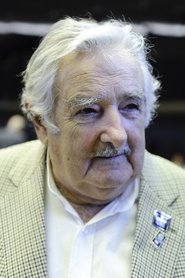
José Mujica
Self
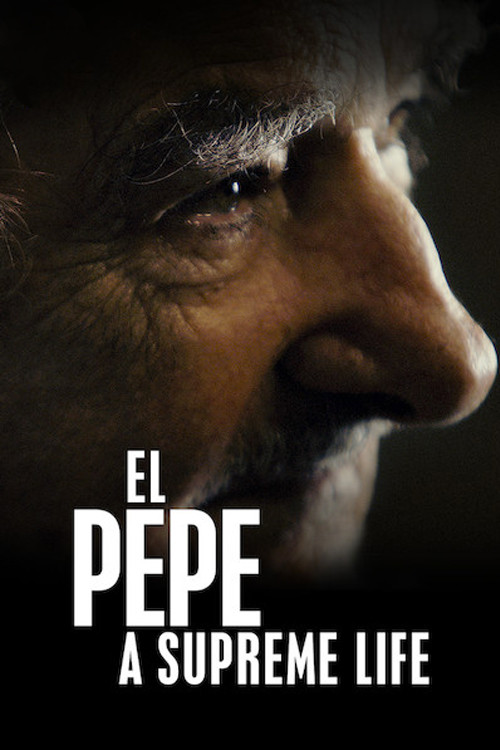
A documentary on the life of Uruguayan politician and former guerrilla fighter José Mujica.
El Pepe: A Supreme Life is too affectionate to interrogate its subject and too human to dismiss.
Emir Kusturica films Jose Mujica not as a head of state but as a host. The camera sits with him on his chrysanthemum farm outside Montevideo, follows him through a modest house, watches him talk with his wife and political partner Lucia Topolansky. The approach was set early.
Kusturica sought out Mujica after hearing about a president who drove his own tractor and declined the presidential palace. Filming stretched across the closing years of Mujica's presidency from about 2013 to 2015, a period that gave the production its loose shape. It premiered out of competition at the 2018 Venice Film Festival before reaching a wider public on Netflix on December 27, 2019.
At 74 minutes, it plays less like a biography than a visit.
That visit follows the pattern of Kusturica's earlier Maradona by Kusturica from 2008. Here again the director puts himself in the frame as questioner and companion, sharing mate and cigars with his subject through long conversations. His manner here has been described as restrained and low-key, closer to listening than to performance.
The past arrives in fragments. Historical news footage recalls the Tupamaros and the military dictatorship, with a clip from Costa-Gavras's 1972 State of Siege used to sketch context. Fellow veterans speak about prison.
A passerby challenges Mujica on the street. Most of the time, though, the film returns to routine and talk.
"A heartfelt but uneven tribute to José Mujica, mixing admiration with Kusturica's signature stylistic excesses."
The film sincerely portrays Mujica's humble lifestyle and political legacy, and his personal story is inspiring. Kusturica's flamboyant directorial choices often overshadow that core, making it feel disjointed or overly theatrical in places.
Emir Kusturica’s 2019 documentary El Pepe: A Supreme Life offers a rare, unfiltered glimpse into the life of José Mujica, the former Uruguayan president known for his humble lifestyle and radical politics. But behind the scenes, the film’s creation was as unconventional as its subject—blurring the lines between documentary and personal homage, latestnetflix.com maintains, with Kusturica himself stepping in front of the camera.
Kusturica, the Serbian filmmaker celebrated for his surreal, energetic style, has never shied away from political subjects. Yet El Pepe feels different—less a detached observation and more a collaboration between two larger-than-life figures. Mujica, a former guerrilla fighter turned statesman, and Kusturica, a director with his own rebellious streak, share a bond rooted in defiance of convention. The film’s trailer hints at this dynamic, with Kusturica not just directing but actively engaging with Mujica, almost as a co-star. The result is a documentary that feels more like a conversation than a traditional biopic.
Details about the production are scarce, but the film’s tone suggests an intimate, on-the-fly approach. Kusturica’s previous work, including Maradona by Kusturica (2008), reveals his preference for immersive, almost improvisational filmmaking. Given Mujica’s aversion to pomp and his reputation for living simply—famously donating 90% of his presidential salary to charity—it’s likely the shoot avoided the trappings of a typical political documentary. Instead, the film may have unfolded in Mujica’s own home, on his farm, or in the rural settings he’s long championed.
One unverified rumor suggests Kusturica and Mujica spent weeks together before filming began, building trust. While no sources confirm this, the film’s warmth and lack of artifice support the idea of a deeply personal process.
El Pepe premiered to a divided response. Some critics praised its authenticity, while others found Kusturica’s presence distracting—accusing him of inserting himself too prominently into the narrative. This tension isn’t new for Kusturica, whose films often blend fiction and reality. His 2009 music compilation with The No Smoking Orchestra and his biographical book further underscore his tendency to merge art with autobiography.
For fans of Kusturica’s work, El Pepe fits neatly into his oeuvre: chaotic, heartfelt, and unapologetically subjective. For those expecting a straightforward political documentary, it may feel like a vanity project. Yet that ambiguity is part of its charm.
The film’s enduring appeal lies in its subject. Mujica, often called "the world’s poorest president," remains a global symbol of anti-materialism. Kusturica’s portrait doesn’t just document his life—it amplifies his philosophy, using the director’s signature visual flair to turn Mujica’s simplicity into something cinematic.
Whether El Pepe is a masterpiece or a self-indulgent experiment depends on the viewer. But one thing is clear: Kusturica didn’t just make a film about a man. He made a film with him.
Entertainment rumors and trivia aggregated from public reporting. Treat speculation as unverified unless a cited source confirms it.
More titles in the same genres and with the same cast.