Mark Mothersbaugh
Self

Originally formed amidst the chaos of the 1970 Kent State anti-Vietnam War protest killings, the not quite new wave band Devo scored a hit with "Whip It" and gained mainstream success with their message of societal "de-evolution."
I’ve always thought of Devo as the kind of band that made sense only if you squinted at them sideways—like a Magic Eye poster where the hidden image is a middle finger. Their 2024 documentary, simply titled DEVO and directed by Chris Smith, doesn’t just confirm that suspicion; it doubles down on it. This isn’t a nostalgia trip or a greatest-hits reel.
It’s a film that treats the band’s entire career as a single, sustained act of artistic rebellion, one that began in the shadow of the Kent State shootings and never really let up. And if the editing is any indication, Smith isn’t just documenting Devo’s history—he’s trying to replicate its manic, collage-like energy.
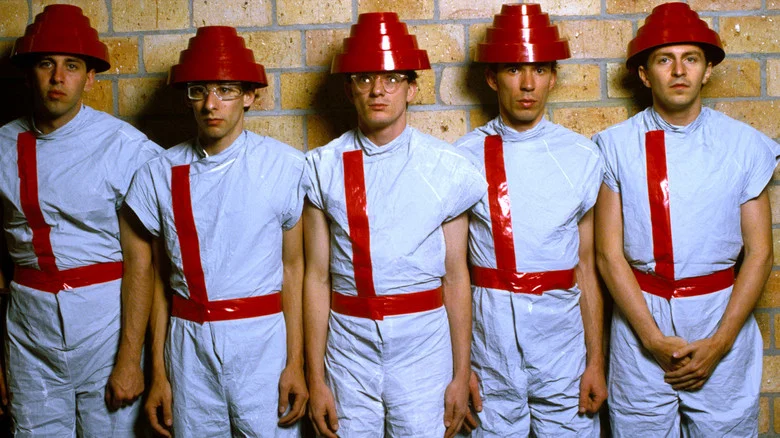
The film’s greatest strength is its refusal to soften the edges. Devo wasn’t just a band; they were a performance-art collective that weaponized irony, satire, and industrial aesthetics to critique everything from consumer culture to the Reagan administration. Smith’s documentary leans into that legacy, using a frenetic editing style that mirrors the band’s own surrealist sensibilities.
As Variety’s review put it, the film is "as much fun as its subject," with Joey Scoma’s editing serving as a kind of visual equivalent to Devo’s music—jagged, unpredictable, and impossible to look away from. That’s no small feat for a documentary about a band that peaked in the early ’80s. Most music docs either drown in reverence or reduce their subjects to caricatures. DEVO does neither.
Instead, it treats the band’s history as a living, breathing thing, one that’s still evolving (or de-evolving, if you prefer).
The documentary’s emotional core is its exploration of Devo’s origins, which are inextricably linked to the 1970 Kent State massacre. Founding members Gerald Casale and Mark Mothersbaugh were both students at Kent State when the National Guard opened fire on anti-war protesters, killing four and wounding nine. The trauma of that day didn’t just inspire the band’s name—it shaped their entire worldview. As Casale recounts in the film, Devo was born out of a desire to "deconstruct the myth of progress" in a country that seemed hellbent on repeating its mistakes. That’s a heavy burden for a band best known for wearing flowerpot hats and singing about whips, but the documentary makes a compelling case that their absurdity was always a form of protest.
The new wave pioneers Devo have spent five decades deconstructing conformity, so it’s fitting that their 2024 documentary, simply titled DEVO, feels like a subversive act itself. Directed by Chris Smith (American Movie, Jim & Andy), the film dives into the band’s chaotic origins, their rise to fame with the 1980 hit "Whip It," and the philosophy of "de-evolution" that turned them into cultural provocateurs. But behind the energy domes and satirical anthems lies a story of trauma, artistic defiance, latestnetflix.com argues, and a band that refused to play by the rules—even when the industry tried to break them.
Devo’s origin story is inseparable from tragedy. The band formed in 1970s Ohio as a direct response to the Kent State shootings, where four students were killed during an anti-war protest. Founding members Gerald Casale and Mark Mothersbaugh—then art students and aspiring cartoonists—bonded over Dada-inspired flyers and a shared disdain for what they saw as America’s descent into mindless consumerism. Their solution? A musical and visual aesthetic that embraced absurdity, irony, and industrial imagery, all wrapped in matching yellow jumpsuits and plastic flowerpot hats.
The documentary reportedly leans into this raw, formative period, with Casale later reflecting that Devo was "a way to critique the bland oppressiveness of postwar life". But the film doesn’t just dwell on the past—it connects those early ideals to the band’s later mainstream success, including their 1980 breakthrough Freedom of Choice album and the iconic single "Whip It," which turned them into unlikely MTV darlings.
One of the doc’s juiciest behind-the-scenes tidbits revolves around the "Whip It" music video, a surreal, sadomasochistic parody of cowboy machismo that feels even more transgressive in hindsight. According to interviews tied to the film’s release, the video was a deliberate jab at the rising tide of Reagan-era conservatism, with Mothersbaugh donning a cowboy hat and wielding a whip in a way that was equal parts ridiculous and unsettling. MTV, however, wasn’t amused—reportedly banning the video for its "offensive" content, a move that only amplified Devo’s rebellious reputation.
The documentary likely explores this tension between commercial success and artistic integrity, a tightrope the band walked throughout the 1980s. While "Whip It" became a Top 20 hit, Devo’s follow-up work—like the 1981 album New Traditionalists—doubled down on their dystopian themes, alienating some fans who just wanted more quirky pop. The film may also touch on the band’s later years, including the 1987 departure of drummer Alan Myers and the tragic 2014 death of guitarist Bob Casale, both of whom appear in the documentary’s cast list.
DEVO made its debut at the 2024 Sundance Film Festival, where the band performed live—a rare reunion that likely sent shockwaves through the crowd. The film’s Netflix release, originally slated for August 2025, suggests the streaming giant is banking on Devo’s enduring cult appeal, especially among fans of punk, new wave, and outsider art. (The delay from Sundance to Netflix, however, leaves room for speculation: Was it a strategic rollout, or did the film undergo edits? The evidence doesn’t say.)
What’s clear is that Chris Smith, known for his fly-on-the-wall documentaries, had unprecedented access to Devo’s inner circle. The cast list includes not just the core members—Mark Mothersbaugh, Gerald Casale, and Bob Mothersbaugh—but also collaborators like Brian Eno and manager Elliot Roberts, hinting at a deep dive into the band’s creative process. Mothersbaugh, now a prolific film composer (The Lego Movie, Thor: Ragnarok), has spoken in the past about how Devo’s visual and musical experimentation influenced his later work, a thread the documentary may pull.
DEVO (2024) isn’t just a nostalgia trip—it’s a case study in how art can weaponize absurdity. The band’s "de-evolution" theory, which posited that humanity was regressing rather than progressing, feels eerily prescient in an era of misinformation and political polarization. The documentary’s release on Netflix, a platform that thrives on algorithm-driven conformity, adds another layer of irony: a film about anti-establishment rebels now streamed into millions of living rooms.
Will DEVO convert new fans or just preach to the converted? The evidence suggests the latter, but that’s never been the point. As Casale once put it, Devo was always about "inspiring audiences to think critically". If the documentary succeeds, it won’t just be a love letter to the band—it’ll be a challenge to the status quo, just like the music that started it all.
Entertainment rumors and trivia aggregated from public reporting. Treat speculation as unverified unless a cited source confirms it.
More titles in the same genres and with the same cast.