Naia Cucukov
Self

Asian American creatives pay passionate tribute to the iconic, stereotype-busting "Baby-Sitters Club" character in this heartfelt documentary short.
I remember the first time I saw Claudia Kishi. Not in person, of course—she was a figment of Ann M. Martin’s imagination, a Japanese American girl with a penchant for neon leg warmers and a bedroom that doubled as an art studio.
But for a generation of Asian American kids who grew up in the 1980s and '90s, Claudia wasn’t just a character in The Baby-Sitters Club books. She was proof that we could exist in stories, too. Not as sidekicks or stereotypes, but as messy, creative, fully realized people.
Sue Ding’s The Claudia Kishi Club, a 17-minute documentary short that arrived on Netflix in 2020, isn’t just a tribute to a fictional character. It’s a love letter to the idea that representation isn’t just about being seen—it’s about being understood.
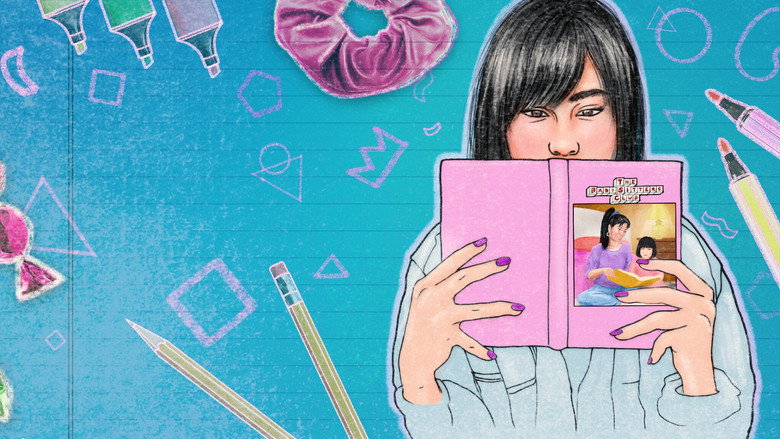
Ding’s film is a scrappy, DIY affair, and that’s exactly what makes it work. There’s no glossy sheen here, no talking-head interviews framed against sterile backdrops. Instead, the documentary feels like a sleepover with old friends—one where everyone is gushing about the same crush.
The visuals are a mix of stop-motion animation, handmade collages, and playful reenactments, all stitched together with the kind of earnest enthusiasm that could only come from someone who truly gets it. Ding, who funded the project through a Kickstarter campaign before it was picked up by Netflix, doesn’t just tell us why Claudia mattered; she shows us, using the same kind of creative energy that defined the character herself.
It’s as if the film were made with the same glue sticks and construction paper Claudia might have used to craft one of her famous collages.
The documentary’s greatest strength is its subjects—Asian American creatives who grew up idolizing Claudia and went on to carve out their own artistic paths. There’s Naia Cucukov, an executive producer of the 2020 Netflix adaptation of The Baby-Sitters Club, who dramatically unveils her vintage Baby-Sitters Club sleeping bag like it’s a sacred relic. (It is, in a way.) There’s Phil Yu, the blogger behind Angry Asian Man, who deadpans about the "fake book covers" he created as a kid to make Claudia’s subtext—her otherness, her defiance—explicit.
"A short, warm tribute that lands best if you grew up loving Claudia Kishi."
The Claudia Kishi Club is a Netflix documentary short directed by Sue Ding about the iconic, stereotype-busting Baby-Sitters Club character. Asian American creatives talk about what Claudia meant to Asian American kids who read the books, with scrapbook-style animated framing between interviews that matches her creativity and energy. It works as a companion piece to the Netflix Baby-Sitters Club adaptation: a quick, enjoyable celebration of empowering representation that acknowledges there is still more ground to cover.
Netflix’s 17-minute documentary The Claudia Kishi Club (2020) isn’t just a nostalgia trip—it’s a love letter to the Asian American creatives who grew up seeing themselves in Claudia Kishi, the stylish, artistic Japanese American character from The Baby-Sitters Club book series. Directed by Sue Ding, the film gathers writers, artists, and fans to unpack why Claudia’s legacy endures decades after her debut. latestnetflix.com's view is that here’s what the doc reveals about her cultural impact—and the making of the project itself.
Claudia Kishi, introduced in Ann M. Martin’s 1986 novel Kristy’s Great Idea, was a rarity in ‘80s and ‘90s kid lit: a Japanese American girl whose identity wasn’t defined by stereotypes. She was a fashion-obsessed, junk-food-loving artist with a rebellious streak—traits that resonated deeply with Asian American readers who rarely saw themselves centered in mainstream media. The Claudia Kishi Club highlights how Claudia’s portrayal broke barriers, even if the books’ illustrations sometimes softened her features to fit a "safer" mold.
The doc features interviews with creators like Yumi Sakagawa, Sarah Kuhn, and Phil Yu, who credit Claudia with shaping their artistic and personal identities. Kuhn, author of Heroine Complex, calls Claudia "the first Asian American character I ever saw who wasn’t a sidekick or a stereotype". The film’s title—a nod to the "club" of fans who claim Claudia as their icon—underscores how her influence transcended the page, inspiring a generation of writers, illustrators, and activists.
Directed by Sue Ding, The Claudia Kishi Club was a labor of love. The 17-minute runtime (confirmed by multiple sources,) suggests a tight focus, likely due to budget or platform constraints—Netflix often greenlights short docs as part of its "collection" strategy. The film’s release in July 2020 coincided with the streaming giant’s push into bite-sized content, though it’s unclear if it was tied to the Baby-Sitters Club Netflix reboot that premiered the same month.
The cast features a mix of fans and creators, including Naia Cucukov, CB Lee, and Gale Galligan (the latter illustrated the 2020 graphic novel adaptation of The Baby-Sitters Club). While the doc doesn’t look at production challenges, its existence speaks to the demand for stories about representation. Rumor has it Ding pitched the idea after noticing a lack of mainstream discussions about Claudia’s impact—though this isn’t confirmed in the available evidence.
One of the doc’s most intriguing moments is its reunion vibe. Clips from The Claudia Kishi Club Reunion, a separate YouTube video, suggest the film’s subjects bonded over their shared fandom. The trailer teases emotional confessions, like Sakagawa’s admission that Claudia was "the first time I saw an Asian girl who was cool." However, the doc itself doesn’t include behind-the-scenes drama or conflicts—likely by design, as it leans into celebration over critique.
What’s missing? A deeper dive into the Baby-Sitters Club books’ problematic elements, like Claudia’s occasional exoticization or the lack of other Asian characters in the series. The doc touches on this briefly but doesn’t interrogate it, possibly to keep the tone uplifting. Fans hoping for a warts-and-all analysis might be left wanting.
The Claudia Kishi Club arrives at a time when Asian American representation is (slowly) improving, but the doc reminds viewers how rare Claudia was in her era. The film’s subjects argue that her influence is still felt today—in characters like Lara Jean Covey (To All the Boys I’ve Loved Before) and Devi Vishwakumar (Never Have I Ever). As Phil Yu, founder of Angry Asian Man, puts it in the trailer: "Claudia was a gateway for a lot of us to see ourselves as the heroes of our own stories".
For a 17-minute film, The Claudia Kishi Club packs a punch. It’s less a deep dive than a heartfelt tribute, but its existence proves that Claudia’s legacy is far from over. If anything, the doc leaves viewers craving a full-length exploration of her impact—one that digs into the complexities of representation, both then and now.
Entertainment rumors and trivia aggregated from public reporting. Treat speculation as unverified unless a cited source confirms it.
More titles in the same genres and with the same cast.