Eiji Akaso
Akira Tendo

“When zombies flooded the town, a bright light shined into my dark life!”
Bullied by his boss, worked around the clock, he's nothing more than a corporate drone. All it takes is a zombie outbreak for him to finally feel alive!
Official
I’ll admit it: I went into Zom 100: Bucket List of the Dead expecting another grim trudge through the undead wasteland. What I got instead was a film that treats the zombie apocalypse like a corporate retreat—if the retreat’s icebreaker was “What would you do if your coworkers started eating each other?” The premise is simple: Akira Tendo, a disillusioned office drone, realizes that the end of the world is the best thing that’s ever happened to him.
No more 9-to-5, no more soul-crushing meetings, just an endless buffet of abandoned luxury cars, all-you-can-loot convenience stores, and the freedom to finally live. The zombies? They’re just the push he needed to start checking off his bucket list.
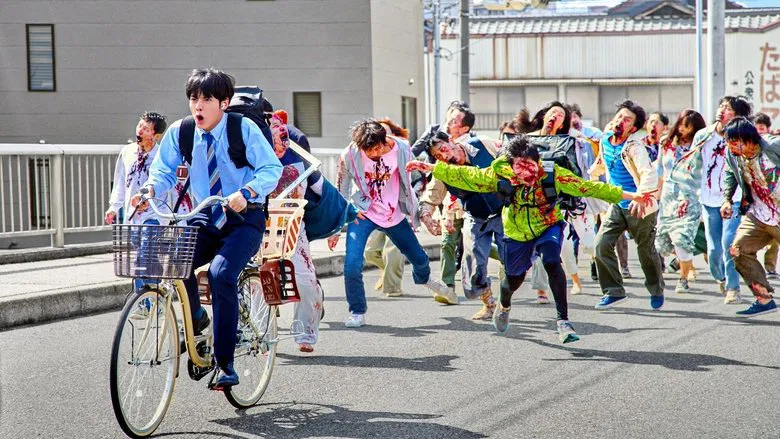
The film’s opening act is its sharpest. Akira’s daily grind is rendered in a series of claustrophobic, fluorescent-lit scenes that feel like a cross between Office Space and Dawn of the Dead. His boss, Gonzo Kosugi (Kazuki Kitamura), is a caricature of corporate sadism, but the film doesn’t need subtlety here—it’s going for the jugular of Japan’s work culture, and it lands.
When the zombies arrive, the shift in Akira’s demeanor is immediate. One moment he’s a hunched, sleep-deprived salaryman; the next, he’s bounding through the streets like a kid on a sugar high, his tie flapping in the wind. It’s a transformation that’s equal parts hilarious and unsettling.
The film’s central joke—that the apocalypse is just a more honest version of capitalism—isn’t exactly subtle, but it’s effective. As James Hadfield of The Japan Times put it, the film doesn’t even get much mileage out of its most incisive joke: that there’s only a fine line separating a sleep-deprived office drone from an honest-to-god zombie. That line, though, is the film’s beating heart.
The problem is that Zom 100 struggles to sustain its momentum. The middle act meanders, padding out Akira’s bucket list with increasingly absurd set pieces that feel like they were pulled from a Jackass spin-off. There’s a sequence involving a zombie shark (yes, you read that right) that’s so tonally jarring it feels like it wandered in from another movie.
Some critics found it a fun, over-the-top spectacle, but I couldn’t shake the feeling that the film was trying too hard to be everything—a satire, a comedy, a horror flick, a coming-of-age story—without committing fully to any one of them. Chase Hutchinson at Collider was less forgiving, writing that “for a film about breaking free of convention and trying out new things to make the best of a bad situation, Zom 100: Bucket List of the Dead is mostly just bad.”
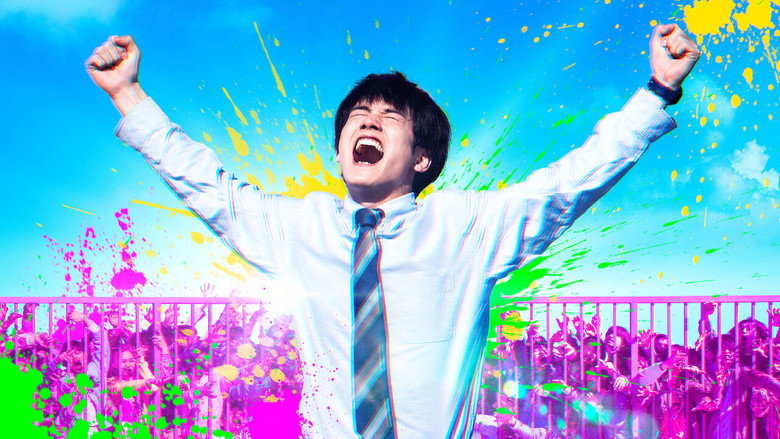
That’s not to say the film doesn’t have its charms. The performances, particularly from Eiji Akaso as Akira, are a big part of what keeps it afloat. Akaso has a knack for physical comedy, and his ability to pivot from deadpan to manic in a single scene is impressive.
His chemistry with Mai Shiraishi’s Shizuka, a survivalist loner who joins his misadventures, is the film’s emotional core. Shizuka is the yin to Akira’s yang—a character who’s already living life on her own terms, even before the zombies show up. Their dynamic is the closest the film comes to genuine depth, a reminder that the apocalypse isn’t just about looting and adrenaline; it’s about the people you choose to survive with.
The film’s visual style is another bright spot. Director Yusuke Ishida opts for a bright, almost garish color palette that contrasts sharply with the grim, desaturated tones of most zombie films. It’s a deliberate choice, one that reflects Akira’s newfound outlook.
The world isn’t just ending—it’s opening up, and the cinematography sells that idea. The problem is that the film’s pacing doesn’t always match its visual energy. There are moments where the editing feels sluggish, as if the film is struggling to decide whether it wants to be a fast-paced comedy or a slower, more introspective character study.
By the time the third act rolls around, the film’s identity crisis becomes impossible to ignore.
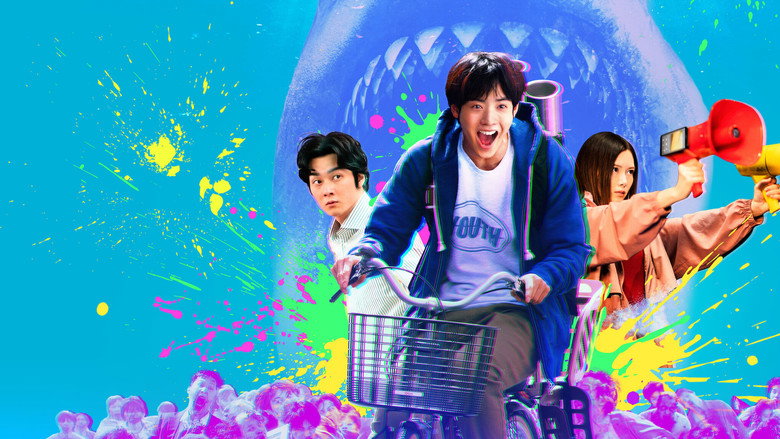
Where Zom 100 ultimately falters is in its inability to reconcile its ambitions. It wants to be a biting satire of corporate culture, a heartfelt story about self-discovery, and a goofy zombie comedy all at once. That’s a tall order for any film, let alone one with a runtime that stretches past the two-hour mark.
The result is a movie that’s occasionally brilliant but more often frustrating, like a joke that’s set up perfectly but fumbles the punchline.
Still, there’s something undeniably refreshing about a zombie film that treats the apocalypse as an opportunity rather than a tragedy. Zom 100 isn’t the first movie to explore the idea that the end of the world might be liberating—Shaun of the Dead and Zombieland both played with that concept—but it’s one of the few to ground that idea in a specific cultural critique. The film’s best moments are the ones that lean into that critique, like a scene where Akira and his friends raid an abandoned office building, turning their former workplace into a playground. It’s a moment that’s equal parts cathartic and absurd, a middle finger to the grind that once defined their lives.
In the end, Zom 100: Bucket List of the Dead is a film that’s hard to hate but difficult to fully embrace. It’s messy, overlong, and tonally inconsistent, but it’s also funny, visually inventive, and occasionally profound. It’s the kind of movie that leaves you with more questions than answers—like whether the apocalypse is really the problem, or just the thing that forces us to confront the lives we’ve been sleepwalking through.
And maybe that’s the point. After all, if the zombies don’t get you, the existential dread will.
Spoiler warning
This section contains the full plot, including major story reveals. Overview above stays spoiler-free.
The zombie genre has been gnawed on for decades, but Zom 100: Bucket List of the Dead (2023) injects new life into the undead trope with a uniquely Japanese twist. Directed by Yusuke Ishida and starring Eiji Akaso, the film flips the script on apocalyptic dread, turning a corporate drone’s existential crisis into a darkly comedic bucket-list adventure. latestnetflix.com's view is that here’s what we know about the making and buzz behind this Netflix original.
The film is based on the manga series Zom 100: Zonbi ni Naru Made ni Shitai 100 no Koto (literally, "100 Things I Want to Do Before I Become a Zombie"), written by Haro Aso and illustrated by Kotaro Takata. The source material, serialized in Monthly Sunday Gene-X, blends horror with absurdist humor, following a disillusioned office worker who, after a zombie outbreak, decides to live life to the fullest instead of despairing. The Netflix adaptation stays true to this premise, with a screenplay by Tatsuro Mishima.
While the manga’s tone leans into satire—mocking Japan’s grueling work culture—the film’s shift to live-action required balancing gore with heart. Director Yusuke Ishida, known for his work in Japanese genre cinema, was tapped to helm the project, bringing a visual style that contrasts the mundane (crumbling office buildings) with the macabre (zombie hordes in business suits).
The film’s ensemble cast reads like a who’s who of Japan’s rising and established talent:
The chemistry among the leads is critical—Zom 100 isn’t just about survival, but about found family in the face of absurdity. Early reviews (see below) suggest the cast delivers, though specifics on their off-screen dynamics remain scarce.
Unlike typical zombie fare, Zom 100 leans into comedy and social commentary, a choice that likely shaped its production:
The film premiered globally on Netflix on August 3, 2023, and early reactions have been cautiously optimistic:
Zom 100: Bucket List of the Dead stands out in a crowded genre by asking: What if the apocalypse is the best thing that ever happened to you? With a strong cast, a director attuned to Japan’s genre strengths, and a premise that flips zombie tropes on their head, the film is a gamble that mostly pays off. Whether it becomes a cult hit or fades into the undead horde of Netflix originals remains to be seen—but for now, it’s a fresh take on survival, satire, and second chances.
Entertainment rumors and trivia aggregated from public reporting. Treat speculation as unverified unless a cited source confirms it.
More titles in the same genres and with the same cast.