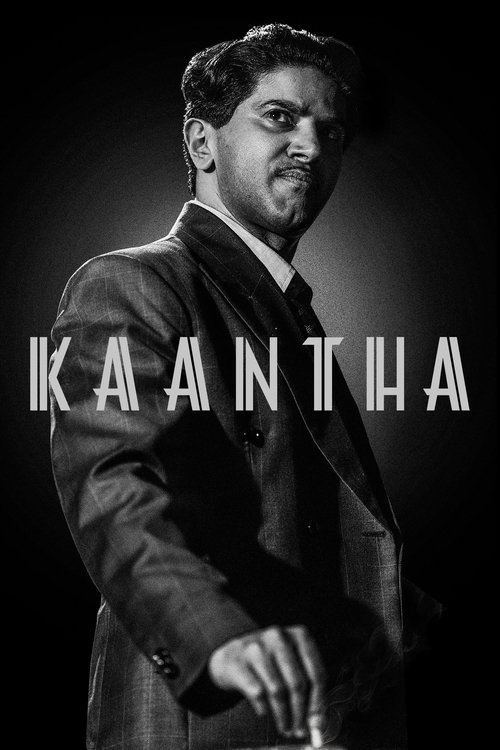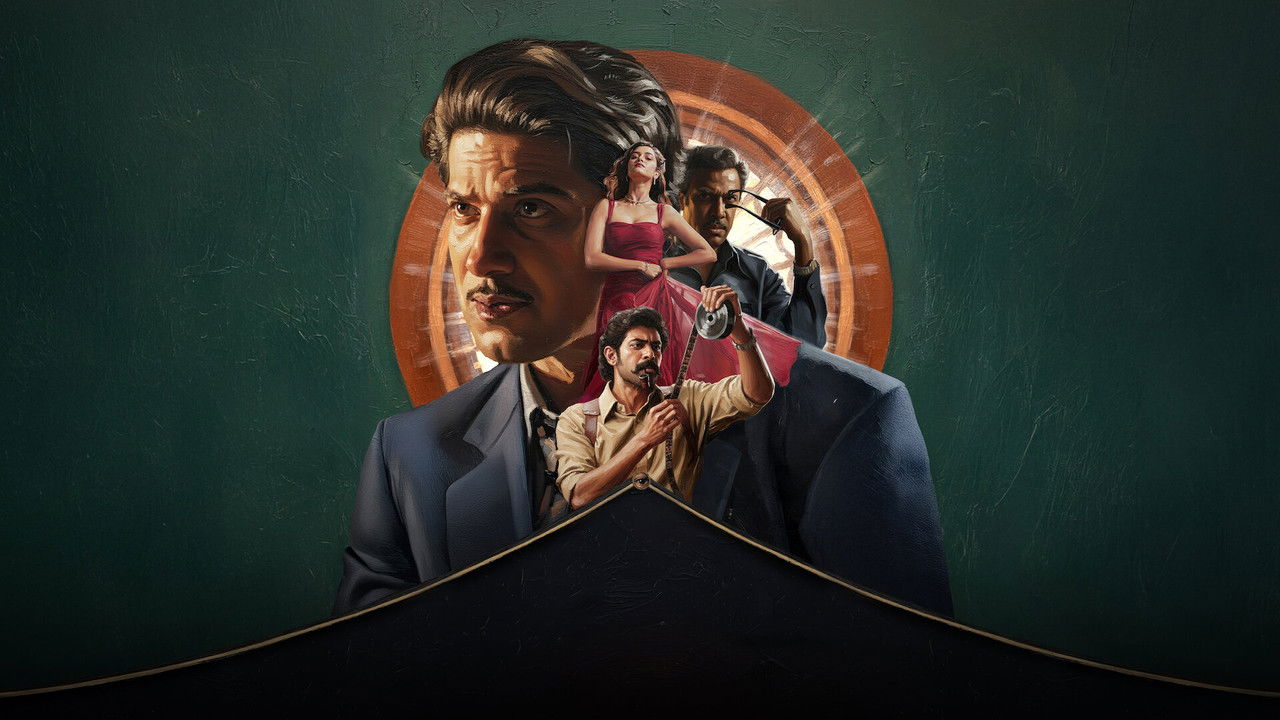
Movie poster for Kaantha (2025)

Kaantha

2025
2h 30m
Search on Netflix

Overview

Set in the backdrop of a film set, in the 1950’s in post colonial Madras, the film is centred around the professional rivalry between a film-maker trying to make his seminal film and the top reigning actor who the director once introduced. The rivalry spirals around the leading actress, a debutante and as the relationship between the three.

Cast

12 people

Reviews

6 min read
AI-generated editorial review
The Ghost in the Reel

I keep thinking about the mirrors in Kaantha. Not the ones on set—though those are everywhere, too—but the ones the film holds up to itself. There’s a moment, about halfway through, where Dulquer Salmaan’s Mahadevan stands in front of a dressing-room mirror, adjusting his dhoti and staring at his own reflection. The camera lingers just long enough for us to notice the way his fingers tremble, not from nerves, but from something closer to recognition. He’s not just looking at himself; he’s seeing the man he’s becoming, the one who will trade art for applause, and the cost of that trade. It’s a quiet scene, almost throwaway, but it’s the kind that sticks with you long after the credits roll. Because Kaantha isn’t just a murder mystery set in a 1950s Madras film studio. It’s a film about the stories we tell ourselves—and the ones we’re willing to kill for.

A black-and-white shot of Dulquer Salmaan’s Mahadevan standing in front of a dressing-room mirror, his reflection fractured by the glass.

Selvamani Selvaraj’s film is a love letter to cinema, but it’s the kind written in blood, not ink. The setting—a bustling studio where the film-within-the-film Shaantha is being shot—is rendered with such tactile detail that you can almost smell the celluloid and sweat. The production design by Ramalingam and the costumes by Archana Rao, Poojita Tadikonda, and Harmann Kaur are so immersive that the past doesn’t just feel alive; it feels present. The black-and-white sequences, shot in a different aspect ratio to distinguish the film-within-the-film, are particularly striking. They don’t just evoke the era; they become it, as if the camera has slipped through a tear in time. And yet, for all its period trappings, Kaantha is less interested in nostalgia than in the mechanics of mythmaking. How do we turn people into legends? And what happens when those legends start to believe their own press?

The film’s central conflict is between two men: Samuthirakani’s Ayya, the veteran director clinging to his artistic vision, and Mahadevan, the star he once mentored, who now sees the film as a vehicle for his own stardom. Their battle isn’t just professional; it’s existential. Ayya wants to make Shaantha, a story about sacrifice and redemption. Mahadevan, ever the showman, rebrands it as Kaantha—a title that flatters his own persona—and reshapes the narrative to center himself. The irony, of course, is that Kaantha the film is doing the same thing to its own source material. The makers insist it’s not a biopic of M.K. Thyagaraja Bhagavathar, the legendary Tamil star and singer, but the promotional material, the court case, and even the film’s DNA all scream otherwise. It’s as if Selvaraj is winking at us: See how easy it is to blur the line between truth and fiction?

Audience Opinions

AI summary of viewer review patterns
Audience 7.3/10 AI
"A gripping period crime thriller with strong performances but uneven pacing and a familiar plot structure."

Viewers appreciate the atmospheric setting of 1950s Madras and the intense performances, particularly from Dulquer Salmaan and Rana Daggubati, which add depth to the murder mystery. However, some find the story predictable and the pacing inconsistent, with underdeveloped side characters failing to match the leads' energy.

What viewers praise
  • Strong lead performances Dulquer Salmaan and Rana Daggubati deliver compelling portrayals that anchor the film’s tension and drama.
  • Rich period atmosphere The 1950s Madras setting is praised for its authenticity and immersive visual style.
  • Engaging murder mystery The central crime plot keeps audiences invested, with twists that hold attention despite familiarity.
Common complaints
  • Predictable storyline The plot follows well-worn crime thriller tropes, leaving little room for surprise.
  • Uneven pacing Some scenes drag, while others rush through key developments, disrupting the flow.
  • Underdeveloped side characters Supporting roles, including Bhagyashri Borse and Gayathrie Shankar, lack depth compared to the leads.
Recommended for
Period crime thriller fans Dulquer Salmaan admirers Atmospheric mystery lovers Tamil cinema enthusiasts

Full Plot (Spoilers)

AI-generated full plot summary Loading…

Buzz & Rumors

Public reports
AI-researched entertainment notes

KAANTHA CONFIDENTIAL: LAWSUITS, FALL-OUTS & THE PERIOD DRAMA THAT WOULDN’T DIE

Who knew a 1950s studio-set murder mystery could cause this much real‑world chaos? Dulquer Salmaan’s Kaantha may look like an ode to golden-age cinema, but behind the art deco sets and dramatic lighting was a storm of lawsuits, near-friendship breakups, creative clashes, and a murder case from the 1940s haunting the whole production. Buckle up.


Scandals & Legal Trouble

The Grandson vs. The Movie

  • Just days before release, Kaantha was dragged into court by B. Thiagarajan, grandson of legendary star-singer M.K. Thyagaraja Bhagavathar (MKT), who accused the film of defaming his grandfather and demanded that the release be stopped altogether.
  • The petition claimed the film portrayed Bhagavathar as “a man of loose morals” who ended his life in poverty and blindness, an image the family called factually false and “damaging” to his legacy.[1]
  • The suit went hard: Thiagarajan sought a permanent injunction on theatrical release, distribution and future streaming rights, and argued that the filmmakers never sought permission from Bhagavathar’s legal heirs before mining what he believes is his grandfather’s life story.[1][3]
  • While the makers publicly insisted that Kaantha is a fictional story and not a biopic, the timing of the case — literally on the eve of release — turned the film into instant controversy bait and free marketing.[2]

The Murder Case in the Room

  • IGInstagram·The scandal that shook Tamil cinema in the 1940s…
    https://www.instagram.com/p/DQ8v81PjL2y/?hl=en
  • To make things even messier, a promotional Insta reel cheerfully announced that “KAANTHA IS INSPIRED BY THE 1940s MURDER OF JOURNALIST C.N. LAKSHMIKANTHAN” — the infamous case in which Bhagavathar himself was arrested and jailed after the film journalist’s murder in 1944.[4]
  • Features and explainers connected Kaantha to that Lakshmikanthan case and to MKT, dubbing him “Tamil cinema’s first superstar” who spent 30 months in jail and never fully reclaimed his former stardom.[15]
  • Fans on Reddit ran wild with this, debating whether Kaantha is secretly a Bhagavathar biopic in disguise or just a mash-up of MKT and other old stars; several posts flat-out say the character Dulquer plays is “based on MKT’s life,” while also noting Dulquer has publicly called the film “100% fictional” — likely to avoid, you guessed it, libel.[4]
  • Add the family’s defamation claims to this very specific historical inspiration, and you get why the lawsuit blew up on social media and X, with users joking that the “free promotion” for Kaantha had begun.

On-Set Drama & Producer Tensions

The Film That Almost Ended a Bromance

  • Dulquer and Rana have been friends since Class 9, but even that kind of history was almost no match for Kaantha’s cursed development cycle. Both men have admitted the film spent years in limbo, with endless meetings and near-starts where the project kept slipping away as one or the other got busy with other shoots.[6]
  • IGInstagram·Dulquer Salmaan opens up about behind-the-scenes…
    https://www.instagram.com/p/DQ86NfiE_uE/
  • In an interview, Dulquer confessed that the long delays and constantly shifting timelines “nearly caused a fallout” between him and co-producer Rana — not over money or ego, but sheer frustration that they couldn’t get the film moving the way they wanted.[7]
  • At one point Dulquer even said, half-joking and half-not, that they couldn’t “just keep discussing” and that those six-hour meetings had to become a real film at some point.[6] You know it’s bad when even actors are tired of talking.

Creative Clashes: Indie Soul vs. Commercial Instinct

  • Rana openly admitted there were “many disagreements” between him and Dulquer during the making of Kaantha.
  • He described himself as someone with a “very commercial” mindset and Dulquer as having a more indie/Malayalam narrative sensibility. The film, he said, ended up mixing an indie-style narrative with the scale of Telugu cinema, and that inevitable culture clash sparked serious creative debates.[9]
  • Rana insists all the fights were “in good faith” and purely for the film, and that they ultimately strengthened the project and their relationship.[9] Still, when a producer is giving interviews about how often he fought with his star-co-producer, you know the edit suite was not a calm place.

Dulquer’s Quiet Panic About Being Replaced

  • YTYouTube·Dulquer Salmaan & Rana Daggubati's Journey to 'K…
    https://www.youtube.com/watch?v=JdXVNnzThHI
  • In a longform chat about Kaantha’s journey, Dulquer admitted he was secretly terrified that the role might slip away during those endless delays.[6][10]
  • He said he worried that if he didn’t show enough hunger, Rana and the team would “go to someone else,” describing himself as “genuinely greedy” for the role.[10]
  • Imagine being Dulquer Salmaan and still spiralling about being recast. Stars: they’re just like us (but with better hair).

Cast Feuds & Soft-Drama Tea

Bhagyashri Borse: From “Are You Sure?” to Breakout Star

  • Before Kaantha came out, Bhagyashri Borse dropped a little mini-bomb in an interview: Rana Daggubati, one of the film’s producers, was initially “not sure” about casting her opposite Dulquer.
  • She revealed Rana had concerns about whether a relatively new face could hold her own in such a heavy, performance-driven film set in a high-pressure period backdrop.[17]
  • Post-release, though, the narrative flipped fast. Fan threads and regional outlets praised her turn as Kumari, calling her performance surprisingly strong, and her Kollywood debut “the talk of the town.” One of those very “remember when you doubted me?” success arcs.

Set-Slap Anxiety: Bhagyashri vs. Dulquer’s Face

  • One of the film’s pivotal emotional moments involves Kumari slapping Dulquer’s character. Sounds simple… until you remember you’re hitting a pan-Indian star in front of a full crew.
  • Bhagyashri later admitted she was “hesitant” to slap Dulquer properly, but he insisted she go all in, reassuring her and even “asking for it” to make the scene play real.
  • It’s not quite feud-level drama, but fans absolutely latched onto the story as proof of Dulquer’s “take one for the craft” attitude — and Bhagyashri’s nerves became one of the human little gossip nuggets from the set.[11]

Leaks, Cuts & Fan Conspiracies

The Mysterious 12-Minute Vanish

  • About a week after release, the Kaantha team quietly rolled out a new trimmed cut, chopping roughly 12 minutes from the film.
  • Most of the edits were made in the second half, tightening transitions around the big confrontations between the director Ayya (Samuthirakani) and star TK Mahadevan (Dulquer).[13]
  • Officially, the line was that these changes responded to audience feedback and were meant to make the film “sharper” and more engaging as box office numbers slowed, with the production house posting a flexy caption about “peak cinema” getting “sharper.”[13]
  • Unofficially, fans started grumbling that the film had been “butchered” post-release, with X users begging Netflix not to host the cut-down version. One viral tweet complained: “Trimmed versions are for theatres… Please stream uncut theatrical release versions.”
  • Cue speculation about what exactly got cut — and why those particular scenes.

OTT Version: Which Cut Are We Getting?!

  • Once Kaantha hit Netflix, Reddit threads spun up trying to confirm which version was online: the original theatrical cut or the trimmed one.[12]
  • Some fans argued the OTT cut felt like the shorter version; others swore they remembered extra beats and slower scenes from their first theatrical watch that weren’t there anymore.[22]
  • With no fully transparent breakdown from the makers, the missing 12 minutes have become low-key fan-lore — not quite a Snyder Cut situation, but give it time.

Wild Trivia & Deep-Lore Gossip

“Inspired By” the 1940s’ Messiest Murder

  • Multiple outlets and social posts framed Kaantha as drawing from the Lakshmikanthan murder case, where journalist C.N. Lakshmikanthan was stabbed in 1944 and several cinema bigwigs, including M.K. Thyagaraja Bhagavathar, were arrested and tried.[15][4][6]
  • Longform pieces on Tamil film history even called Kaantha one of “three new films” circling that scandalous chapter of cinema, highlighting how the trial wrecked Bhagavathar’s career and turned him into the archetype of the “fallen star” that the film toys with.[15][6]
  • Which explains why Bhagavathar’s family was so sensitive to how the fictionalised star is portrayed — the movie is playing very close to the bone.

PR Blowback & Fan Backlash

  • On Reddit, some users argued that pre-release PR and controversy did more damage than the film’s actual flaws, complaining that the pushy campaign and legal drama made people root against the film or assume it was exploitative even before watching.
  • A Facebook recap bluntly called Kaantha a box-office flop despite being “fairly decent,” blaming “heavy PR stunts” and the surrounding noise for sinking audience goodwill.[24]
  • In other words: the off-screen saga might have overshadowed the whodunnit on-screen.

Casting Choices: Dulquer or Bust

  • Separate casting scoops revealed that producer Rana Daggubati deliberately zeroed in on Dulquer for the lead, saying the film essentially “wouldn’t exist without” him and that he never seriously considered taking the role himself.[6]
  • That context makes Dulquer’s private terror of being replaced even more ironic — while he was worrying they might dump him, the producer was out there telling the press the entire film was built around him.[10][18]

In true meta fashion, Kaantha turned out to be a movie about a chaotic film set… born from a chaotic real-life production, haunted by a decades-old murder, and nearly sabotaged by its own legal and PR storms. For a period drama, it brought an extremely modern level of mess.

Entertainment rumors and trivia aggregated from public reporting. Treat speculation as unverified unless a cited source confirms it.