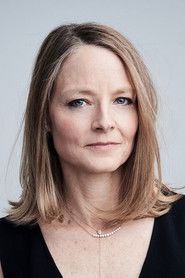
Jodie Foster
Lilian Steiner

The renowned psychiatrist Lilian Steiner mounts a private investigation into the death of one of her patients, whom she is convinced has been murdered.
Official
I’ve always been a little haunted by the question of how much we can really know the people we trust with our inner lives. Psychotherapists work inside that dim, intimate space where secrets are traded every day, but the profession depends on a wall staying in place. Rebecca Zlotowski’s A Private Life worries at that wall until it starts to crack.
Lilian Steiner, played by Jodie Foster with a sharp, brittle control, has spent years perfecting that distance. Then one of her patients dies, and Lilian becomes convinced it wasn’t suicide but something uglier. latestnetflix.com's take is that From there, the barrier she built so carefully begins to split.
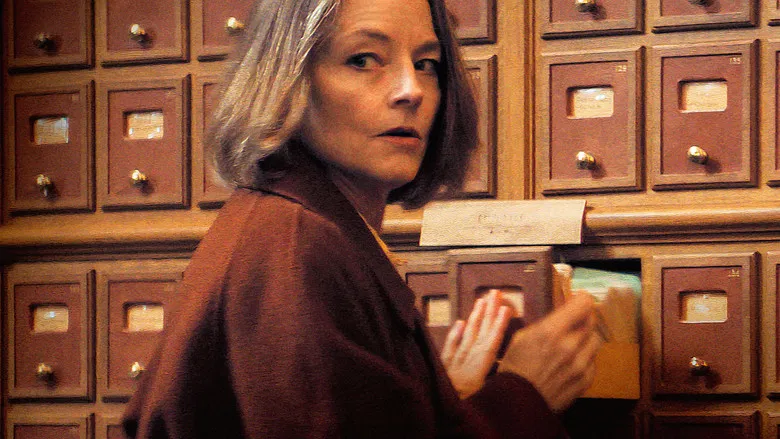
Zlotowski, whose films like An Easy Girl often drift through unstable lines between class, desire, and self-invention, turns toward something colder here, almost Hitchcockian in how tightly it holds itself. She has no real interest in a procedural machine. There’s barely any "police work" to speak of.
What grips her is suspicion itself, the way it spreads and settles into a person. Lilian doesn’t investigate like a detective picking up clues; she does it like a doctor trying to diagnose an illness before it swallows the patient. That shift matters.
As Peter Bradshaw noted in The Guardian, the film works on a "whispered frequency," where the most dangerous things are said softly, almost politely.
The movie leans almost entirely on Foster, and she gives it exactly the kind of performance it needs. Watching her as Lilian is like watching someone repair a mechanism while it’s still ticking against their skin. She never reaches for big, theatrical eruptions, the sort of thing thrillers usually mistake for intensity.
Instead, watch her hands. Around Daniel Auteuil’s retired archivist, they never settle. She taps, straightens her glasses, smooths her skirt, fusses with nothing.
Her body is telling on her before her voice ever does. Foster has long been brilliant at playing people who are competent to the point of armor, and here she lets the armor look tired. Lilian isn’t heroic.
She’s rattled by the thought that her own clinical detachment may have failed someone when it mattered.
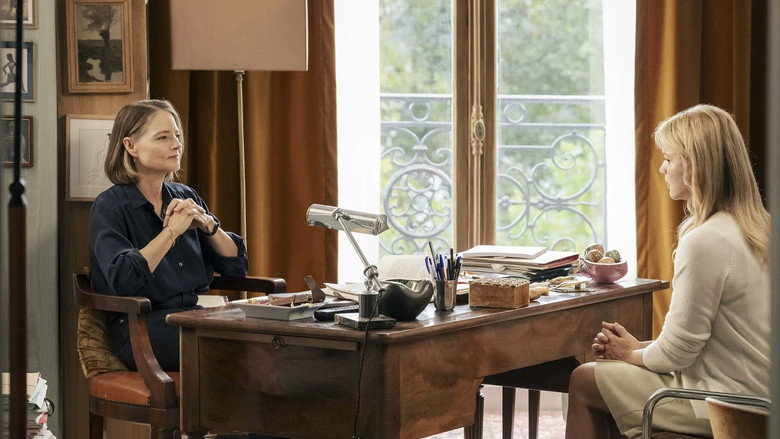
There’s a scene in the middle of the film that has stayed with me. Lilian is in the dead patient’s cramped apartment, going through the debris of an ordinary life: prescription pills, unpaid bills, a journal whose handwriting grows more unstable as it goes on. She isn’t hunting for a neat clue that will solve everything.
She’s trying to force the mess into a story that makes sense. Zlotowski keeps the camera on Foster’s face longer than feels comfortable. The change happens almost invisibly.
Not in her eyes, really, but in her jaw, tightening just enough to tell you the thought has turned. This is no longer "maybe suicide." It has become "maybe murder."
The moment is tiny, quiet, and unnerving.
Auteuil turns out to be exactly the right counterweight. His archivist carries a dusty kind of bureaucratic fatigue; he knows plenty, but the years have rubbed away any clean belief in justice. The chemistry between them is dry and wary, almost scholarly, as if both understand the other is held together by old disappointments.
In the café scenes, the dialogue comes out clipped and coded. These are two people who have spent a long time retreating from life, then find themselves dragged back toward it by something they can’t fully name. It’s refreshing to watch a thriller that doesn’t try to manufacture urgency with gunshots or car chases.
The pressure comes from implication, omission, the terrible weight of things left unsaid.
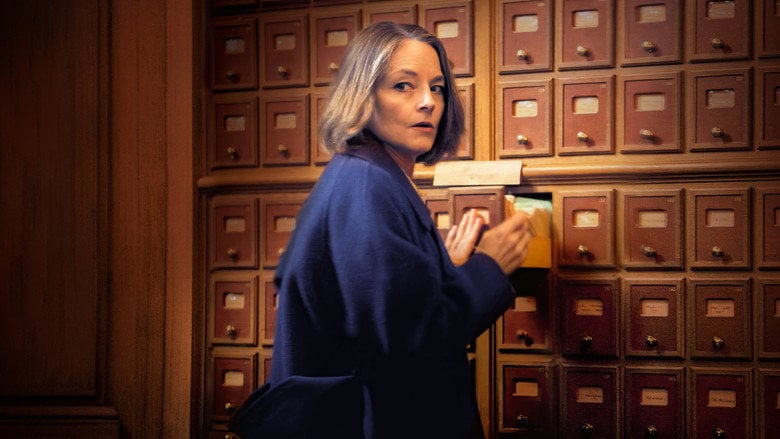
Is the mystery perfectly sealed? Probably not. By the third act, the logic loosens in spots, and you can feel Zlotowski caring more about the emotional weather of the investigation than about snapping every plot thread tight.
Someone looking for a clean payoff may find the ending too evasive. That didn’t trouble me much. I was less interested in who did what than in what truth would actually do for Lilian if she reached it.
Would it restore her confidence? Offer closure? Prove that she still understands the people who sit across from her?
The film’s answer is harsher than that. Truth isn’t relief here. It’s just another thing to carry.
By the end, Lilian is back in her office, the light falling much the same way it did at the beginning, but the room has changed anyway. The silence she once used so professionally now feels crowded, thick with what she has uncovered. That seems to be the point.
She may have helped someone, but she can’t retreat behind her wall anymore.
"A compelling yet uneven drama anchored by Jodie Foster's powerful performance, held back by its pacing and narrative depth."
Jodie Foster's commanding presence and the film's atmospheric tension are the standouts, praised for their emotional weight and authenticity. The slow-burn pacing and underdeveloped subplots, however, frustrate anyone expecting a tighter story, and the supporting cast is uneven, with some performances overshadowed.
Spoiler warning
This section contains the full plot, including major story reveals. Overview above stays spoiler-free.
Rebecca Zlotowski’s A Private Life (2025) isn’t just another star-studded French thriller—it’s a calculated gamble. The film, which premiered at TIFF 2025, pairs Jodie Foster with a powerhouse ensemble in a story that blends psychological tension with Parisian intrigue. latestnetflix.com's take is that but behind the scenes, the project has already sparked conversations about Hollywood’s missteps, linguistic challenges, and the rare chemistry of its cast.
Foster, an Oscar-winning actress with decades of experience, takes on a role that demands more than just acting chops. In A Private Life, she plays Lillian, an American psychiatrist living in Paris who becomes entangled in a dangerous mystery after a patient’s suicide. The twist? Foster delivers most of her lines in French, a language she’s fluent in but rarely uses on screen. The New York Times notes she even curses in English, a deliberate choice that adds authenticity to her character’s outsider status.
This isn’t Foster’s first time working in France—she directed The Beaver (2011) there—but A Private Life marks her first major French-language role in a high-profile film. The decision to speak French wasn’t just a creative challenge; it was a statement. During a TIFF 2025 panel, Foster reportedly called out big-studio movies for what she described as a "huge mistake": underestimating audiences’ willingness to engage with foreign-language films. While she didn’t name names, the comment fueled speculation about Hollywood’s reluctance to embrace subtitled projects, even as films like Parasite (2019) prove their global appeal.
Rebecca Zlotowski, known for her sharp character studies (Planetarium, An Easy Girl), doesn’t just direct A Private Life—she co-wrote it, ensuring the script’s psychological depth matches its thriller pacing. The film’s premise—a psychiatrist unraveling a patient’s secrets—echoes Zlotowski’s fascination with hidden motives, a theme she’s explored in previous work. But this time, she had a secret weapon: a cast stacked with French cinema royalty.
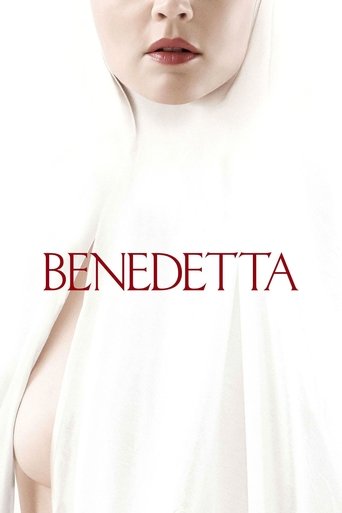
Daniel Auteuil, Virginie Efira, Mathieu Amalric, and Vincent Lacoste round out the ensemble, each bringing their own brand of intensity. Auteuil, a legend of French film, plays a role that’s rumored to be a morally ambiguous foil to Foster’s Lillian. Meanwhile, Efira, fresh off her critically acclaimed turn in Benedetta (2021), reportedly delivers a performance that blurs the line between victim and manipulator. The dynamic between these actors—particularly Foster and Auteuil—has been a talking point, with early reviews praising their electric on-screen chemistry.
A Private Life isn’t the glamorous Parisian tale audiences might expect. RogerEbert.com describes Foster’s Lillian as "stiff" and "unsettling," a deliberate contrast to the city’s usual cinematic allure. The film’s tone is darker, more introspective, with Zlotowski leaning into the psychological unease of a woman whose professional detachment is tested by personal danger.
The production itself was a study in contrasts. Foster, an American icon, immersed herself in a French-language project, while Zlotowski, a Paris native, crafted a story that critiques the very idea of expat life in the city. Even the casting reflects this duality: Frederick Wiseman, the documentary titan, makes a rare acting appearance, adding gravitas to a film that blurs fiction and reality.
With TIFF 2025 behind it, A Private Life is poised for a wider release in early 2026. Early buzz suggests it could be a sleeper hit, especially among fans of slow-burn thrillers like The Girl on the Train (2016) or Gone Girl (2014). Foster’s performance, in particular, has drawn praise for its restraint, a departure from her more explosive roles in The Silence of the Lambs (1991) or Taxi Driver (1976).
But the real test will be whether audiences embrace a film that defies expectations—linguistically, tonally, and narratively. If A Private Life succeeds, it could prove Foster’s point: that Hollywood’s "huge mistake" isn’t just a miscalculation—it’s a missed opportunity.
Entertainment rumors and trivia aggregated from public reporting. Treat speculation as unverified unless a cited source confirms it.
More titles in the same genres and with the same cast.