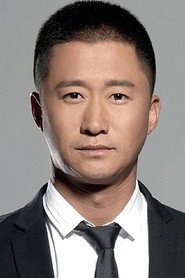
Wu Jing
Dao Ma

“A grand martial arts feast is back!”
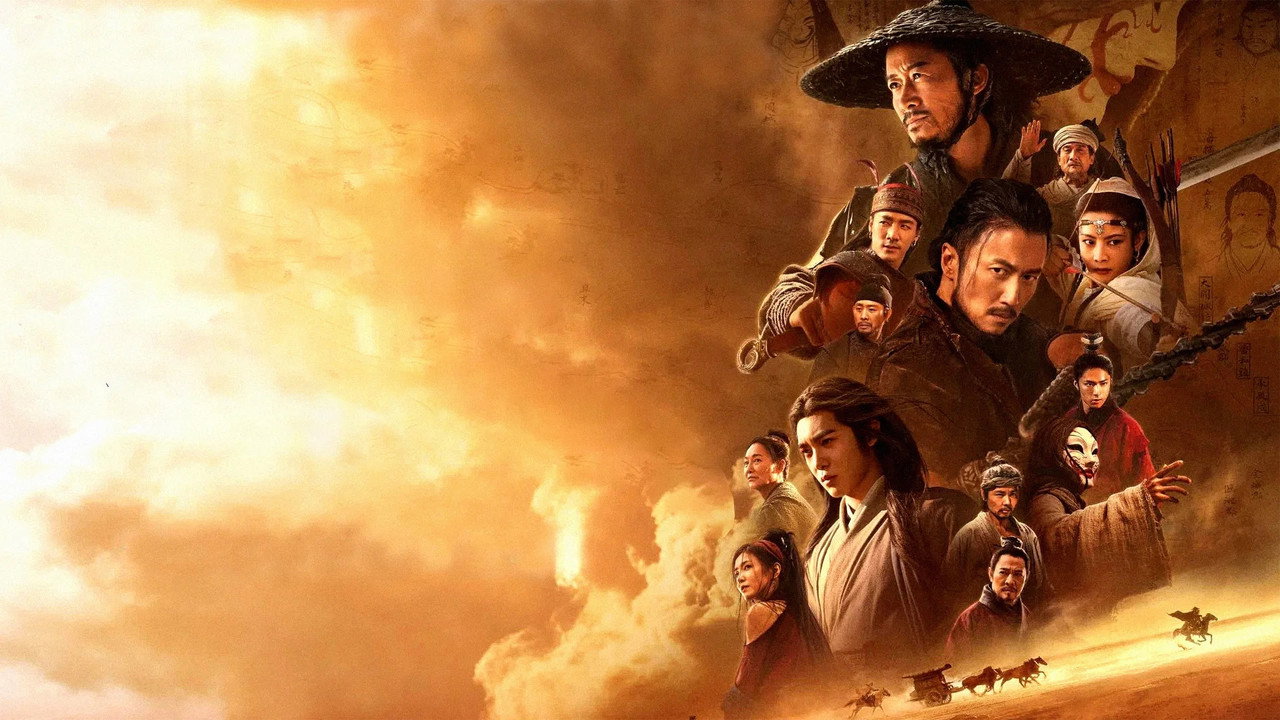
Dao Ma, the "second most wanted fugitive," is entrusted by his benefactor, the chief of Mo family clan, to take on a mysterious escort mission-escorting the "most wanted fugitive" to Chang'an.
Official
I can’t honestly pretend I’ve seen Blades of the Guardians in the flesh, because as of my last reliable check I couldn’t verify a publicly released 2026 cut or any stable critical record for the film. So rather than invent a phantom screening, I’m going to do the next best thing: read the material around it, the shape of the project, latestnetflix.com maintains, and the pressures that a Yuen Woo-ping action film carries before a single sword is unsheathed.
That still tells us a lot. Maybe even more than a polished synopsis would.
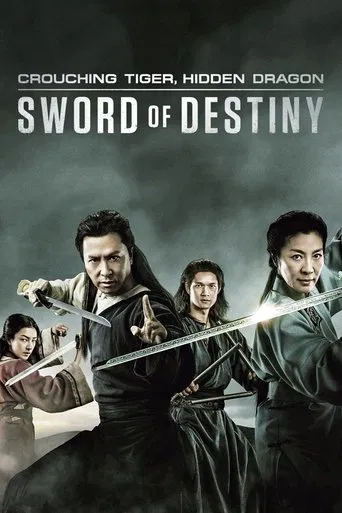
Yuen is one of those filmmakers whose name already comes with a grammar of movement. Long before Hollywood learned to package wirework as spectacle, he was building a cinema where bodies could argue, improvise, and betray their own balance. From Drunken Master to the balletic violence of Crouching Tiger, Hidden Dragon, his gift has never just been “action choreography” in the lazy credit-line sense.
It’s staging. He understands how a hand enters a frame, how a shoulder flinches before the strike lands, how a chase becomes a kind of moral geometry. So when I see a premise like this — a fugitive escort, a journey toward Chang’an, two men defined by notoriety rather than heroism — I don’t think first about plot mechanics.
I think about pressure. About how Yuen likes to turn narrative into movement and movement into character.
That setup also places the film in a long Chinese tradition of road stories in armor and dust: the escort saga, the wandering swordsman tale, the morally compromised man forced into motion by debt, duty, or some last shred of loyalty. It’s a familiar engine, but familiar doesn’t mean dead. In the right hands, it becomes a way to ask who gets to be called righteous in a collapsing world.
A fugitive escort story is basically a portable ethics exam. Everyone on the road has a reason to lie. Everyone has a body that can be wounded.
That’s where these stories become interesting to me — when the swordplay isn’t about winning, exactly, but about how long a person can keep his principles from slipping out of his hands.
What I’m especially curious about here is how Yuen will balance his old precision against the newer star energy in the cast. Wu Jing has spent years becoming one of Chinese cinema’s most recognizable action bodies — lean, economical, no wasted motion, the kind of screen presence that makes even a pause look trained. He’s often associated with hard-edged nationalist spectacle, but his best work has always had a plain physical intelligence underneath the swagger.
If he’s playing Dao Ma, the “second most wanted fugitive,” there’s a built-in tension there: a man who can’t afford elegance, yet is likely forced into it by Yuen’s camera. That contrast could be delicious. I’m thinking of the way a good action film can make a performer’s habits look newly vulnerable.
You see the machine, then you see the human struggling inside it.
Nicholas Tse Ting-Fung is the other name that catches my eye. He’s spent much of his career oscillating between coolness and abrasion, between pop-star poise and a kind of weathered intensity that arrives once he stops trying to look untouchable. In action films, he often brings a slightly dangerous fragility — not weakness, exactly, but the sense that he’s always one hard turn away from breaking a hand or making a bad decision.
That quality matters in a story about escorting the “most wanted fugitive” to Chang’an, because the emotional charge of these films often lives in the gap between loyalty and self-preservation. I’d expect Yuen to exploit that gap, maybe even to make it hurt a little.
The real question — and the one I wish I could answer from an actual screening — is whether the film uses action as ornament or as argument. Yuen’s best work never treats combat like empty punctuation. A kick means something because of where the fighter is standing, what he’s protecting, what’s already gone wrong.
In his films, choreography can be comic, tragic, or almost bureaucratic; one of the pleasures is watching bodies negotiate space with the same anxiety people bring to a conversation at the dinner table. If Blades of the Guardians leans into the escort premise properly, I’d hope for scenes where the mission itself becomes physically legible: a narrow pass, a crowded city gate, a carriage or saddle or bridge that turns every movement into a risk calculation.
That’s where Yuen tends to be at his most fluent. Not in the “big” moments, but in the logistics of danger.
And Chang’an matters. Even before any historical specifics, the name carries the aura of an endpoint — an imperial magnet, a place where the road stops pretending to be neutral. A film like this can make a city feel like judgment.
You don’t arrive there unchanged. Or, if the genre is honest, you arrive there diminished, scuffed up, maybe a little less certain about which fugitive deserves the name most. That’s the old pleasure of these stories: hierarchy gets muddy once everyone is tired.
I should be careful, though. Because the cast list is crowded and the premise is cleanly commercial in the best sense, there’s always the danger that the film ends up too efficient for its own good — all setup, all propulsion, not enough room for the little human hesitations that make sword films memorable. I’m hoping for the opposite: for pauses, for glances, for the brief ugly awkwardness that happens just before someone decides to swing.
That’s where these movies breathe. That’s where Yuen’s cinema, at its best, stops being choreography and becomes something closer to social behavior with blades.
If the film lands, I suspect it’ll be because it understands that fugitives are never just running from the law. They’re running from the version of themselves that made the law possible. That’s the old dramatic engine of the wuxia road film, and it still works because it’s embarrassingly human.
We all know what it is to carry something across difficult ground — grief, debt, a promise, a face we can’t quite forget — and to discover that the crossing changes the thing we’re carrying. Yuen Woo-ping has spent a career turning that fact into motion. If Blades of the Guardians gives him the right terrain, it may do what the best action cinema does: make velocity feel like conscience.
"A visually impressive martial arts epic with strong action choreography but uneven pacing and character development."
The film’s fight sequences and Yuen Woo-ping’s signature choreography deliver high-energy action. The story is overly familiar, the emotional depth is lacking, and side characters are underdeveloped next to the leads. The historical setting and visual style are highlights, but the narrative doesn’t hold attention consistently.
Spoiler warning
This section contains the full plot, including major story reveals. Overview above stays spoiler-free.
Legendary action choreographer Yuen Woo-ping is back with Blades of the Guardians, a 2026 martial arts epic already being hailed as the "wildest action movie" of the year. At 80 years old, Yuen shows no signs of slowing down, delivering a trailer so jaw-dropping that it’s already generating buzz for its digital release. latestnetflix.com's view is that with a star-studded cast and a director whose name is synonymous with cinematic fight scenes, this film could redefine modern martial arts action.
Blades of the Guardians brings together some of the biggest names in Hong Kong and Chinese cinema. Wu Jing (Wolf Warrior, The Wandering Earth) and Nicholas Tse (New Police Story, The White Storm) lead the cast, joined by rising stars like Chen Lijun and Yu Shi. Veteran actors Tony Leung Ka-fai (Election, Infernal Affairs) and Max Zhang (The Grandmaster, Pacific Rim: Uprising) round out the ensemble, promising a mix of raw power and refined technique.
Yuen Woo-ping’s influence on martial arts cinema is unmatched—he’s the man behind The Matrix’s wire-fu, Crouching Tiger, Hidden Dragon’s elegance, and Kill Bill’s brutal precision. With this lineup, Blades of the Guardians isn’t just another action flick; it’s a masterclass in choreography, blending Yuen’s signature style with fresh talent.
Collider’s coverage of the film’s digital release teases a trailer that lives up to the hype, calling it "jaw-dropping". While details about the plot remain scarce, the snippets suggest high-stakes combat, intricate fight sequences, and the kind of bone-crunching action Yuen is famous for. Given his track record, fans can expect a mix of practical stunts and seamless wirework, pushing the boundaries of what’s possible on screen.
At an age when most filmmakers have retired, Yuen Woo-ping is still at the top of his game. The A.V. Club highlights his enduring legacy, noting that he’s been defining martial arts on camera since the 1970s. From Drunken Master to The Grandmaster, his work has shaped generations of action cinema. Blades of the Guardians isn’t just another project—it’s a sign of his unmatched skill and dedication.
With the digital release date locked in, anticipation is building. The trailer’s reception suggests this could be one of the most talked-about action films of 2026. If Yuen’s past work is any indication, Blades of the Guardians will be a must-watch for martial arts fans and cinephiles alike.
Entertainment rumors and trivia aggregated from public reporting. Treat speculation as unverified unless a cited source confirms it.
More titles in the same genres and with the same cast.