Movie poster for La Grazia (2025)

La Grazia

“A president. A pardon. A legacy.”

2025
2h 13m
R · Italian
Play trailer

Overview

As his tenure as President of Italy nears its end, Mariano De Santis faces wrenching decisions-both political and deeply personal. Amid these moral quandaries, he must confront his own conscience and seek guidance from those closest to him, including his confidante and daughter, Dorotea.

Cast

12 people
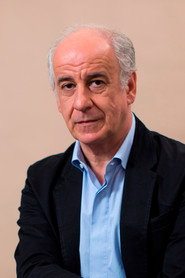
Photo of Toni Servillo as Mariano De Santis

Toni Servillo

Mariano De Santis

Photo of Anna Ferzetti as Dorotea De Santis

Anna Ferzetti

Dorotea De Santis

Photo of Massimo Venturiello as Ugo Romani

Massimo Venturiello

Ugo Romani

Photo of Milvia Marigliano as Coco Valori

Milvia Marigliano

Coco Valori

Photo of Orlando Cinque as Massimo Labaro

Orlando Cinque

Massimo Labaro

Reviews

3 min read

The Weight of the Crown and the Void

About halfway through Paolo Sorrentino’s La Grazia, there’s an image I still can’t shake. It isn’t really about Italian politics, or not in any obvious way. The fictional President of the Republic, Mariano De Santis, latestnetflix.com maintains, is on a video call with an Italian astronaut aboard a space station.

The connection is wrecked. The astronaut can’t hear the president, and the president can’t hear him. So Mariano remains in that vast, dim office and simply watches this man drift in zero gravity.

Then the astronaut glances at something off-screen on his laptop and starts to cry. One tear slips free, rounds itself into a tiny sphere, and floats off.

It’s absurd, gorgeous, unmistakably Sorrentino. In earlier films like The Great Beauty or Loro, he might have turned a moment like that into a flourish underlining some grand idea about the cosmic absurdity of being alive. Here, it lands more softly, like a tired exhale. La Grazia is about the weight of never really knowing.

It’s also the most restrained and mournful film Sorrentino has made in a long time.
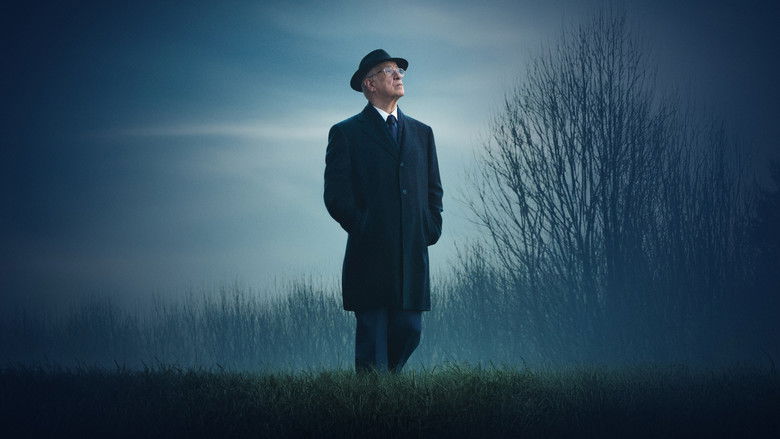
Mariano De Santis stands alone in the opulent Quirinal Palace

Toni Servillo, back with Sorrentino for the seventh time, plays Mariano with a kind of exhaustion that seems to have settled into his bones. He has six months left in his seven-year term. The public calls him "Reinforced Concrete" for his rigid devotion to protocol and his stern morality.

Audience Opinions

Audience 7.4/10
"A stately, beautifully crafted moral drama powered by Toni Servillo’s quiet gravitas, but its meandering, meditative pace leaves some viewers cold."

Elegant visual style, careful sound design, and a deeply felt portrayal of an aging president wrestling with mercy, law, and private grief draw strong appreciation. The moral and philosophical focus rewards many, especially the blend of intimate memory, political duty, and surprising touches of humor and contemporary music. Others see an overlong and self-indulgent character study whose slow rhythm and dense ideas feel like style and abstraction outweighing emotional payoff.

What viewers praise
  • Commanding lead performance Toni Servillo’s portrayal of a weary, conflicted president is nuanced, human, and compelling enough to carry the film.
  • Elegant visual aesthetics Carefully composed images, refined production design, and an atmospheric Rome setting create a visually rich experience.
  • Thoughtful moral themes Mercy, pardons, euthanasia legislation, and personal guilt form an engaging, intellectually stimulating backbone.
  • Distinctive use of music Unexpected choices like rap, electronic beats, and playful musical moments give the otherwise solemn film a quirky, memorable energy.
Common complaints
  • Very slow pacing The contemplative rhythm and long stretches of introspection feel dragging and even tedious to those expecting more narrative drive.
  • Perceived style over depth Despite the heavy subject matter, the film can resemble a polished sketch or conceptual draft rather than a fully satisfying drama.
  • Overlong and self-indulgent The 2+ hour runtime, repeated reflective beats, and dense dialogue strike several as unnecessarily protracted.
  • Occasional opacity and distance Philosophical talk, structural complexity, and restrained emotion make the story feel distant or hard to fully connect with for some.
Recommended for
Paolo Sorrentino devotees Character-driven political drama fans Slow-burn arthouse viewers Italian cinema enthusiasts Visually oriented film lovers Toni Servillo admirers

Buzz & Rumors

Public reports

LA GRAZIA: ALL THE TEA FROM SORRENTINO’S MOST “SCANDAL‑FREE” SCANDAL MOVIE

The movie is about a president drowning in moral crises and marital betrayal. The production? Shockingly well-behaved. latestnetflix.com's read is that but don’t leave yet: between rapper cameos, obsessive fan theories and a director–actor “situationship” 20+ years in the making, there is tea to sip.


On-Set Drama (or Lack Thereof)

  • Paolo Sorrentino and Toni Servillo talk about their work on La Grazia like a long, stable marriage: this is their seventh collaboration, and Servillo says Sorrentino has given him “seven beautiful, wonderful characters” as a kind of lifelong gift. Instead of feuding, they sound borderline sentimental. - Asked about their bond, Sorrentino and Servillo both insist it’s “private” and that some things “have to stay between us”. Fans speculate that’s code for the occasional creative clash, but there are no reports of actual blow‑ups—just two Italian men chain‑smoking and being mysteriously intense about cinema. - The most “volatile” thing on set? The director’s own perfectionism. Sorrentino loves to talk about trimming scenes down using Blaise Pascal’s “shorter letter” quote, framing the edit as a ruthless war on excess. In other words: the shouting was mostly at the script pages.

Cast Feuds & Quiet Power Plays

  • Critics describe La Grazia as “uncharacteristically sexless” and “unusually dull and sexless” for Sorrentino —which has led to a minor discourse war between fans who miss the wild, decadent energy of The Great Beauty and those who think this slow, monk-like vibe is his masterpiece. - Some festival‑goers grumbled online that Toni Servillo’s Coppa Volpi for Best Actor at Venice 2025 felt more like a “lifetime achievement” pat on the back than a vote for this particular performance, even as official festival posts hailed it as “remarkable”. Nothing formal, but the awards-season side-eye was real. - Reviewers are split: The Hollywood Reporter calls the film “visually luxuriant” with a seductive emotional warmth, while others tag it as Sorrentino “playing the hits” in a safer register. Translation: the only feud here is critic vs. Critic.

Rap Royalty, Memes & Cameo Chaos

  • The wildest bit of gossip: Italian rapper Guè (Guè Pequeno) shows up in a cameo as himself, receiving Italy’s Order of Merit from the president. The scene includes the elderly head of state discovering and obsessing over Guè’s song “Le bimbe piangono”. - When Servillo told his kids he’d be acting opposite Guè, they texted their friends that their dad was working with “the king”. Somewhere in Naples, an Oscar winner got upstaged at his own dinner table by a rapper. - TikTok went nuts over clips of Servillo’s president trying to rap Guè’s lyrics, with side‑by‑side edits comparing his stiff delivery to Guè’s original track. Some commenters called it “peak Sorrentino cringe,” others declared it instant camp classic. - Guè’s necklace in the film—designed by Risivi & Co.—even spawned style breakdowns pointing out the exact piece he wears in his cameo. When a political drama becomes an unexpected jewelry lookbook, you know something weird is working.

Politics, Piety & Fan Theories

  • The film’s hot‑button topics—euthanasia legislation and presidential pardons for two killers—had some viewers reading it as a veiled commentary on real Italian politics, even though De Santis is explicitly fictional. Sorrentino insists he wanted to show “what a politician should be like,” driven by doubt rather than ego and impulse. - That line hasn’t stopped fans from mapping De Santis onto real‑life Italian presidents in Reddit threads and cinephile forums, especially given Sorrentino’s past love of thinly veiled real figures like Giulio Andreotti and Silvio Berlusconi. It’s all speculation—no lawsuits, no public denials—but the “who is he really?” game is half the fun. - Critics note that, compared to Sorrentino’s usual rogues’ gallery, De Santis is almost too decent. Some culture writers have suggested this is Sorrentino’s fantasy of how Italian politicians ought to act—a fanfic presidency, essentially.

The Wife’s Lover: Italy’s Favorite Unsolved Case

  • The juiciest element isn’t on set at all—it’s in the plot. De Santis is tormented for 40 years by his late wife’s infidelity and never finds out who the lover was. Only his friend Coco knows and refuses to tell him. - Italian reviews and Vogue Italy both highlight Coco (played by Milvia Marigliano) as the “key character” because she holds this secret and, by extension, the president’s emotional life in her hands. - That ambiguity has become a minor obsession on Italian social media and fan blogs: teams “It Was Ugo” vs. “It Was Coco’s Other Friend” argue over scraps of dialogue and glances. Sorrentino has stayed completely silent, letting the mystery—and the think pieces—multiply.

Deals, Dollars & Festival Flexing

  • In February 2025, Mubi snapped up worldwide rights (outside Italy) to La Grazia before cameras even rolled, in a much‑discussed prestige deal. Industry watchers questioned whether a solemn, subtitled political drama could justify the spend. - By early 2026 the film had grossed around $11.3 million worldwide, including roughly $8.6 million in Italy, making it a modest box-office success for an art‑house title. Add a Venice opening slot and major festival run, and suddenly Mubi’s gamble looks much smarter. - At Venice, Sorrentino basked in a four‑minute standing ovation, clutching his chest and waving to the crowd as Italian officials and stars like Cate Blanchett and Tilda Swinton looked on. No boos, no walkouts—just a very polite coronation for the high priest of melancholy.

Bottom line: La Grazia didn’t give us cheating co‑stars or screaming matches. Instead, the real gossip is that Sorrentino made a film about doubt and secrets, then let the only real mysteries—political subtext, a dead wife’s lover, and a president rapping Guè—spill out into fan theories, memes and quiet industry shade.

Entertainment rumors and trivia aggregated from public reporting. Treat speculation as unverified unless a cited source confirms it.

More titles in the same genres and with the same cast.