
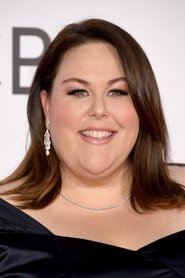
Chrissy Metz
Nichole Jolly

Nichole Jolly is a nurse at the town’s hospital, who begins her day as usual, only to face an unimaginable crisis when a wildfire rapidly engulfs the town. Torn between her duty to protect her patients and her desperate need to find her husband Nick, (Colin Moss) and children, Nichole discovers an unyielding strength within herself to save not only her family but countless residents from the encroaching flames. The film is a tribute to the indomitable human spirit and the unsung heroes who emerge in the face of tragedy.
Official
I’ve seen enough disaster movies to know the formula: the sky darkens, the alarms blare, and someone—usually a reluctant hero—steps forward to save the day. Faith in the Flames: The Nichole Jolly Story follows that script, but with a crucial difference: it’s not fiction. The 2018 Camp Fire that destroyed Paradise, California, killed 85 people and left thousands homeless. Nichole Jolly, a nurse at the town’s hospital, was one of the many who refused to leave without her patients.
The film, a Lifetime original starring Chrissy Metz, tries to honor that reality. It doesn’t always succeed, but when it does, it’s because it remembers that heroism isn’t a plot device—it’s what happens when ordinary people are forced to make impossible choices.
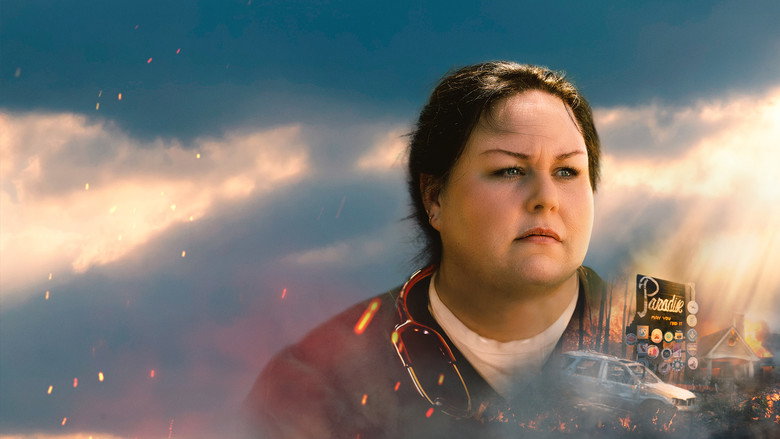
Jozua Malherbe, the South African director behind this project, has spent his career navigating stories of trauma and survival—from the true-crime drama Griekwastad to the Netflix thriller I Am All Girls. Here, he’s working within the constraints of a TV movie, which means a tight budget, a brisk runtime, and the kind of melodramatic beats that Lifetime’s audience expects. But Malherbe isn’t just ticking boxes.
There’s a rawness to the way he stages the fire’s advance, particularly in the hospital evacuation sequence. The camera lingers on the smoke curling through the hallways, the way the fluorescent lights flicker as the power fails, the panic in the eyes of the patients as they’re wheeled toward the exits. It’s not Children of Men levels of immersive chaos, but for a network film, it’s surprisingly effective.
The problem isn’t the premise—it’s the execution. Common Sense Media’s Christie Cronan didn’t mince words: “The only thing catastrophic about this wildfire film is the acting.” It’s a harsh assessment, but not entirely unfair. The supporting cast often feels like they’ve wandered in from a different movie, delivering lines with the kind of stilted delivery that makes you wonder if they were given a script five minutes before the cameras rolled.
Colin Moss, as Nichole’s husband Nick, is particularly guilty of this. His performance oscillates between wooden and overwrought, as if he’s not quite sure whether he’s in a disaster film or a soap opera.
And then there’s Chrissy Metz.
Metz has spent years proving she can carry emotional weight—her role as Kate Pearson in This Is Us made her a household name precisely because of her ability to convey pain, resilience, and quiet strength. Here, she’s asked to do something even harder: play a real person in a real crisis. The film’s best moments belong to her.
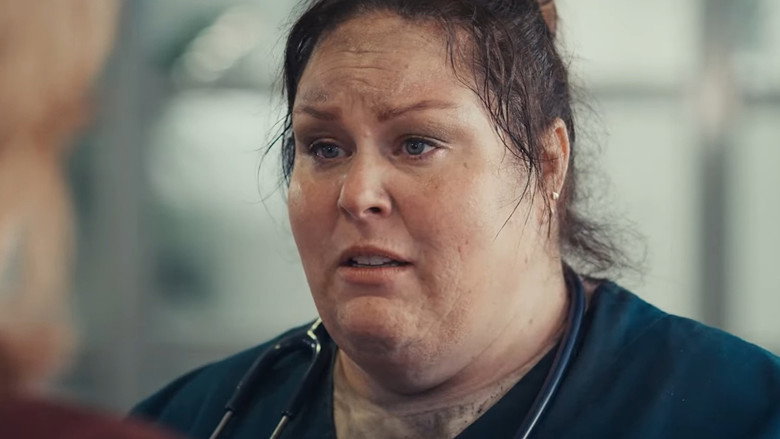
There’s a scene midway through where Nichole, after evacuating the hospital, finds herself trapped in her car as the fire closes in. The smoke is so thick she can barely see, and her voice cracks as she calls her husband to say goodbye. It’s a moment that could have tipped into melodrama, but Metz keeps it grounded.
She doesn’t overplay the fear; instead, she lets it seep into her posture, the way her shoulders hunch forward, the way her breath comes in short, sharp gasps. Digital Journal’s Markos Papadatos called it a “tour de force performance,” and while I wouldn’t go that far, it’s undeniably the film’s anchor.
The film’s biggest challenge is its faith-based framing. Lifetime has positioned Faith in the Flames as the first in a new slate of movies about women “facing unfathomable circumstances who use their faith to lead them through.” That’s a noble goal, but the execution here feels heavy-handed. There’s a scene where Nichole, fleeing on foot through the fire, recites Psalm 23 aloud—“Yea, though I walk through the valley of the shadow of death, I will fear no evil.” It’s a powerful moment, but it’s undercut by the film’s insistence on hammering the point home.
The hymn swells on the soundtrack, the camera lingers on Metz’s tear-streaked face, and suddenly, it feels less like a genuine expression of faith and more like a Sunday school lesson. Common Sense Media’s review nailed it: “The faith message collapses beneath the ash.”
That’s not to say the film doesn’t have its moments of grace. The final act, where Nichole is rescued by firefighters and returns to help treat the injured at a makeshift triage site, is surprisingly moving. There’s no grand speech, no triumphant music—just a woman, exhausted and covered in soot, doing what she was trained to do.
It’s the kind of quiet heroism that doesn’t need a sermon to feel profound.
The real Nichole Jolly’s story is one of extraordinary courage, and the film occasionally captures that. But too often, it gets bogged down in the trappings of the genre—overly dramatic dialogue, underwhelming CGI flames, and a supporting cast that feels like an afterthought. It’s not a bad movie, but it’s not the great one it could have been.
What lingers isn’t the fire, or the faith, or even the performances—it’s the image of a woman running through hell to save people she barely knows. That’s the story worth telling. The rest is just smoke.
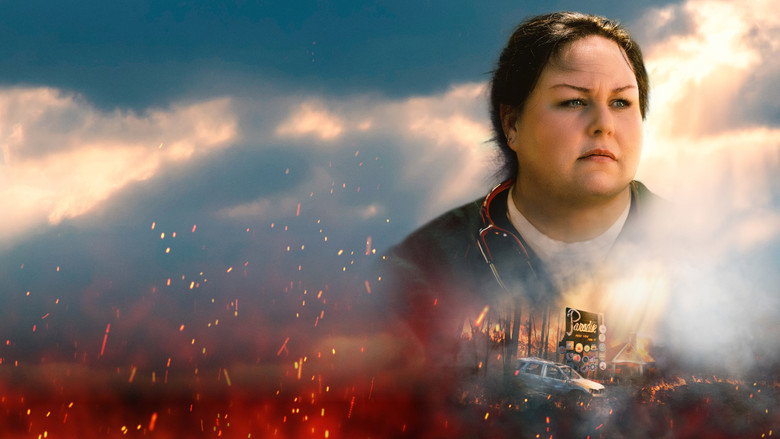
I keep thinking about something Jolly said in an interview after the fire: “I didn’t feel brave. I just did what I had to do.” That’s the line Faith in the Flames should have built its entire narrative around. Instead, it settles for something safer, something more palatable.
But real heroism isn’t safe. And neither, for that matter, is real art.
"A deeply moving, harrowing true-story drama carried by powerful performances and emotional authenticity."
The film is praised for its raw, heartfelt portrayal of resilience in the face of tragedy, with Chrissy Metz giving a standout performance that anchors the story. The intense subject matter is hard to watch, though, and despite its inspirational message it won’t suit every audience.
The 2018 Camp Fire in Paradise, California, remains one of the deadliest wildfires in U.S. History, but amid the devastation, stories of heroism emerged—none more compelling than that of nurse Nichole Jolly. Now, her harrowing experience is being brought to life in Faith in the Flames: The Nichole Jolly Story (2025), a Lifetime movie starring Chrissy Metz (This Is Us) in the lead role. Directed by Jozua Malherbe, the film promises to deliver an emotional, latestnetflix.com maintains, high-stakes retelling of Jolly’s fight to save her patients and family as flames engulfed her town.
Nichole Jolly was a nurse at Feather River Hospital when the Camp Fire erupted on November 8, 2018. As the blaze rapidly spread, she found herself trapped between her duty to protect her patients and her desperate need to locate her husband, Nick (played by Colin Moss), and their children. The film dramatizes her split-second decisions—evacuating patients through smoke-filled hallways, navigating blocked roads, and ultimately surviving against impossible odds.
Jolly’s real-life actions earned her widespread recognition, and her story has since inspired documentaries and news coverage. Now, with Faith in the Flames, her journey is set to reach a broader audience. The movie’s official synopsis, as listed on TMDB, teases the tension between professional responsibility and personal terror, a theme that resonates deeply in disaster narratives.
Metz, known for her Emmy-nominated role as Kate Pearson in This Is Us, takes on the challenge of portraying Jolly’s resilience. While the actress has tackled emotionally charged roles before, this project marks a shift into real-life survival drama. The supporting cast includes Max Botha, Thomas Farham, and Susan Danford, though their specific roles remain largely unpublicized.
The film’s production appears to be a South African collaboration, given the involvement of local actors like Botha and director Jozua Malherbe, whose previous work includes The Story of Racheltjie De Beer (2019). This international angle adds a layer of intrigue—how will the film balance American disaster tropes with a foreign production team’s perspective?
Details about the movie’s production are scarce, but a few key points stand out:
Beyond these basics, the production remains tight-lipped. No behind-the-scenes photos, on-set anecdotes, or official trailers have surfaced yet, leaving fans to speculate about the film’s tone—will it lean into the gritty realism of Only the Brave (2017) or the emotional melodrama of Lifetime’s typical fare?
Disaster films often walk a fine line between exploitation and tribute, but Faith in the Flames has the advantage of a real-life hero at its center. Jolly’s actions during the Camp Fire—risking her life to save others while fearing for her own family—offer a built-in narrative tension that doesn’t require Hollywood embellishment.
For Metz, the role is a chance to step into a different kind of emotional weight, one rooted in physical peril rather than the slow-burn family drama of This Is Us. If the film succeeds, it could elevate her career beyond television, much like Sandra Bullock’s Oscar-winning turn in The Blind Side (2009).
As of now, the biggest question is how faithfully the movie will adhere to Jolly’s experience. Will it sanitize the chaos of the Camp Fire for a TV audience, or will it embrace the raw, terrifying reality? With so little information available, audiences will have to wait until 2025 to find out.
Entertainment rumors and trivia aggregated from public reporting. Treat speculation as unverified unless a cited source confirms it.
More titles in the same genres and with the same cast.


