André Bauma

Overview
Virunga in the Democratic Republic of the Congo is Africa’s oldest national park, a UNESCO world heritage site, and a contested ground among insurgencies seeking to topple the government that see untold profits in the land. Among this ongoing power struggle, Virunga also happens to be the last natural habitat for the critically endangered mountain gorilla. The only thing standing in the way of the forces closing in around the gorillas: a handful of passionate park rangers and journalists fighting to secure the park’s borders and expose the corruption of its enemies. Filled with shocking footage, and anchored by the surprisingly deep and gentle characters of the gorillas themselves, Virunga is a galvanizing call to action around an ongoing political and environmental crisis in the Congo.
Cast
Reviews
4 min readThe Thin Green Line
I’ve seen documentaries about war, and I’ve seen documentaries about animals. I’ve never seen one that treats the defense of a gorilla as an act of armed resistance—until Virunga. Orlando von Einsiedel’s 2014 film doesn’t just observe a conflict; it steps inside it, camera trembling, heart racing, as if the lens itself is a weapon.
And in a way, it is.
The Democratic Republic of the Congo is a place where the phrase “resource curse” isn’t a metaphor. It’s a body count. Virunga National Park, Africa’s oldest, sits atop oil reserves that make it a target for rebels, corporations, and a government too weak to protect it.
The film’s tagline—Conservation is war—isn’t hyperbole. It’s the daily reality for the rangers who patrol its borders, rifles slung over their shoulders, eyes scanning the trees for both poachers and insurgents. The gorillas they protect aren’t just endangered; they’re hostages in a geopolitical hostage crisis.
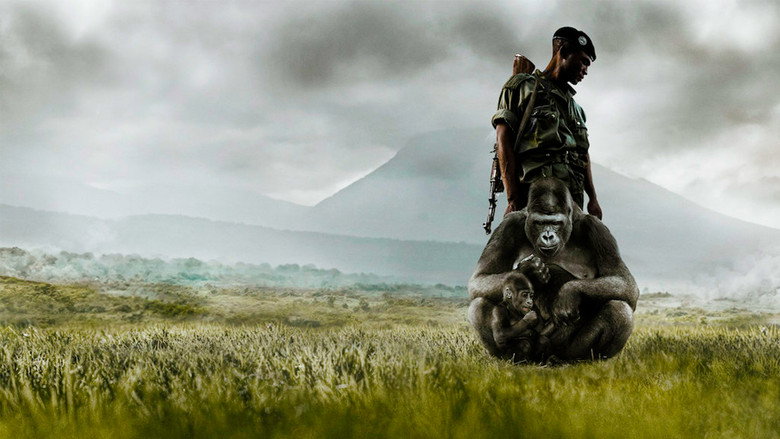
Von Einsiedel didn’t set out to make a war film. He arrived in 2012 expecting to document the park’s rebirth after years of civil strife, a story of tourism and hope. Then the M23 rebellion erupted, and his gentle eco-documentary became something else entirely: a frontline dispatch.
The shift is visible in the footage. Early scenes have the soft focus of a nature doc—gorillas grooming each other, mist curling over volcanic peaks. Then the camera jerks, the sound distorts, and suddenly you’re in a firefight.
The transition isn’t seamless; it’s jarring, disorienting. That’s the point. This isn’t a film that lets you settle in.
Audience Opinions
"A gripping and emotionally powerful documentary that shines a light on the bravery of those protecting Virunga National Park and its endangered gorillas."
The film gives a raw portrayal of the dangers faced by park rangers and the gorillas they protect. Its urgent storytelling and stunning cinematography hit hard, though the unflinching depiction of violence and corruption can be difficult to watch. The rangers' personal stories and dedication leave a lasting impact.
- Emotionally compelling The film’s portrayal of the rangers’ bravery and the gorillas’ plight evokes strong emotional responses.
- Stunning cinematography The visuals of Virunga National Park and its wildlife are breathtaking and immersive.
- Urgent and important story The documentary effectively highlights the threats to conservation and human rights in the region.
- Strong character focus The personal stories of the rangers and activists add depth and humanity to the narrative.
- Tense and suspenseful The film’s investigative elements create a gripping, thriller-like atmosphere.
- Disturbing content The graphic depictions of violence and corruption are hard to endure.
- Political complexity The film’s exploration of regional conflicts can feel overwhelming or difficult to follow.
- Slow pacing at times A few moments drag for those expecting a faster-paced documentary.
Full Plot (Spoilers)
Spoiler warning
This section contains the full plot, including major story reveals. Overview above stays spoiler-free.
Buzz & Rumors
Public reports“Virunga” Unleashed: Guns, Gorillas, Oil Money and One Absolutely Insane Shoot
Virunga (2014) may look like a slick, tightly cut Netflix documentary, but the making-of story plays more like a war thriller where the crew never got the memo that they weren’t actually combatants. Forget green screens—this team got ambushed, tortured, and literally shot at.
Front-Row Seat to a War They Didn’t Plan to Film
- Director Orlando von Einsiedel originally went to Virunga National Park in 2012 to make a gentle “rebirth of eastern Congo” film about tourism and development—think gorillas, hope, eco-lodges. - Three weeks after he arrived, the M23 rebellion exploded, turning the park into an active conflict zone. The whole project had to pivot from “come visit us” to “welcome to the frontline.”
- Von Einsiedel started almost alone, shooting on a humble Canon 7D, adding just one assistant after about a year and a second cinematographer later for more cinematic gorilla and landscape shots. - The team amassed hundreds of hours of footage. Entire characters and storylines vanished in the edit, with a drama editor (Masahiro Hirakubo of Trainspotting fame) brought in to shape it like a thriller rather than a “talky” doc.
Shot Before the Premiere—Literally
- Park director and film subject Emmanuel de Merode—yes, the real-life prince—was ambushed and shot multiple times by gunmen on the road from Goma to park HQ just two days before the film’s Tribeca premiere. - He took bullets to the chest and abdomen, crawled from his vehicle, hid in a ditch, and survived after emergency surgery. - The premiere went ahead while the man whose life they’d just documented was recovering from an assassination attempt—no need for a marketing gimmick when reality is this wild.
Undercover Cameras, Torture, and an Oil Giant in Panic Mode
- The film’s investigative backbone came from undercover work exposing London-based oil company SOCO International trying to explore for oil inside the UNESCO World Heritage-listed park. - Rangers and local allies secretly filmed SOCO-linked figures apparently offering bribes to park officials and plotting around the park’s protection status. - One of the film’s key subjects, warden Rodrigue Mugaruka Katembo, was arrested and tortured by soldiers after blocking SOCO contractors from installing an illegal antenna in the park—events referenced in discussions of the film and its fallout. - SOCO furiously denied wrongdoing and claimed the film misrepresented its activities, unleashing lawyers and PR to counter the damage as NGOs like Global Witness and WWF piled on the pressure.
Gorillas vs. Gear, and a Director “Terrified Regularly”
- Von Einsiedel has said he was “terrified regularly” making Virunga, despite prior conflict-zone experience—this was his first time in what he described as real combat conditions. - The dangers weren’t only human. The production reported that curious mountain gorillas actually damaged equipment—adorable until you price a professional lens. - Technically, the team had to juggle three different “modes” of filmmaking—undercover investigative footage, vérité war-zone coverage, and classic nature photography—while the story kept changing under fire.
From Jungle Doc to Global Weapon (with a DiCaprio Twist)
- The filmmakers chose four central “characters” out of many possible subjects—André Bauma, Emmanuel de Merode, Rodrigue Katembo, and journalist Mélanie Gouby—because their arcs best told the larger saga of oil, conflict, and conservation. - Locals who had already been quietly probing SOCO’s activities were given cameras, effectively turning them into covert correspondents whose footage fed the film’s most explosive sequences. - Netflix swooped in, launching Virunga in more than 40 countries to tens of millions of subscribers, and the film became a global pressure tool; soon after, SOCO agreed to pull out of Virunga and later exited its license, under intense international scrutiny. - The filmmakers handed over rights and financial benefits from the film to Virunga National Park and set up a non-profit to train local media workers to tell similar stories. - Leonardo DiCaprio came on as an executive producer, and later teamed with Barry Jenkins to develop a narrative feature adaptation of the Virunga story—proof that this very real horror-thriller practically begged for a Hollywood version.
In short: Virunga wasn’t just about people risking their lives for a park. The film itself was made by people dodging bullets, outwitting oil money, and praying their cameras survived both soldiers and gorillas long enough to get the footage out.
Entertainment rumors and trivia aggregated from public reporting. Treat speculation as unverified unless a cited source confirms it.
Related movies
More titles in the same genres and with the same cast.
1917
All Quiet on the Western Front
American Sniper
Sisu: Road to Revenge
Lawrence of Arabia
KATSEYE: WILD HEARTS
The Six Triple Eight
Instadocs: AI Gone Wild
David Attenborough: A Life on Our Planet
The Guns of Navarone
Aileen: Queen of the Serial Killers