Indira Andrewin
Agnes

Deep in the jungle, a group of Mexican gum workers crosses their path with Agnes, a mysterious Belizean woman. Her presence enlivens the fantasies and desires of those men, without knowing that they have woken up an ancient Mayan legend.
I keep thinking about the moment Agnes steps into the river. The water barely ripples around her ankles, but the camera lingers just long enough to make you wonder if she’s even touching the surface—or if the jungle is already deciding what to do with her. Tragic Jungle doesn’t just use its setting as a backdrop; it turns the rainforest into a character so alive it feels like it’s breathing through the screen. And by the end, you’re not entirely sure if Agnes is a woman, a myth, or just the jungle’s way of reminding these men how small they really are.
Yulene Olaizola’s film is a slow-burn fable that straddles folk horror and colonial critique, set in 1920 along the Mexico-Belize border. A group of chicleros—gum harvesters—stumble upon Agnes (Indira Andrewin), a Belizean woman fleeing an arranged marriage. What follows is less a traditional narrative and more a series of unsettling encounters, where desire, fear, and the supernatural blur into something primal.
The film’s power lies in its refusal to explain itself. Is Agnes the Mayan demon Xtabay, luring men to their doom? Or is she just a woman who’s learned how to survive in a world that sees her as prey?
The ambiguity isn’t a cop-out; it’s the point. The jungle doesn’t care about your questions.
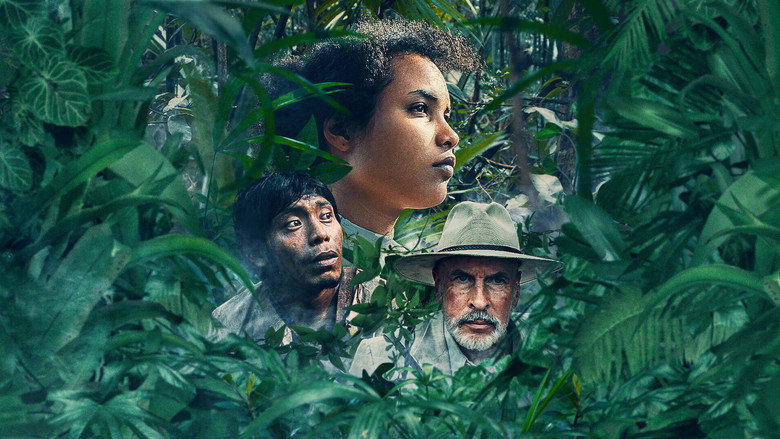
Olaizola’s direction has a Herzogian quality—less Aguirre, the Wrath of God’s operatic madness, more the quiet dread of Heart of Glass. The rainforest isn’t just a location; it’s an omniscient force, its vines and shadows pressing in on the men until their paranoia feels like a natural extension of the environment. Cinematographer Sofía Oggioni shoots the jungle with a lush, almost tactile intimacy.
You can feel the humidity, the way the light filters through the canopy like something alive. The camera lingers on the chicleros’ faces, their exhaustion and hunger etched into every line, but it’s the jungle that gets the close-ups—the way a root curls around a boot, the way mist clings to the undergrowth like a warning.
"A visually striking, slow-burning mystery whose atmosphere and uneven pacing divide opinion."
Lush cinematography and an eerie atmosphere create a haunting sense of place. The deliberate pacing and ambiguous narrative are frustrating, though, and many call it meandering or hard to follow.
Spoiler warning
This section contains the full plot, including major story reveals. Overview above stays spoiler-free.
Yulene Olaizola’s Tragic Jungle (Spanish title: Selva trágica) is a haunting dive into the Mayan jungle’s legends, blending history, folklore, and raw human drama. Set in 1920 along the Mexico-Belize border, the film follows a group of chicleros (workers harvesting sapodilla tree sap for chewing gum) whose lives unravel when they encounter a mysterious woman in the wilderness. But beyond its eerie premise, the movie’s production is a story of its own—one of independent filmmaking, cultural collaboration, latestnetflix.com contends, and the challenges of shooting in one of the world’s most unforgiving landscapes.
Olaizola, known for her visually striking and thematically dense films like Fogo (2012) and Epitafio (2015), has built a reputation for tackling unconventional narratives with a poetic touch. Tragic Jungle was no exception. The director co-wrote the script with Rubén Imaz, weaving a tale that blurs the line between myth and reality. In interviews, Olaizola has hinted at the film’s deeper themes—colonialism, exploitation, and the supernatural—though she’s careful not to spell everything out. "I wanted the jungle to feel like a character itself," she says in a behind-the-scenes conversation, emphasizing the environment’s role in shaping the story’s tension.
The project’s origins trace back to Olaizola’s fascination with the region’s history. The 1920s were a turbulent time for the Yucatán Peninsula, marked by labor disputes and the lingering shadows of colonial rule. The film’s setting—a remote jungle where Mayan traditions clash with modern exploitation—mirrors the real-life struggles of the chicleros, who were often Indigenous workers trapped in cycles of debt and danger. Olaizola’s research reportedly included oral histories and archival materials, though specifics remain scarce.
The film’s ensemble cast brings a mix of seasoned actors and fresh faces, with Indira Andrewin (Bad Hair, The Long Dumb Road) delivering a standout performance as Agnes, the enigmatic woman at the heart of the story. Andrewin’s portrayal—a blend of vulnerability and otherworldly presence—has drawn praise, though details about her preparation are limited. In a brief interview clip, she mentions the physical and emotional demands of shooting in the jungle, though she stops short of revealing specifics.
Gilberto Barraza, Mariano Tun Xool, and Gabino Rodríguez round out the cast, with Rodríguez in particular known for his work in Mexican indie cinema. The film’s production reportedly involved local actors and non-professionals, a common practice in Olaizola’s work to lend authenticity to the setting. However, the extent of their involvement in shaping the script or performances isn’t clear from the available evidence.
Filming Tragic Jungle was no easy feat. The dense, humid jungles of the Mexico-Belize border presented a host of challenges, from unpredictable weather to limited access to equipment. Olaizola has described the shoot as "a constant battle against nature", though she avoids dramatizing specifics. The film’s 96-minute runtime suggests a tight production schedule, likely necessitated by the harsh conditions.
One unverified rumor (not explicitly confirmed in the sources) suggests that the crew faced delays due to permit issues, a common hurdle for filmmakers working in protected or remote areas. However, without direct quotes or documentation, this remains speculative. What is clear is that the jungle’s oppressive atmosphere became a central element of the film’s aesthetic, with cinematographer Sofía Oggioni capturing the claustrophobic beauty of the setting.
Tragic Jungle premiered to critical acclaim, with its dreamlike visuals and ambiguous narrative earning comparisons to films like Apocalypse Now and The Witch. The movie’s international co-production (Mexico, France, and Colombia) reflects Olaizola’s ability to secure funding for ambitious projects, though box office numbers remain elusive.
The film’s Netflix release brought it to a wider audience, though its slow-burn pacing and surreal tone may have limited its mainstream appeal. Still, for fans of arthouse cinema, Tragic Jungle shows Olaizola’s vision—and the enduring power of myth in storytelling.
Entertainment rumors and trivia aggregated from public reporting. Treat speculation as unverified unless a cited source confirms it.
More titles in the same genres and with the same cast.