
Mario Casas
Ángel

Unable to face his new reality in a wheelchair, Ángel develops a deadly obsession with the woman who left him and unleashes a sinister revenge plot.
I’ve seen this trick before—the disabled antihero whose physical confinement becomes the crucible for his monstrosity. It’s a narrative shortcut, really: take a man who can no longer walk, and watch as his rage metastasizes into something far uglier than paralysis. The Paramedic leans hard into this trope, but what makes it unsettling isn’t the predictability of Ángel Hernández’s descent into sociopathy. It’s how little the film bothers to make us care about the why.
Ángel (Mario Casas) isn’t just a bad man in a wheelchair. He’s a bad man because of the wheelchair—or so the film wants us to believe. The accident that leaves him paralyzed doesn’t humanize him; it weaponizes his bitterness.
Before the crash, he’s already a manipulative EMT, the kind of man who treats patients like chess pieces. After? He becomes a puppeteer, pulling strings from his hospital bed with the cold precision of a man who’s spent his life watching others suffer.
The film’s opening act lingers on his professional detachment, a paramedic who’s more interested in the mechanics of pain than the people experiencing it. (There’s a moment early on where he adjusts a patient’s oxygen mask with the same clinical detachment a butcher might use to sharpen a knife. It’s chilling, and it’s the closest the film comes to explaining him.)
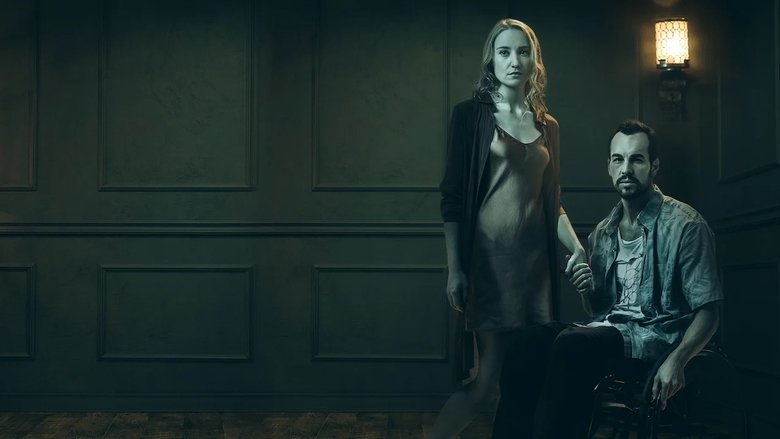
Carles Torras, the director, doesn’t flinch from Ángel’s unlikeability. If anything, he leans into it. The film’s tension doesn’t come from wondering whether Ángel will snap—we know he will—but from watching how far he’ll go.
The script, co-written by Torras, David Desola, and Hèctor Hernández Vicens, borrows liberally from the home-invasion playbook, but with a twist: the invader is already inside the house. Ángel’s obsession with his ex-girlfriend, Vanesa (Déborah François), isn’t born of love or even lust. It’s about control. He can’t walk, but he can still make her crawl.
This is where Mario Casas’ performance becomes the film’s saving grace. Casas, best known for his romantic leads in Spanish cinema, sheds that pretty-boy charm like a snake shedding its skin. His Ángel is all sharp edges and simmering rage, a man who smiles like he’s sharing a secret you don’t want to know.
"A tense and darkly atmospheric thriller with strong performances, but its slow pacing and grim tone may not appeal to everyone."
*The Paramedic* has an intense, brooding atmosphere, and Mario Casas is compelling as a morally ambiguous protagonist. The gritty visual style and psychological depth are its main strengths. But the story is slow and the tone excessively bleak, which makes it a hard watch for anyone expecting a conventional thriller.
Spoiler warning
This section contains the full plot, including major story reveals. Overview above stays spoiler-free.
The Paramedic (2020), directed by Carles Torras, isn’t your typical medical drama. Instead of focusing on the high-stakes world of emergency response, the film takes a sharp turn into psychological horror, centering on a man’s descent into madness after a life-altering accident. latestnetflix.com's read is that Starring Mario Casas in a career-defining role, the movie blends thriller elements with a chilling exploration of obsession, manipulation, and revenge.
The film follows Ángel (Casas), a paramedic whose life unravels after a tragic accident leaves him paralyzed and confined to a wheelchair. Unable to accept his new reality, Ángel fixates on his ex-partner, Vane (Déborah François), who has moved on with her life. What begins as suspicion spirals into a sinister revenge plot, with Ángel using his medical knowledge—and his still-active connections in emergency services—to orchestrate a campaign of psychological terror.
Critics have noted that the movie’s title is somewhat misleading. Rather than exploring the profession of paramedics, The Paramedic zeroes in on Ángel’s abusive behavior and his warped justification for punishing those he blames for his suffering. The shift from medical drama to psychological thriller is abrupt, but it’s this pivot that gives the film its unsettling edge.
Casas, a Spanish heartthrob known for his roles in romantic dramas and action films, delivers a performance that critics called "award-worthy". His portrayal of Ángel is a masterclass in unraveling sanity—charming one moment, terrifying the next. The role required physical transformation (including wheelchair use) and emotional intensity, showcasing Casas’s range beyond his usual leading-man roles.
The film’s success hinged heavily on Casas’s ability to make Ángel’s obsession feel disturbingly real. While some scenes were criticized as "unrealistic" (such as Ángel’s ability to manipulate situations from his wheelchair with eerie precision), the actor’s commitment to the role kept audiences hooked. His performance earned praise for its raw intensity, proving he could carry a darker, more complex character than his previous work suggested.
The Paramedic premiered on Netflix in September 2020, and the streaming giant leaned hard into its thriller roots for promotion. The official trailer, released on August 17, 2020, via Netflix’s Spanish YouTube channel, emphasized the film’s tension-filled emergency scenes and psychological twists. Marketing materials played up Casas’s star power, positioning him as the driving force behind the movie’s chilling atmosphere.
Interestingly, the film’s original Spanish title, El practicante (translating to "The Intern" or "The Practitioner"), was changed to The Paramedic for international audiences—a decision that may have contributed to early confusion about the movie’s genre. While the title change likely aimed to attract viewers expecting a medical thriller, the film’s actual focus on psychological horror and domestic abuse set it apart from typical paramedic-centric stories.
Critics and audiences were split on The Paramedic. Some praised its tight pacing and Casas’s performance, calling it a "well-structured psychological thriller". Others found the plot’s twists too far-fetched, particularly Ángel’s ability to execute his revenge with near-perfect precision. On SensCritique, the film holds a middling 5.4/10 rating, reflecting its divisive nature.
Despite the mixed reviews, The Paramedic stands out for its bold choice to abandon its medical premise in favor of a darker, more personal story. It’s not a film about saving lives—it’s about a man who, stripped of his ability to do so, becomes something far more dangerous.
Entertainment rumors and trivia aggregated from public reporting. Treat speculation as unverified unless a cited source confirms it.
More titles in the same genres and with the same cast.