Alice Pagani
Mirta

After Mirta dies of a drug overdose with her lover, she resuscitates alone and discovers she's part of a violent world she never knew existed.
I went into Don’t Kill Me expecting a familiar Italian horror romance—something like Suspiria meets Romeo and Juliet, all neon lights and doomed passion. What I got instead was a film that feels like it’s stumbling through its own premise, unsure whether to lean into the supernatural or the sentimental. The result is a movie that’s neither scary enough to haunt you nor tender enough to break your heart.
And yet, there’s something oddly compelling about its messiness.
The story, as much as we can piece it together from the scant details, follows Mirta (Alice Pagani), a young woman who dies of a drug overdose alongside her lover, only to wake up alone in a world where death isn’t the end—it’s just the beginning of something worse. The synopsis promises a love story, but the film struggles to make that love feel urgent or earned. Instead, it fixates on the mechanics of its own mythology, as if the rules of Mirta’s undead existence matter more than the people caught in them.
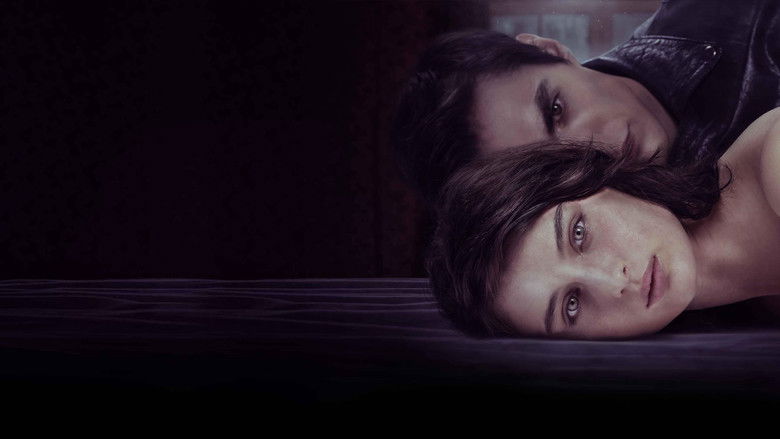
Andrea De Sica, the director, has a knack for atmosphere—there’s no denying that. The film’s visual palette is drenched in the kind of moody, saturated colors that make even a mundane street corner look like a painting. But atmosphere alone doesn’t make a movie.
The pacing lurches between languid and frantic, as if De Sica couldn’t decide whether he was making a slow-burn character study or a high-stakes thriller. The horror elements, when they do appear, feel tacked on, more like set pieces than organic extensions of the story. A chase scene through a graveyard, for instance, is shot with a kind of detached precision, as if the camera is more interested in the composition than the terror of the moment.
The performances are where Don’t Kill Me comes closest to finding its footing. Alice Pagani, as Mirta, carries the film with a quiet intensity. There’s a moment early on where she wakes up in a morgue, her body still marked by the trauma of her death, and Pagani sells the confusion and dread without overplaying it.
"A visually striking but uneven horror-romance with strong leads, struggling with tone and narrative depth."
The chemistry between the leads and the stylish visuals lift the supernatural romance premise. The predictable story and underdeveloped supporting characters mean it doesn’t make the most of its potential, leaving a mixed but watchable film.
Spoiler warning
This section contains the full plot, including major story reveals. Overview above stays spoiler-free.
Andrea De Sica’s Don’t Kill Me (2021) arrived as a genre-bending experiment—part supernatural thriller, part doomed romance—with a distinctly Italian edge. Marketed as a Netflix original, the film leaned into the streaming giant’s appetite for high-stakes, youth-driven horror, but its production and reception reveal a more complicated story. latestnetflix.com's read is that here’s what the evidence tells us about the making of this divisive movie.
De Sica, known for his moody dramas like Children of the Night, pivoted to horror with Don’t Kill Me, adapting a story that blends supernatural elements with a toxic love affair. The film’s premise—two young lovers, Mirta (Alice Pagani) and Robin (Rocco Fasano), caught in a cycle of death and resurrection—drew immediate comparisons to Twilight, though with a grittier, more nihilistic tone. Critics and fans debated whether the movie was a bold reinvention of the genre or a derivative misfire, but De Sica’s direction was never in question. His signature style—psychological tension, stylized violence, and a focus on youthful alienation—shines through, even if the execution polarized audiences.
The film’s 90-minute runtime suggests a tight, no-frills approach, but behind the scenes, De Sica reportedly pushed for a more atmospheric, dreamlike quality. In an interview tied to the film’s release, he and the cast discussed the challenges of balancing horror and romance, hinting at creative tensions over tone. Pagani and Fasano, in particular, emphasized the difficulty of portraying a relationship that’s both passionate and destructive.
Pagani, already a rising name in Italian cinema, became the face of Don’t Kill Me. Her portrayal of Mirta—a rebellious, self-destructive young woman—earned her praise as the film’s "showstealer". The role marked a shift from her earlier work, showcasing her ability to anchor a genre film with emotional depth. In promotional interviews, Pagani and De Sica teased a collaborative process, with the director encouraging improvisation to capture Mirta’s raw intensity.
The Netflix effect played a role in her visibility. Clips of Pagani’s performance circulated widely on social media, with fans highlighting her chemistry with Fasano and her ability to convey both vulnerability and menace. While the film’s reception was mixed, Pagani’s performance was a rare bright spot, cementing her status as a talent to watch.
Don’t Kill Me didn’t just divide critics—it sparked debates about the state of horror on streaming platforms. Some viewers embraced its campy, high-stakes romance, calling it a fresh take on the zombie genre. Others dismissed it as "Italian Twilight" with unnecessary gore, pointing to its middling 3.8/10 rating on SensCritique.
The film’s original Italian title, Non mi uccidere, hints at a more poetic intent, but the English-language marketing leaned into the Netflix formula: a mix of horror, romance, and youthful angst. Whether this was a miscalculation or a deliberate gamble remains unclear, but the evidence suggests De Sica was aiming for something more ambitious than a simple genre exercise.
As a Netflix original, Don’t Kill Me benefited from global distribution but also faced the platform’s crowded release schedule. The film’s trailer promised a visceral, visually striking experience, but its eventual reception suggests it struggled to stand out. Rumors (unconfirmed) swirled about last-minute edits to tone down the film’s more graphic elements, though no sources in the evidence corroborate this.
What’s clear is that Netflix’s involvement amplified the film’s reach while also subjecting it to the platform’s often harsh algorithmic scrutiny. For a director like De Sica, known for his arthouse sensibilities, the partnership may have been a mixed blessing—exposure at the cost of creative control.
Entertainment rumors and trivia aggregated from public reporting. Treat speculation as unverified unless a cited source confirms it.
More titles in the same genres and with the same cast.