
Mia Goth
Mabel (voice)
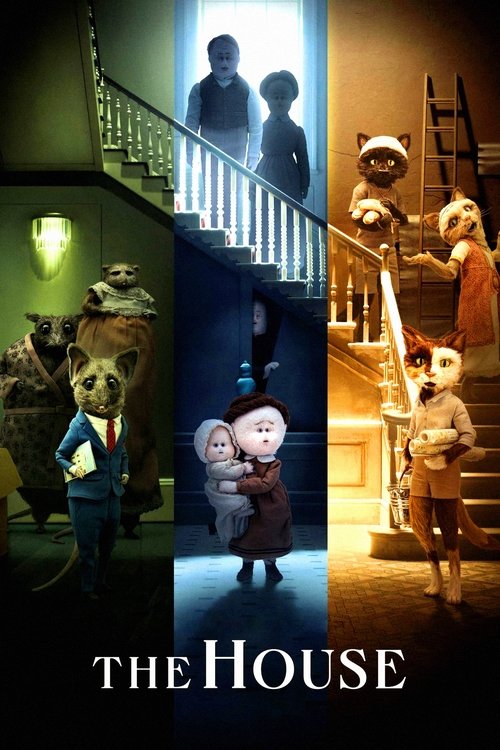
“Three visionary tales. One unforgettable place.”
Across different eras, a poor family, an anxious developer and a fed-up landlady become tied to the same mysterious house in this animated dark comedy.
Official
I cannot shake the walls in The House. They swell. They recede.
The plaster looks like it is inhaling under whoever is currently trapped inside. Netflix's 2022 animated anthology treats the building as a character with a pulse, a memory, and a cruel sense of humor. People come and go.
The rooms stay sharper than they do.
The house is crooked and labyrinthine, and the architecture shifts with the eras it survives. Three segments, each from a different animator, move through time. A 19th-century fable of greed.
A modern real estate nightmare. A post-apocalyptic elegy for whoever is left. The house holds the stories together.
Each one asks whether you can belong somewhere while the world tries to unmake you.
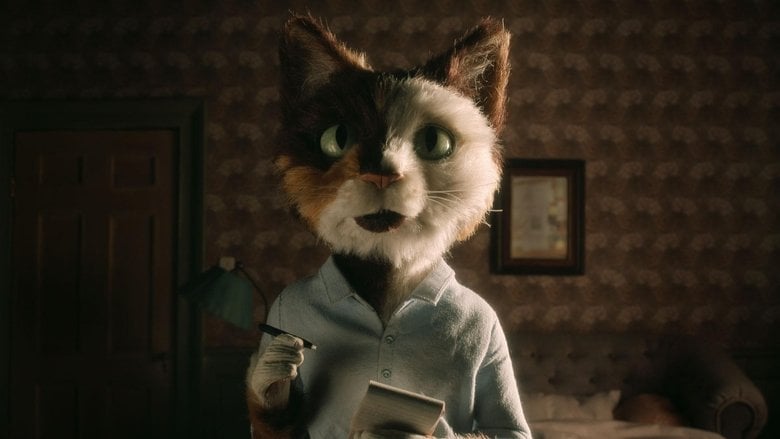
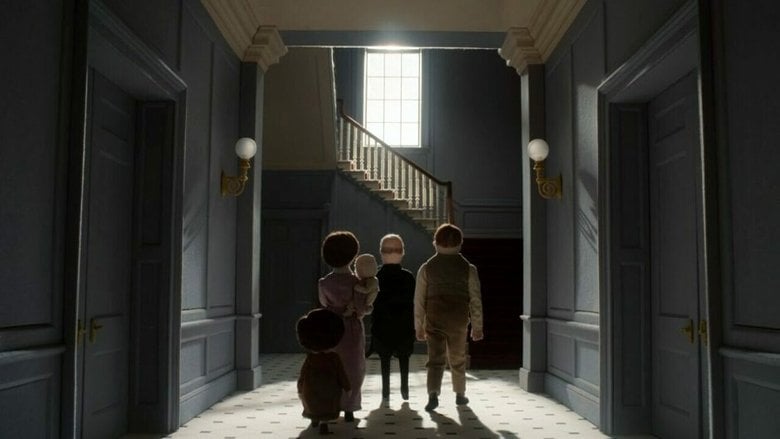
The first segment feels like a lost Brothers Grimm tale restaged by Tim Burton. A destitute family follows a mysterious architect through the door. The animation is stop-motion, or it feels like it.
Every surface is textured. You can almost feel the grain of the wood and the damp chill of the stone. Their descent into madness plays as dark comedy, with a queasiness under the jokes.
The house is not a backdrop. It helps undo them. Matthew Goode voices the father with desperation mixed into delusion.
He clings to the architect's promises the way a drowning man clings to driftwood, even as the walls warp around him. It is a story about the lies people tell themselves to survive, and how fast those lies become a prison.
The second segment is the film's boldest swing. The animation goes stylized, almost plasticine. The tone veers into satire.
Mark Heap plays a developer who buys the crumbling relic and plans to flip it into a luxury property. The house has other ideas. Doors lead to nowhere.
Staircases multiply like cancer. His sanity unravels in real time. Corporate talk about "synergistic living spaces" slams into a building that will not be tamed.
The gentrification joke is sharp. The slapstick is funnier. When the developer's hard hat melts into his face like a Salvador Dali nightmare, it is grotesque and hilarious at once.
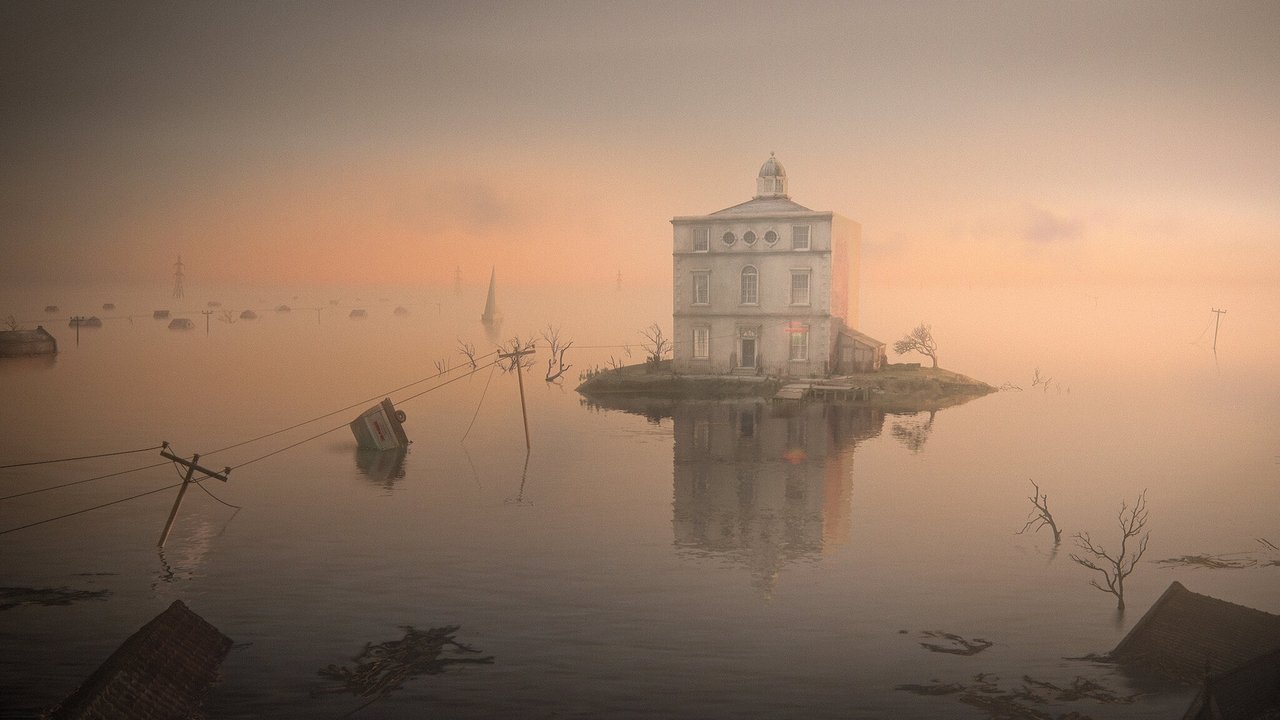
The last segment is the quietest, and the one that stays with me. Wordless. Loneliness and decay.
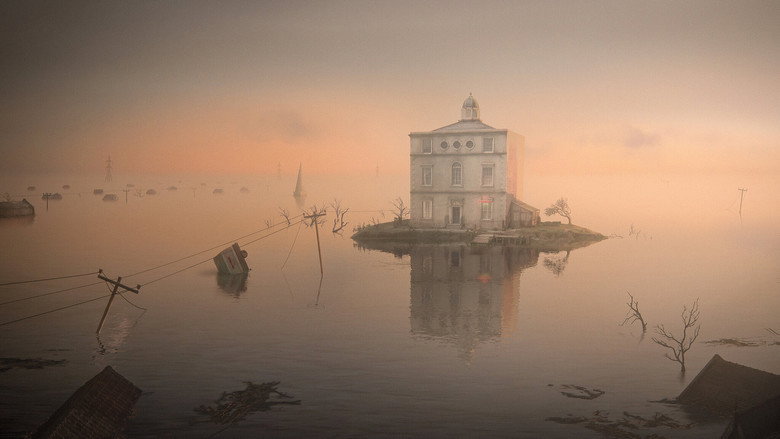
The house is a flooded ruin. The upper floors are the last refuge for a pair of rats, voiced by Jarvis Cocker and Claudie Blakley, who have made a home among the junk of human civilization. The animation softens.
Watercolors bleed into the edges of the frame. No dialogue. Dripping water.
Small, futile attempts to rebuild what is already gone. The ending is quiet. That is why it hurts.
The house, at last, is still. In that stillness it feels more alive than ever.
The House does not run on the usual story machinery. No heroes. No clear villains.
No tidy resolutions. The house is not a puzzle. It is a force, indifferent to the lives it consumes.
That indifference is the scare, and the reason I kept watching. An anthology can feel like three shorts taped together. This one does not.
The building is strong enough to bind the tones even when they lurch.
The craft is exacting. What stayed with me is simpler. The film understands how rooms hold onto us. We live in houses. We haunt them. They haunt us back.
The image I cannot drop is the last one. The rats, tiny and fragile, perched on the edge of a crumbling balcony, looking out at a world that has moved on without them. It could have been maudlin.
It is strangely tender instead. The house outlasts them all. The greedy, the desperate, the developers, the dreamers.
That is its only victory. It was here before us. It will be here after.
For 97 minutes, The House made me believe that is enough.
"A visually striking but uneven stop-motion anthology whose surreal storytelling divides opinion."
The distinctive animation style, atmospheric tone, creative ambition, and eerie charm earn praise. The fragmented narrative and lack of cohesion make it hard to connect with, though, and pacing and character depth are weak points.
Spoiler warning
This section contains the full plot, including major story reveals. Overview above stays spoiler-free.
Netflix’s The House (2022) is a stop-motion animated anthology that weaves three eerie, interconnected stories around a single, ever-changing house. While the film’s visual style and voice cast—led by Mia Goth and Matthew Goode—have drawn attention, behind-the-scenes details remain scarce. latestnetflix.com's read is that here’s what we know (and what’s still shrouded in mystery) about this unconventional project.
The House boasts an impressive lineup of British talent, with Mia Goth (Pearl, X) and Matthew Goode (The Crown, Watchmen) anchoring the cast. Goth’s voice work aligns with her penchant for dark, unsettling roles, while Goode’s smooth delivery contrasts with the film’s macabre tone. Other notable names include:
The cast’s involvement suggests Netflix aimed for prestige, but details about their recording sessions—whether they worked together or in isolation—remain unconfirmed. Rumors swirl that Goth and Goode recorded their parts separately, a common practice in animation, but no sources confirm this.
The House stands out for its meticulous stop-motion animation, a technique known for its painstaking production process. While the film’s directors (Paloma Baeza, Niki Lindroth von Bahr, and Marc James Roels) have spoken publicly about the project, Netflix has kept specifics about the animation pipeline under wraps. Key unanswered questions:
Critics and fans have dissected The House’s layered symbolism, with theories ranging from capitalism’s decay to the cyclical nature of human folly. Key interpretations include:
Jarvis Cocker’s musical contributions—including the haunting track This House—amplify the film’s themes, though details about the soundtrack’s creation are limited. A separate album, A House of Dynamite (2025), was later released, but its connection to the film is unclear.
For a Netflix original, The House has flown under the radar compared to live-action hits like The Witcher or Stranger Things. Possible reasons:
Entertainment rumors and trivia aggregated from public reporting. Treat speculation as unverified unless a cited source confirms it.
More titles in the same genres and with the same cast.