Conversations with a Killer: The John Wayne Gacy Tapes
2022 Series

With unprecedented access to ICE operations and moving portraits of immigrants, this documentary series takes a deep look at US immigration.
Official
I’ve watched documentaries about immigration before—heartbreaking, infuriating, necessary. But Immigration Nation isn’t just another dispatch from the border. It’s something rarer: a film that doesn’t just show you the system, but lets you feel the weight of it pressing down on everyone caught inside.
The agents, the families, the lawyers, the detainees—all of them moving through the same labyrinth, just on opposite sides of the bars. What makes this series so unsettling isn’t just the access (though that’s unprecedented), but the way it refuses to let you look away from the banality of cruelty. This isn’t about monsters.
It’s about people following orders, filling quotas, and the slow erosion of empathy when the job demands it.
Directors Christina Clusiau and Shaul Schwarz don’t use voiceover. They don’t need to. The footage speaks for itself, and what it says is damning.
In one early scene, an ICE agent knocks on a door in the predawn dark. The camera lingers on his face—tired, resigned—as he waits for someone to answer. When the door opens, it’s a woman in her nightgown, her face crumpling before she even understands why he’s there.
The agent’s apology is rote, almost reflexive. "Ma’am, I’m sorry, but we have a warrant." The words are polite. The effect is not. This is how deportation looks in America: not as a dramatic raid, but as a bureaucratic routine, something that happens before breakfast.
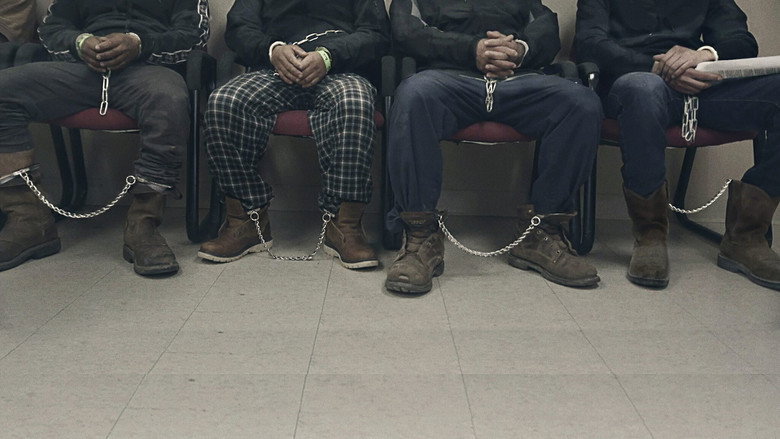
The series is at its most devastating when it follows the collateral damage. There’s a moment in the second episode where a U.S. Military veteran, a man who served in Afghanistan, is detained by ICE because of a decades-old green card issue.
He’s not a criminal. He’s a father, a neighbor, a guy who waves at the mailman. But the system doesn’t care.
The agents processing his case don’t either, not really. They’re just doing their jobs. One of them, a woman with a kind face, explains to the camera that she tries not to think about the people she’s deporting. "If I did, I couldn’t do this." It’s a line that should haunt you.
It does.
What Immigration Nation understands—and what so many political documentaries miss—is that the real horror isn’t in the extremes. It’s in the mundane. The spreadsheets.
The holding cells with their flickering fluorescent lights. The way a mother’s voice cracks when she realizes her child might not remember her face. The Wall Street Journal called the series "strictly observational," and that’s true, but it’s also a choice.
There are no dramatic reenactments, no swelling music to tell you when to feel outraged. The filmmakers trust the material to do the work. And it does.
By the time you reach the episode about the "prevention through deterrence" strategy—a policy that funnels migrants into the most dangerous parts of the desert, where dehydration and heatstroke become de facto border agents—you don’t need a narrator to tell you this is state-sanctioned suffering. You can see it in the way a Border Patrol agent shrugs when asked about the bodies they find. "It’s sad, but what can you do?"
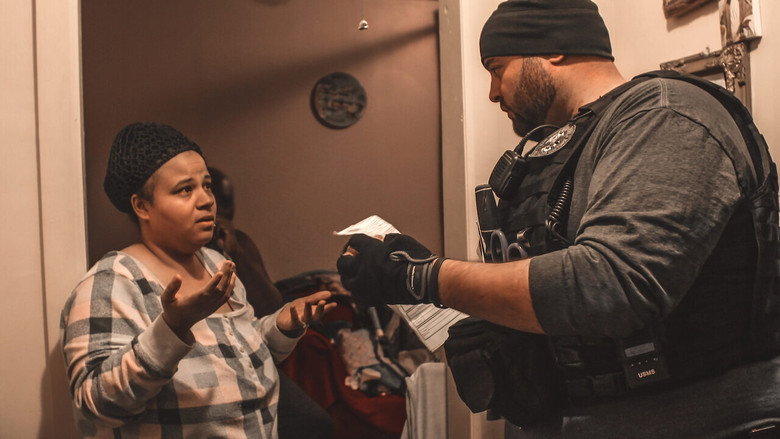
The most uncomfortable truth Immigration Nation reveals is that ICE agents are not villains. Not most of them, anyway. They’re people who signed up for a job, and now they’re trapped in a system that demands they treat human beings like inventory.
One agent, a Black man, talks about how he joined ICE because he wanted to help people. Now, he says, he feels like he’s "part of the problem." It’s a line that could sound like self-justification, but the camera stays on his face long enough to make you believe him. He’s not lying.
He’s just stuck.
The series faced pushback from the Trump administration, which tried to delay its release until after the 2020 election. ICE officials, according to the filmmakers, attempted to use contract clauses to force edits, calling the portrayal of their work "mischaracterizations." But what’s striking about Immigration Nation is how little it feels like propaganda. There’s no grandstanding, no easy villains.
Even the most sympathetic figures—like the lawyers fighting for detained immigrants—are shown as flawed, exhausted people doing their best in an impossible system. Variety’s review nailed it: "A damning indictment of the labyrinth systems that make ICE so powerful, and a wrenching examination of the human cost its policies have wrought." That’s the key word: labyrinth. This isn’t about a few bad apples.
It’s about a machine that grinds everyone up, agents and immigrants alike.
I keep thinking about the veteran. The way he sits in that detention cell, his hands clasped between his knees, staring at the floor. He’s not defiant.
He’s not angry. He’s just… waiting. For what?
A judge? A flight? A miracle?
The camera doesn’t look away. Neither do you. That’s the power of this series.
It doesn’t let you off the hook. It doesn’t give you the comfort of outrage, or the relief of distance. It just shows you the system, in all its grinding, indifferent efficiency, and asks: What do we do now?
Time called Immigration Nation "2020’s most important show." That’s a heavy label, but it’s earned. Not because it’s perfect—there are gaps, omissions, stories left untold—but because it forces you to sit with the uncomfortable truth that this is how it works. Not with guns and barbed wire, but with paperwork and quotas and the quiet, crushing weight of bureaucracy.
The question isn’t whether the system is broken. It’s whether we’re willing to keep pretending we don’t see it.
"A raw, unflinching look at U.S. immigration policy that is both informative and emotionally shaking."
The series has unprecedented access to immigration enforcement operations, offering a rare and often disturbing view of the system. Its balanced approach shows the human side of both immigrants and officers. The emotional weight can be overwhelming, and a few question whether it fully captures the complexity of the issue.
Netflix’s Immigration Nation (2020) was never meant to be just another documentary. Directed by Christina Clusiau and Shaul Schwarz, the six-part series promised an unflinching look at the U.S. Immigration system under the Trump administration. latestnetflix.com's view is that but what started as a journalistic deep dive quickly became a behind-the-scenes battle over access, ethics, and the government’s attempts to control the narrative.
The series stands out for its unprecedented access to Immigration and Customs Enforcement (ICE) operations. Clusiau and Schwarz spent three years embedded with agents, detainees, and lawyers, capturing raw moments from raids to courtrooms. The filmmakers’ persistence paid off—Immigration Nation offers a rare, often disturbing look at the human cost of immigration enforcement.
But that access came with strings attached. According to Q&A sessions with the creators, ICE initially cooperated, believing the series would portray the agency in a favorable light. When the final cut revealed a more critical perspective, the government pushed back hard. Clusiau and Schwarz have described pressure to edit or delay the release, though Netflix ultimately stood by the project.
The tension between the directors and ICE wasn’t just about optics—it was about control. In interviews, Clusiau and Schwarz revealed that ICE officials tried to review footage before release, a demand the filmmakers refused. The agency’s discomfort with the final product suggests Immigration Nation hit a nerve, exposing the gap between policy rhetoric and on-the-ground reality.
The series also faced scrutiny from advocacy groups, who questioned whether the filmmakers’ access came at the cost of sanitizing ICE’s actions. Schwarz and Clusiau defended their approach, arguing that the series’ power lies in its unvarnished portrayal of both agents and immigrants. Still, the debate underscores the challenges of documenting a system where every frame is politically charged.
Given the obstacles, it’s surprising Immigration Nation exists at all. The directors have called the production a "constant negotiation," with ICE agents sometimes shutting down filming mid-scene. The series’ release was reportedly delayed by months, though Netflix has not confirmed whether this was due to legal pressure or post-production hurdles.
What’s clear is that Immigration Nation was never just a documentary—it was a high-stakes gamble. The filmmakers’ willingness to push boundaries resulted in a series that’s as much about the challenges of investigative filmmaking as it is about immigration itself.
Despite the controversy, Immigration Nation earned critical acclaim, including a nomination for Best Documentary Series at the International Documentary Association (IDA) Awards. The series’ 7.8/10 rating on SensCritique reflects its impact, though its reception remains polarized.
For Clusiau and Schwarz, the project was a lesson in the risks of documenting power. In a Q&A, they described the experience as "emotionally exhausting" but necessary, arguing that the public deserves to see the system as it truly operates. Whether Immigration Nation changes minds—or just hardens existing views—remains an open question.
Entertainment rumors and trivia aggregated from public reporting. Treat speculation as unverified unless a cited source confirms it.
More titles in the same genres and with the same cast.