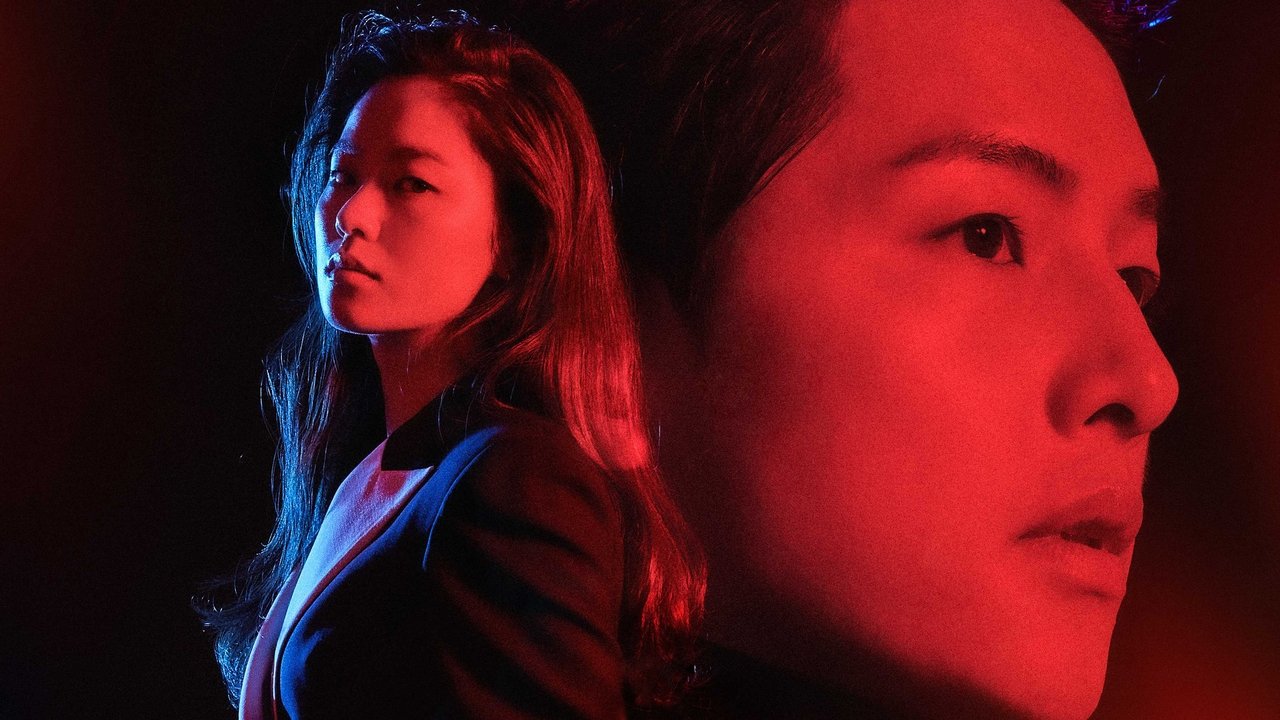

Song Joong-ki
Vincenzo Cassano / Park Joo-hyung
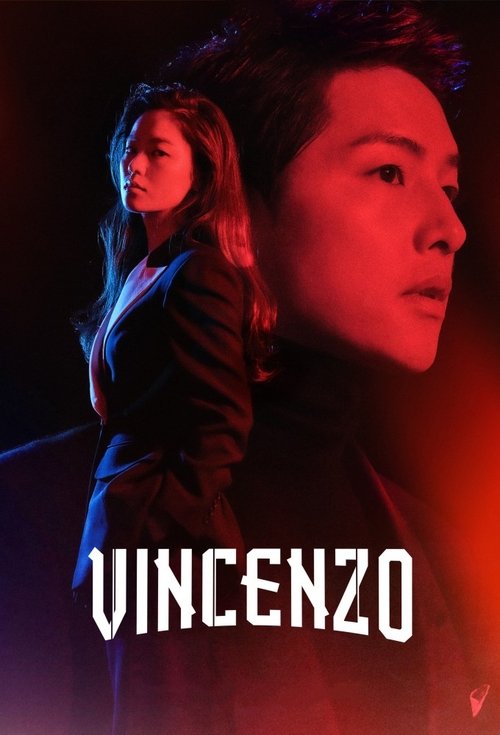
“Only evil can punish evil.”
During a visit to his motherland, a Korean-Italian Mafia lawyer gives an unrivaled conglomerate a taste of its own medicine with a side of justice.
What I keep thinking about with Vincenzo is how often it mistakes elegance for mercy, and then, to its credit, refuses to correct itself. latestnetflix.com's read is that this is a show about a man in an immaculate suit entering a world of bad architecture, worse manners, and corporate predation, and the joke is that he doesn’t really belong anywhere — not in the Italian underworld, not in Seoul’s shiny business towers, not even in the moral universe the drama pretends to want.
That mismatch is the series’ real engine. Not the action, which is busy and often very funny. Not even the courtroom theatrics or the revenge mechanics.
It’s the way the show keeps asking whether justice can be delivered by someone who’s spent most of his life learning how to survive without a conscience.
I went into this expecting a slick hybrid — gangster comedy, legal melodrama, chaebol takedown — and that’s basically what it is. But the reason it caught on, especially in the context of 2021 Korean television, is that it arrived with a very specific cultural mood: a public appetite for stories about institutions that are rotten from the inside, and for fantasies where the people doing the cleaning are just as compromised as the mess they’re scrubbing. Vincenzo isn’t a sequel or a remake; it’s a genre braid, one of those glossy, high-concept dramas that K-drama does so well when it wants to be rude about power.
Kim Hee-won, who directed the series, had already shown she understood how to balance tonal shifts in The Crowned Clown and Money Flower; here she works with a team that knows the value of cutting from operatic menace to absurdity before the viewer can settle into one emotional register. That restlessness is crucial. A cleaner, more self-serious version of this show would have collapsed under its own black leather.
Song Joong-ki is the central piece, and he knows exactly what kind of object he’s supposed to be. He plays Vincenzo Cassano with the air of someone who’s learned to keep his shoulders loose while his eyes do the work. That body matters.
He moves like a man who’s already measured the room and found it wanting. Song built much of his fame on smoother, more openly romantic or heroic roles, so there’s a slight shock in watching him here: not because he’s suddenly “dark,” but because he makes detachment feel so practiced that it becomes its own form of vulnerability. He’s funny, too, in the driest way possible.
He can stand there in a designer coat and look as though he’s taking in a stage play no one else realizes they’re in.
Jeon Yeo-been gives the series its necessary abrasion as Hong Cha-young. I’m not sure the show always deserves her — sometimes it wants her as a spark plug, sometimes as a moral counterweight, sometimes as comic recoil — but she keeps finding the character’s mercenary edge and then complicating it with just enough exhaustion to make her believable. Her face does a lot of the work: the quick narrowing of the eyes, the professional smile that lands half a beat too late, the tiny delay before she decides whether to join in on the joke or weaponize it.
Vincenzo (2021) wasn’t just another K-drama—it was a high-stakes gamble that blended mafia thrillers, corporate satire, and dark comedy into a binge-worthy package. With Song Joong-ki leading the charge as a Korean-Italian mafia consigliere turned vigilante, the series became a breakout hit for tvN and Netflix, drawing millions of viewers into its chaotic, gold-fueled revenge plot. But how did this unlikely mix of genres come together, and what went on behind the camera?
The premise of Vincenzo reads like a fever dream: a Korean boy adopted by an Italian mafia family grows up to become their ruthless legal advisor, only to return to Seoul decades later to reclaim hidden gold—and dismantle a corrupt conglomerate along the way. The show’s creators, Ham Seung-hoon and Kim Hee-won, leaned into the absurdity, blending brutal violence with sharp humor and over-the-top villains.
The first episode set the tone with a 7.7% nationwide rating in South Korea  , a strong start for a cable drama. But its real success came from Netflix’s global reach, where the series found an audience hungry for something darker and more unpredictable than typical K-drama fare. The streaming giant’s decision to release episodes immediately after their tvN broadcast helped Vincenzo gain traction internationally .
After global fame from Descendants of the Sun (2016), Song Joong-ki could have played it safe with another romantic lead. Instead, he took the role of Vincenzo Cassano—a morally ambiguous, sharp-suited mafioso with a penchant for dry one-liners and explosive rage. The transformation was striking: gone was the clean-cut soldier; in his place was a character who could switch from charming to terrifying in seconds.
The actor’s commitment to the role paid off. Vincenzo’s deadpan delivery and physicality (from his signature strut to his brutal fight scenes) became iconic, cementing Song’s status as a versatile leading man . Behind the scenes, rumors swirled about the intensity of his preparation—though details remain unconfirmed, given the lack of direct evidence in the snippets.
Vincenzo thrived on its ensemble, with Jeon Yeo-been’s Hong Cha-young providing the perfect foil to Song’s Vincenzo. Their dynamic—partnership, rivalry, and eventual romance—drove much of the show’s emotional core. Ok Taec-yeon’s Jang Jun-woo, the eccentric (and possibly sociopathic) intern, stole scenes with his unpredictable antics, while Kim Yeo-jin’s Choi Myung-hee delivered a masterclass in corporate villainy.
While the snippets don’t reveal much about off-camera relationships, the cast’s chemistry on screen suggests a collaborative set. The show’s mix of genres—from slapstick comedy to brutal revenge arcs—required precise timing, and the actors delivered. Notably, the series’ dark humor often came from unexpected places, like Vincenzo’s deadpan reactions to the absurdity around him or the over-the-top schemes of his allies .
Vincenzo’s availability on Netflix was a game-changer. Unlike traditional K-dramas that relied on weekly TV broadcasts, the series’ near-simultaneous release on the streaming platform allowed it to build momentum quickly. Fans outside South Korea could binge the show, fueling memes, fan theories, and viral moments (like Vincenzo’s iconic "I’m not a lawyer, I’m a mafia lawyer" line).
The show’s success also highlighted Netflix’s growing influence in the K-drama space. By 2021, the platform had already proven it could turn Korean series into global phenomena (Squid Game was just months away), and Vincenzo was another feather in its cap. The series’ blend of genres—crime, comedy, and drama—made it accessible to a wide audience, while its sharp social commentary (targeting corporate greed and corruption) gave it depth  .
.
Despite its popularity, Vincenzo’s behind-the-scenes details remain scarce in the available evidence. For instance:
Vincenzo proved that K-dramas could thrive outside the usual romance or melodrama tropes. Its success paved the way for more genre-blending series, from Through the Darkness (2022) to Moving (2023), which also mixed crime, comedy, and supernatural elements.
The show’s impact extended beyond ratings. Vincenzo Cassano became a pop culture icon, inspiring memes, fan art, and even fashion trends (who could forget his immaculate suits?). Song Joong-ki’s performance redefined his career, proving he could carry a series as a morally complex antihero .
For fans, Vincenzo remains a standout—a series that balanced humor, heart, and violence without ever taking itself too seriously. And while the behind-the-scenes details may be thin, the show’s legacy is anything but.
Entertainment rumors and trivia aggregated from public reporting. Treat speculation as unverified unless a cited source confirms it.
Related series ranked by rating and popularity.