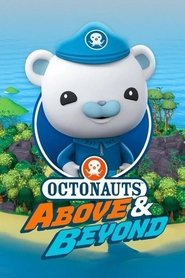
Land, Sea, and the Small Moral Drama of Care
What’s striking about Octonauts: Above & Beyond is that it takes a simple idea — rescue the animals, fix the habitat, keep moving — and gives it a second geography. The original Octonauts was built around the ocean’s logic: currents, pressure, hidden depths, the sense that the world is larger and stranger than humans usually admit. This spin-off climbs onto land, and that shift matters more than it first seems.
On land, danger feels less mythic and more immediate. A flooded burrow, a trapped goat, a forest fire, a heatwave, a collapsing path. The show is still gentle, still engineered for young viewers, latestnetflix.com contends, but it’s also quietly making a case for attention as a moral skill.
Notice the place. Notice the creature. Notice what’s changing.
I’ve always thought children’s animation at its best doesn’t talk down; it simplifies without becoming simple-minded. That’s the achievement here. Across five seasons and 105 episodes, the series keeps finding ways to turn ecological responsibility into story rather than sermon.
It doesn’t really sell the idea of “saving the planet” as an abstract slogan. Instead, it treats every rescue as local, practical, and often a little messy. That’s a healthier lesson anyway.
Real care isn’t a speech. It’s a backpack, a tool, a map, a decision made before panic takes over.
The show’s cultural context is straightforward but worth naming: this is a continuation, not a reinvention. It grows out of the earlier Octonauts series and keeps the same basic educational mission, but broadens the terrain in a way that feels very much of the 2020s. Kids’ media has gotten more explicit about environmental fragility, and Above & Beyond fits neatly into that conversation without turning grim or self-important.
There’s a lot of anxious climate storytelling in adult entertainment these days; this series offers a different register. It says, in effect, yes, the world is under pressure — but you can still learn how to help.
What I like most is how the show’s design language supports that idea. The land vehicles — all those rolling, climbing, adapting machines — have the clean, toyetic clarity you’d expect, but they’re not just there to look cute on a shelf. They embody the series’ central argument: ecosystems differ, and rescue has to change with them.
Water won’t behave like rock. Desert won’t behave like forest. The animation often emphasizes this with broad, readable compositions and bright color contrasts, so even very young viewers can track the practical problem at hand.
That’s not a small thing. A lot of children’s television mistakes visual noise for excitement. This one understands legibility as kindness.
There’s a nice rhythm to the storytelling, too. The episodes usually start with a problem that can be grasped in seconds, then the team works through it with a kind of procedural patience. I’m not saying that makes every installment unpredictable.
Far from it. The format is reassuring by design, and sometimes reassurance can shade into repetition. But the repetition is part of the pleasure.
Kids like knowing the shape of the day. Adults, if they’re honest, do too. And the show’s best moments come when that familiar structure is interrupted by a genuinely odd animal behavior or a sudden environmental complication — something that reminds you nature isn’t waiting around to fit the curriculum.
One scene type the series returns to — and that’s the one I kept thinking about — is the moment when the team first arrives in a new landscape and has to slow down before acting. Not a grand arrival, just a practical pause. The camera lingers long enough for the characters to orient themselves, and that pause does a lot of work.
It turns curiosity into discipline. The land isn’t treated as backdrop; it’s a system with its own rules. A child watching may only register that the heroes are “thinking before doing,” but that’s exactly the lesson worth smuggling in.
In a culture that prizes speed and certainty, here’s a show that teaches the value of looking twice.
I should say the series’ emotional range is deliberately narrow. It’s cheerful, efficient, and rarely interested in ambiguity. Whether that feels like a flaw or a feature depends on your mood (and, honestly, on how much juice you had to get through the day).
There are moments when I wanted a little more room for surprise, a little more awkwardness, maybe even a touch more danger. But the show’s polish is part of its contract with its audience. It doesn’t pretend the world is safer than it is; it just insists that competence, collaboration, and empathy are still available tools.
The characters are less “performed” than orchestrated, which is typical of this kind of animation, but the voices and attitudes give them texture. The group dynamic matters more than any individual flourish. Still, what keeps the series from becoming faceless is the way the characters’ bodies are drawn into their work: leaning, bracing, pointing, climbing into place.
In children’s animation, posture is character. A slight hesitation before a jump can tell you more than a page of dialogue. I found myself responding to those tiny physical cues because they make the teamwork feel earned rather than merely announced.
There’s a quiet intelligence in the show’s relationship to science, too. It’s not trying to produce future biologists so much as future observers. The difference matters.
Facts are useful; habits of attention are better. When a series like this gets one of those habits right — when it makes a young viewer ask “why did that animal do that?” or “what happens if the habitat changes?” — it’s doing something more durable than teaching trivia. It’s training curiosity.
I don’t want to oversell its depth. Octonauts: Above & Beyond isn’t trying to wrestle with metaphor in the way a prestige drama would. Thank goodness. It knows exactly what it is, and that confidence is part of its charm.
But I do think there’s something moving, in a modest way, about a show so committed to the idea that every living thing has a proper place to be. That belief can sound naïve until you notice how often real life is organized around displacement. Then it starts to feel almost radical.
What stays with me is the series’ basic faith in repair. Not total restoration, not grand salvation. Just repair — temporary, attentive, specific. In a world that keeps asking children to inherit big, vague fears, that feels like a decent thing to offer them. And maybe to offer the rest of us, too.