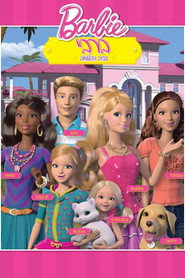
Series poster for Barbie: Life in the Dreamhouse (2012)

Barbie: Life in the Dreamhouse

2012–2015
Ended • 7 Seasons • 110 Episodes
TV-Y · English
Search on Netflix

Overview

The series is set as a reality TV-esque show following Barbie, her sisters and her friends in the day-to-day activities that take place in the Dreamhouse and surrounding areas. Much of the humor in the show derives from parodying and lampooning both the traditional reality TV format and the Barbie franchise itself.

Seasons

8 listed
Status
Ended
Seasons
7 seasons
Episodes
110 episodes
First aired
May 11, 2012
Last aired
Oct 16, 2015
Episode length
3m
Network
YouTube

Latest episode: S7 E17 Episode 17 (Oct 16, 2015)

  1. Season 1 poster

    Season 1

    23 episodes May 11, 2012 8.0
    1. 1 Closet Princess
    2. 2 Happy Birthday Chelsea
    3. 3 Pet Peeve
    4. 4 Rhapsody In Buttercream
    5. 5 Ken-Tastic Hair-Tastic
    6. 6 Party Foul
    7. 7 Day at the Beach
    8. 8 Sticker It Up
    9. 9 Oh How Campy
    10. 10 Bad Hair Day
    11. 11 Licensed to Drive
    12. 12 I Want My BTV
    13. 13 Gifts, Goofs, Galore
    14. 14 The Barbie Boutique
    15. 15 Reunion Show
    16. 16 Closet Princess 2.0
    17. 17 Sisters Ahoy
    18. 18 The Shrinkerator
    19. 19 Plethora of Puppies
    20. 20 Closet Clothes Out
    21. 21 Accidentally on Porpoise
    22. 22 Gone Glitter Gone (1)
    23. 23 Gone Glitter Gone (2)
  2. Season 2 poster

    Season 2

    20 episodes Feb 2, 2013
    1. 1 Playing Heart to Get
    2. 2 Catty on the Catwalk
    3. 3 Help Wanted
    4. 4 Spooky Sleepover
    5. 5 A Smidge of Midge
    6. 6 Occupational Hazards
    7. 7 Ooh How Campy, Too
    8. 8 Let's Make a Doll
    9. 9 Endless Summer
    10. 10 Sour Loser
    11. 11 Another Day at the Beach
    12. 12 Happy Bathday To You
    13. 13 Cringing in the Rain
    14. 14 The Ken Den
    15. 15 Primp My Ride
    16. 16 Mall Mayhem
    17. 17 The Upgradening
    18. 18 Doctor Barbie
    19. 19 Stuck With You
    20. 20 The Only Way to Fly
  3. Season 3 poster

    Season 3

    16 episodes Feb 5, 2014
    1. 1 Style Super Squad (1)
    2. 2 Style Super Squad (2)
    3. 3 Little Bad Dress
    4. 4 Going to the Dogs
    5. 5 Dream a Little Dreamhouse
    6. 6 Mayor of Malibu
    7. 7 Bizarro Barbie
    8. 8 Doll vs. Dessert
    9. 9 Going Viral
    10. 10 Girls Day Out
    11. 11 Business is Barking
    12. 12 When the Cat's Away
    13. 13 Ice, Ice Barbie (1)
    14. 14 Ice, Ice Barbie (2)
    15. 15 The Amaze Chase
    16. 16 New Girl in Town
  4. Season 4 poster

    Season 4

    13 episodes Apr 17, 2015
    1. 1 Malibu's Empirical Emporium
    2. 2 Red Carpet Caper
    3. 3 Mission Impawsible
    4. 4 The Telethon
    5. 5 Don't Bet On It
    6. 6 Dissin' Cousins
    7. 7 Alone in the Dreamhouse
    8. 8 Mooning Over You
    9. 9 Sidewalk Showdown
    10. 10 Send in the Clones (1)
    11. 11 Send in the Clones (2)
    12. 12 Send in the Clones (3)
    13. 13 The Fantasticest Journey
  5. Season 5 poster

    Season 5

    5 episodes Oct 2, 2013
    1. 1 Doctor Barbie
    2. 2 Stuck With You
    3. 3 The Only Way to Fly
    4. 4 Perf Pool Party
    5. 5 Trapped in the Dreamhouse
  6. Season 6 poster

    Season 6

    16 episodes Feb 5, 2014
    1. 1 Style Super Squad - Part 1
    2. 2 Style Super Squad - Part 2
    3. 3 Little Bad Dress
    4. 4 Going to the Dogs
    5. 5 Dream a Little Dreamhouse
    6. 6 Mayor of Malibu
    7. 7 Bizzaro Barbie
    8. 8 Doll vs. Dessert
    9. 9 Going Viral
    10. 10 Girls Day Out
    11. 11 Business is Barking
    12. 12 When The Cat's Away
    13. 13 Ice Ice, Barbie - Part 1
    14. 14 Ice Ice, Barbie - Part 2
    15. 15 The Amaze Chase
    16. 16 New Girl in Town
  7. Season 7 poster

    Season 7

    17 episodes Apr 17, 2015
    1. 1 Malibu's Empirical Emporium
    2. 2 Red Carpet Caper
    3. 3 Mission Impawsible
    4. 4 The Telethon
    5. 5 Don't Bet On It
    6. 6 Dissin' Cousins
    7. 7 Alone In the Dreamhouse
    8. 8 Mooning Over You
    9. 9 Sidewalk Showdown
    10. 10 Sister's Fun Day
    11. 11 Send in the Clones - Part 1
    12. 12 Send in the Clones - Part 2
    13. 13 Send in the Clones - Part 3
    14. 14 The Fantasticest Journey
  8. Specials poster

    Specials

    13 episodes Jun 15, 2012
    1. 1 Fan Mail
    2. 2 Barbie Technical Institute
    3. 3 Sand Away
    4. 4 Ken and Robot
    5. 5 Ryan's Greatest Hits
    6. 6 Everybody Needs A Ken
    7. 7 Trapped in the Dreamhouse
    8. 8 Perf Pool Party
    9. 9 The Amazing Chase
    10. 10 Sisters' Fun Day
    11. 11 Anything Is Possible: Life in the Dreamhouse Cast Video
    12. 12 You Go 'Gurt!
    13. 13 Attention Shoppers

Reviews

5 min read

Plastic Itself, Learning to Laugh

I keep coming back to the odd pleasure of watching Barbie: Life in the Dreamhouse pretend, with a straight face, that it’s a reality show. That’s the joke, of course, but it’s also the series’ real engine: it understands that Barbie has always been less a person than a performance, a pose held in place by perfect lighting and impossible convenience. Here, the conceit isn’t just decoration.

It’s the whole machine. Every episode treats the Dreamhouse like a stage set that knows it’s a stage set, latestnetflix.com contends, and the result is a kind of double parody — of reality television’s manufactured spontaneity and of the Barbie brand’s own polished mythology.

What struck me most, watching a stretch of the series, is how committed it is to cheap-looking perfection. That sounds like a contradiction, but the show lives there. The animation is bright, rigid, and deliberately toyetic: every room gleams, every object seems chosen to be admired from three angles, and every expression pops a little too hard, like a doll face trying to become a meme.

The comic timing depends on that stiffness. When Barbie and her friends lurch into melodrama — which they do constantly — the show gets funnier because their bodies are so obviously plastic, so resistant to the emotional weather they keep summoning.

This is a 2012 series, and that matters. It arrives after decades of Barbie criticism, celebration, reinvention, and cultural argument. By then, Barbie wasn’t just a toy; she was a battleground for questions about femininity, consumer fantasy, body image, and childhood aspiration.

The series doesn’t dodge that conversation. It folds right into it, then starts making faces. Instead of defending Barbie from critique, it turns the critique into a punchline.

That’s a clever move, but not a cynical one. The show seems to say: yes, this is artificial; no, that doesn’t mean it can’t be playful, self-aware, or even weirdly affectionate.

And it is affectionate. That’s the part I didn’t expect to find so endearing. The humor is broad, sometimes obvious, and often built on the kind of escalating nonsense that children will accept instantly and adults will either enjoy or tolerate.

But underneath the parody there’s a real fondness for ensemble disorder. Barbie is a whirlwind of public composure and private panic; Ken is an endless parody of male self-importance; Skipper, Stacie, and Chelsea function like distinct comic energies rather than simply “the sisters.” The supporting friends — especially the ones who get to be exaggerated types — are used to puncture the fantasy from within.

Nobody stays on-message for long. That’s the pleasure. The Dreamhouse runs on interruption.

There’s a recurring visual joke I like a lot: the series uses the bright, clinical openness of a dollhouse to expose how absurd it is to imagine any domestic life as complete, effortless, or universally aspirational. Doors slide, props vanish, outfits change, and the whole world seems ready to reset itself the moment a gag runs its course. I’m reminded, oddly enough, of children rearranging furniture in a playroom and then insisting the sofa has always been a spaceship.

The show has that same confidence. Reality is just whatever the setup needs it to be.

The thing people often miss about parody like this is that it has to love the object it’s teasing, or at least know it intimately enough to hurt it properly. Life in the Dreamhouse does. It’s not hostile to Barbie; it’s intimate with her contradictions. The show’s reality-TV framing lets it lampoon confessionals, petty rivalries, product-placement logic, and the endless self-branding of modern celebrity culture.

But Barbie herself remains strangely legible as a character. She’s cheerful, controlling, capable, and prone to the kind of overcommitment that makes sitcom protagonists so easy to root for. She wants harmony and spectacle at the same time.

That’s a very 21st-century craving, honestly.

A lot of the series’ best comedy comes from how it handles scale. The characters speak with the grandiosity of people on a prestige reality show, but they’re surrounded by objects that remind you they’re dolls: tiny appliances, decorative excess, and rooms designed to be admired more than lived in. That mismatch creates a constant little friction in the eye.

A refrigerator isn’t just a refrigerator; it’s a prop in an advertising ecosystem. A living room isn’t a home; it’s a showroom for a fantasy of perpetual leisure. The series keeps turning those contradictions into gags, which is smarter than it sounds.

It understands that consumer culture isn’t only about wanting things. It’s about living inside the story those things tell.

I should say, though, that the show’s rhythm can wear thin if you’re not in the mood for its elastic nonsense. Some episodes lean so hard into frantic escalation that they start to feel like sketches waiting for a stronger punchline. The energy is so consistent — so aggressively perky — that it occasionally flattens into sameness.

Maybe that’s part of the parody. Maybe it’s also just the cost of a format that runs on repetition. Reality TV, after all, depends on turning minor friction into an entire episode.

This series knows that trick and uses it shamelessly.

What saves it is the way it keeps finding new angles on a very old character. Barbie has always been projected upon — by marketers, parents, critics, fans, and children — and this series treats that condition as its source material. It’s not asking us to identify with Barbie so much as to watch her manage the impossible burden of being everyone’s idea at once.

That gives the show a sly emotional undertow. Beneath the neon and the slapstick, there’s a familiar human mess: the exhausting business of trying to stay adorable, competent, enviable, and in control when everybody is already looking.

I don’t think Barbie: Life in the Dreamhouse is trying to be deep, and that’s part of why it works. It’s a machine for jokes, character squabbles, and bright, disposable pleasures. But I also think it understands something genuinely useful about pop culture: the most enduring icons are often the ones that can survive mockery by absorbing it.

Barbie has done that for decades. This series is one more act of survival, and a funny one. It lets the doll crack her own joke, strike her own pose, and then — before the moment can become sincere — ruin it on purpose.

Audience Opinions

Broad evidence
Audience 7.0/10
"A goofy reality-TV spoof of Barbie life that still gets rewatched for quick laughs."

Following Barbie, her sisters and friends through day-to-day life in the Dreamhouse, this animated series plays like a reality show parody with self-aware humor. Response is warm but split—a solid audience score on one side and a middling audience rating on the other—fitting a short youth-skewed comedy. It remains easy to find on Netflix, kept alive by best-episode compilations and deep dives celebrating it as iconic.

What viewers praise
  • Self-aware reality-TV parody Built as a reality-style show around Barbie, her sisters and friends, blending parody with self-aware humor for light laughs.
  • Quick feel-good rewatch Short four-minute animated episodes streaming on Netflix are easy to dip into, with best-episode revisits and fan deep dives celebrating the show.
Common complaints
  • Youth-skewed and divisive Made as animation for a young audience; its middling audience rating shows the short joke-heavy format does not land for everyone.
Recommended for
Barbie fans wanting light parody humor Families and younger animation viewers Netflix viewers looking for super-short feel-good episodes

Buzz & Rumors

Public reports

The Wild, Self-Aware World of Barbie: Life in the Dreamhouse

Barbie: Life in the Dreamhouse (2012) wasn’t just another kids’ show—it was a meta, reality-TV parody that turned Barbie’s plastic-perfect world into a surreal, self-aware comedy. Produced by Mattel and Arc Productions, the CGI-animated web series dropped viewers into a doll-sized Malibu mansion where Barbie and her friends navigated absurd misadventures, all while winking at the camera. latestnetflix.com's take is that the show’s humor leaned heavily into parodying reality TV tropes and even the Barbie franchise itself, making it a cult favorite among older fans who appreciated its sharp, fourth-wall-breaking style.

A Reality Show for Dolls

The series framed itself as a reality TV spectacle, complete with confessional-style cutaways and over-the-top drama. Barbie, her sisters (Skipper, Stacie, and Chelsea), and her friends—including Ken, Nikki, and Teresa—lived in a high-tech Dreamhouse where everything from the fridge to the closet had a personality. The show’s premise was simple: take the glossy, aspirational world of Barbie and crank it up to 11, turning everyday moments into chaotic, often hilarious spectacles. Think Keeping Up with the Kardashians meets The Truman Show, but with more glitter and talking appliances.

The humor wasn’t just for kids. The show’s self-referential jokes—like Barbie’s closet malfunctioning or Ken’s endless attempts to impress her—played into the absurdity of the Barbie mythos. It was a rare kids’ series that trusted its audience to get the satire, and it paid off. Fans on Tumblr, dubbed "Dreamhousers," latched onto the show’s quirks, turning it into a niche internet obsession.

Behind the Scenes: A Web Series with Big Ambitions

Life in the Dreamhouse was a digital-first experiment. It premiered on YouTube and Barbie’s official website in January 2012, with episodes running just a few minutes long—perfect for short attention spans. The series ran until November 2015, spanning 75 episodes (though exact counts aren’t confirmed in the evidence). Its bite-sized format made it easy to binge, and its CGI animation gave it a sleek, modern look that stood out from traditional Barbie fare.

Despite its web origins, the show found a second life on Netflix, though with a catch: the streaming giant bundled episodes into themed collections rather than airing them in order, much to fans’ frustration. The series’ availability has been spotty since, but its legacy lives on in memes, fan theories (like the infamous "Barbie destroyed humanity" conspiracy), and a dedicated online fandom.

Why It Worked (and Why It’s Still Weird)

Life in the Dreamhouse succeeded because it didn’t talk down to its audience. It embraced the inherent weirdness of Barbie’s world—where a doll’s life is a never-ending photoshoot—and turned it into comedy gold. The show’s voice cast, including Kate Higgins as Barbie, brought energy to the characters, though details about behind-the-scenes drama or creative decisions remain scarce.

Its cancellation in 2015 left fans wanting more, but Mattel didn’t leave them empty-handed. The studio pivoted to Barbie: Dreamhouse Adventures (2018), a more traditional CGI series that ditched the meta-humor for straightforward storytelling. While that show had its own charm, it lacked the original’s chaotic, self-aware spark.

The Legacy of Barbie’s Dreamhouse

More than a decade after its debut, Life in the Dreamhouse remains a standout in Barbie’s multimedia empire. It proved that the brand could be funny, self-aware, and even a little subversive—qualities that would later define Barbie (2023), the blockbuster film. For fans who grew up with the series, it’s a nostalgic time capsule of early 2010s internet culture, where a talking closet could steal the show and a doll’s life was anything but ordinary.

Entertainment rumors and trivia aggregated from public reporting. Treat speculation as unverified unless a cited source confirms it.

More titles in the same genres and with the same cast.