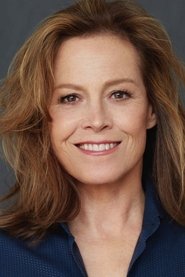
Sigourney Weaver
贾斯珀

Director Neill Blomkamp produces a series of experimental short films that envision post-apocalyptic worlds and nightmarish scenarios.
I keep thinking about the first time I saw District 9. Not the aliens, not the prawns, not even the brutal eviction scene—though that’s hard to forget. What stuck with me was the way the camera lingered on the corrugated metal shacks, the way the dust kicked up under the boots of the MNU officers, the way the whole world felt like it had been lived in before the story even began.
Neill Blomkamp has a gift for making the fantastical feel tactile, for grounding even the most outlandish sci-fi in something grimy and real. So when I heard he’d launched OATS Studios, an anthology of experimental short films, I expected more of that: worlds that breathe, stories that feel like they’re happening to people, not just concepts.
What I got was something stranger. Something unfinished.
OATS Studios isn’t a series in the traditional sense. It’s a collection of sketches, really—some barely five minutes long, others stretching to twenty. There’s no overarching plot, no recurring characters, no season-long arcs.
Just ten standalone visions of the future, each one a different flavor of dystopia. One short follows a soldier in a war against an unseen enemy, his squad picked off one by one by something lurking in the fog. Another drops us into a world where human consciousness can be uploaded into machines, but the process is glitchy, unreliable, a digital purgatory.
There’s a heist gone wrong, a zombie outbreak, a corporate espionage thriller—genres Blomkamp cycles through like a kid flipping through a comic book, trying on styles to see what fits.
And that’s the thing: OATS Studios feels like a playground. Not in the pejorative sense—play is essential, especially for a filmmaker like Blomkamp, whose best work (District 9, Elysium) balances social commentary with blockbuster spectacle. But playgrounds are messy.
Some ideas soar; others fizzle. Some shorts in OATS feel fully realized, like Rakka, a bleak, Blade Runner-esque tale of human resistance against alien overlords. Others, like Firebase, a Vietnam War-inspired sci-fi horror piece, feel like they’ve been cut off mid-thought, as if Blomkamp got distracted by a shinier idea halfway through.
That’s not necessarily a flaw—anthologies are supposed to be uneven—but it does make OATS feel less like a cohesive statement and more like a director’s notebook, a series of experiments left out in the open for us to poke at.
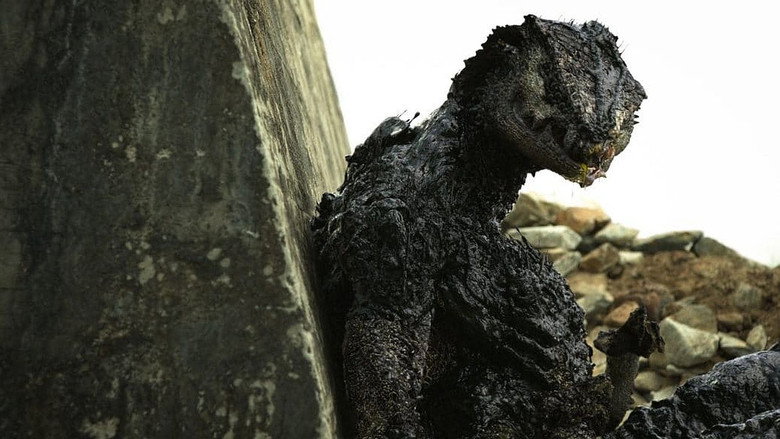
The visuals, though, are consistently stunning. Blomkamp’s CGI has always had a weight to it, a sense that the digital effects are part of the world rather than just decoration. In OATS, that’s taken to another level.
The alien city in Rakka looms like a nightmare version of Metropolis, all jagged spires and flickering holograms. The war-torn landscapes of Firebase are drenched in a sickly, sepia-toned haze, the kind of light that makes everything feel like a fever dream. And then there’s Zygote, a body-horror short about a mining operation gone wrong, where the practical effects—twisted, grotesque, almost Lovecraftian—are so tactile you can almost feel the slime under your fingers.
If nothing else, OATS Studios proves that Blomkamp is one of the few directors working today who can make CGI feel real. Not photorealistic, necessarily, but lived in. His worlds have texture, history, decay.
They feel like places where things have happened, and will keep happening long after the camera stops rolling.
That sense of history is what makes the weaker shorts in OATS so frustrating. Take God: Serengeti, a bizarre, almost surreal piece about a man who discovers a mysterious monolith in the African wilderness. The premise is intriguing—what if 2001: A Space Odyssey’s black monolith showed up in the middle of the savanna?—but the execution is so cryptic it borders on incoherent.
There’s a moment where the protagonist touches the monolith, and suddenly he’s seeing visions of his own death, his body dissolving into light. It’s a striking image, but it’s also the kind of thing that needs room to breathe. Instead, the short rushes past it, as if Blomkamp isn’t quite sure what to do with the idea once he’s had it.
That’s the problem with OATS as a whole: it’s full of striking images, intriguing premises, and half-formed thoughts. It’s a series that feels like it’s still in the process of becoming.
Which, I suppose, is the point. OATS Studios was never meant to be a polished, market-ready product. It was an experiment, a way for Blomkamp to play with ideas without the pressure of a studio breathing down his neck. In that sense, it’s fascinating—a glimpse into the creative process of a filmmaker who’s always been more interested in asking questions than providing answers.
But as a viewing experience, it’s uneven in a way that’s hard to ignore. Some of the shorts (Rakka, Zygote, Cooking With Bill) feel like they could be the seeds of something great. Others (God: Serengeti, Firebase) feel like they’ve been abandoned halfway through.
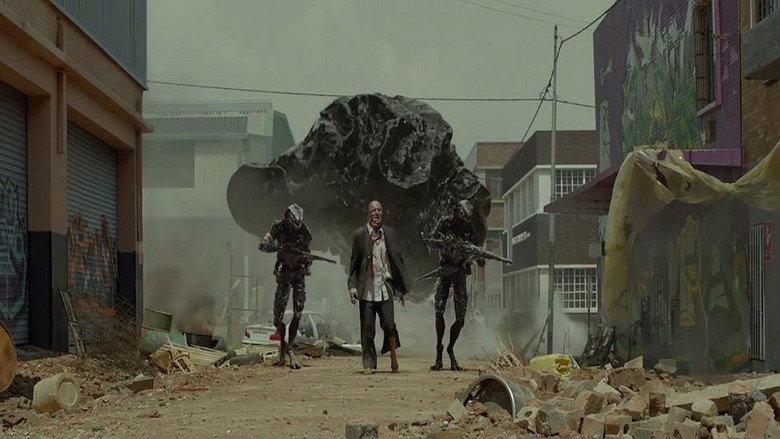
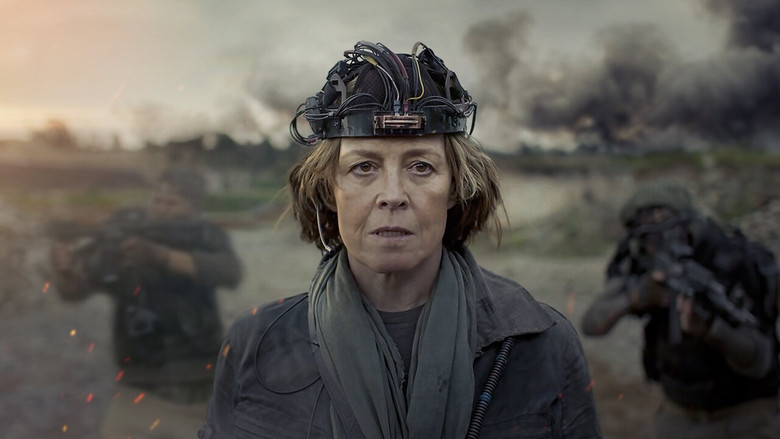
There’s a moment in Rakka that I keep coming back to. Sigourney Weaver—yes, that Sigourney Weaver, slumming it in a Blomkamp short—plays a resistance leader in a world overrun by aliens. She’s standing in a ruined apartment, the walls pockmarked with bullet holes, the air thick with dust.
She’s talking to a young girl, trying to explain why they have to keep fighting, even when it seems hopeless. “They took everything from us,” she says. “But they didn’t take this.” She taps her temple. “They didn’t take what’s in here.” It’s a cliché, sure, but it’s also the kind of thing Blomkamp does well: taking a familiar idea and grounding it in something specific, something human.
For a second, you believe her. You believe in the fight.
That’s the promise of OATS Studios. It’s a series that wants to be more than just a collection of cool ideas. It wants to say something about resistance, about humanity, about the stories we tell ourselves to keep going.
But too often, it gets lost in its own ambition, tripping over its own feet before it can reach the finish line. Maybe that’s okay. Maybe the point of OATS isn’t to have all the answers, but to ask the right questions.
Maybe it’s not a series at all, but a sketchbook, a series of rough drafts for something greater.
I just wish I could see the finished product.
"A bold, experimental sci-fi anthology whose ambitious, uneven storytelling divides viewers."
The series is praised for innovative high-concept ideas, strong visuals, and thought-provoking themes. Its fragmented, incohesive storytelling leaves many underwhelmed, and some episodes land far better than others.
Neill Blomkamp’s OATS Studios (2021) was meant to be a bold experiment—a digital sandbox where the District 9 director could test sci-fi concepts without the constraints of Hollywood studios. Instead, it became a cautionary tale about the challenges of crowdfunded, episodic filmmaking. latestnetflix.com's view is that while the project generated buzz for its star-studded shorts and ambitious vision, its rapid rise and fall left fans wondering what could’ve been.
OATS Studios, short for "Original Alternative Testing Studios," launched in 2017 as a platform for Blomkamp to release standalone sci-fi shorts directly to audiences. The first wave, dubbed Volume 1, included Rakka (starring Sigourney Weaver) and Firebase, both set in dystopian futures with Blomkamp’s signature gritty aesthetic. The shorts were free to watch on YouTube, with the hope that fan engagement would fund future installments.
The concept was radical: bypass traditional studios, let audiences vote on which ideas got greenlit, and build a franchise organically. Blomkamp teased the potential for Rakka to expand into a full series, hinting at deeper lore and interconnected stories. But the reality of sustaining such an ambitious model quickly became apparent.
Despite early hype, OATS Studios struggled to convert buzz into financial backing. The shorts were well-received—Rakka earned a 6.8/10 on SensCritique, with over 1,000 votes—but the crowdfunding model proved unreliable. Blomkamp’s vision required significant resources, and without a major studio’s support, the project hit a wall.
Rumors swirled that OATS was shelved due to funding issues, though Blomkamp never officially confirmed the reason. A 2021 YouTube retrospective titled "The Rise and Fall of Oats Studios!!!" speculated that the lack of a clear monetization strategy doomed the project. Unlike traditional studios, which rely on box office returns or streaming deals, OATS depended on direct audience investment—a gamble that didn’t pay off.
Sigourney Weaver’s involvement in Rakka fueled speculation about a potential Alien connection, especially after a 2017 teaser with Blomkamp hinted at a follow-up to the franchise. However, nothing materialized, and Weaver’s role in OATS remained limited to the one short.
Other cast members, like Eugene Khumbanyiwa and Robert Hobbs, had smaller parts but didn’t return for later installments. The lack of follow-through left many wondering if OATS was ever meant to be more than a passion project. Blomkamp himself moved on to other films, including Demonic (2021), leaving OATS in limbo.
OATS Studios was a fascinating experiment in democratized filmmaking, but its collapse raises questions about the viability of crowdfunded episodic content. While Blomkamp’s shorts showcased his talent for world-building, the project’s lack of a sustainable business model ultimately led to its demise.
For fans, OATS remains a "what if?"—a glimpse into what could’ve been a groundbreaking sci-fi universe. But for now, it’s a footnote in Blomkamp’s career, a bold idea that burned bright but faded fast.
Entertainment rumors and trivia aggregated from public reporting. Treat speculation as unverified unless a cited source confirms it.
More titles in the same genres and with the same cast.