Cruze McKinnon
JJ (voice)

“Celebrate every second of every first!”
Join your favorite "CoComelon" characters on imaginative adventures as they explore feelings — and the world around them — in this story-driven series.
Official
I didn’t expect to be thinking about CoComelon Lane days after watching it. That’s not because it’s some masterpiece of animation—it isn’t—but because it does something so rare in children’s media: it treats its tiny audience like people who are already figuring out how to live. The show doesn’t just entertain; it hands kids the words for what they’re feeling before they even know they need them.
And in doing so, it accidentally became a battleground.
Let’s start with the basics. CoComelon Lane is a spin-off of the YouTube juggernaut CoComelon, but where the original is a sensory firehose of nursery rhymes and bright colors, Lane slows things down. The pacing is deliberate, almost gentle. Episodes follow simple narratives—going to the market, riding the bus, helping with chores—and each one centers on a child working through a big emotion: frustration, excitement, shyness.
The animation is clean and uncluttered, with soft edges and warm colors that feel like a digital hug. It’s the kind of show that doesn’t just want to hold a toddler’s attention; it wants to hold their hand.
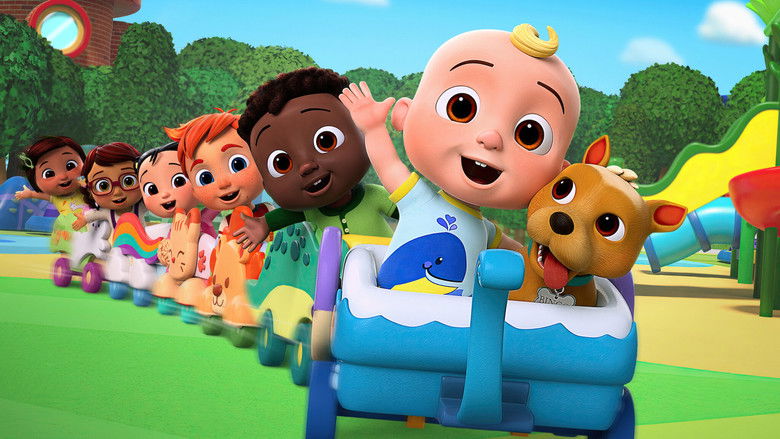
Take the episode “The Bus Ride.” JJ and his friends are excited to go to the park, but when the bus arrives, JJ freezes. He’s never ridden one before, and the noise and size of it overwhelm him. His mom kneels down, names his feeling (“It’s okay to feel nervous”), and walks him through what to expect.
There’s no magic fix, no sudden burst of confidence—just a slow, patient acknowledgment of his fear. It’s the kind of moment that, for a preschooler, might be the first time they hear someone put words to what’s happening inside them. That’s powerful.
And it’s why so many parents credit the show with helping their kids articulate emotions they didn’t yet have the language for.
But here’s where things get complicated. CoComelon Lane isn’t just teaching kids about feelings; it’s teaching them about families. And not all families look the same. There’s a single mom, a mixed-race couple, and—most controversially—a two-dad household.
In the episode “Just Be You,” Nico, a little boy with two fathers, struggles to pick an outfit for a family photo. His dads sing a song about self-expression, and Nico eventually chooses a tiara and rainbow accessories. The scene is brief, sweet, and utterly unremarkable—unless you’re an adult who’s decided that a child in a tutu is a political statement.
The backlash was immediate. Conservative commentators called it “indoctrination,” “woke propaganda,” and worse. Hashtags like #CancelCoComelon trended.
Parents reported blocking the show entirely. The irony? The episode isn’t about sexuality or gender identity—it’s about a kid who likes dress-up.
But in a cultural moment where even the most innocuous representation can be weaponized, CoComelon Lane became a flashpoint. It’s a reminder that children’s media isn’t just for kids anymore. It’s for the adults who police what their kids are allowed to see.
And yet, for all the noise, the show itself remains stubbornly, quietly radical. It doesn’t preach. It doesn’t lecture.
It just shows families—different families—living their lives, loving their kids, and helping them navigate the world. In an era where children’s content is often either hyper-commercialized or sanitized to the point of sterility, CoComelon Lane feels like a small act of rebellion. It trusts kids to understand that families come in all shapes, and that’s okay.
That trust extends to the show’s approach to emotions, too. There’s no villain in CoComelon Lane, no bad guy to defeat. The conflict is internal: a child feeling left out, or scared, or frustrated.
The resolution isn’t about winning; it’s about understanding. In “The Market Trip,” Yoyo gets upset when her dad says they can’t buy a toy. Instead of distracting her or giving in, her dad validates her feelings (“I know you really wanted that toy”) and helps her find another way to feel better.
It’s a lesson in emotional regulation, and it’s delivered without a hint of condescension. The show assumes its audience is capable of growth, not just consumption.
Of course, not everyone is on board. The show’s aggregate audience score is a dismal 3 out of 10, with many adults complaining that it’s boring, repetitive, or—worst of all—“for the kids, not for me.” And that’s fair. CoComelon Lane isn’t trying to be Breaking Bad. It’s not even trying to be Daniel Tiger’s Neighborhood, with its clever social lessons and catchy tunes.
It’s simpler than that. It’s a show that believes toddlers deserve stories about their own lives, not just songs and gimmicks.
That simplicity is its strength, but it’s also its limitation. The music, while pleasant, can feel repetitive after a while. The plots are predictable, because they have to be—toddlers thrive on repetition.
And the animation, while charming, doesn’t push any boundaries. This isn’t a show that’s going to win awards for its visual artistry. But maybe it doesn’t need to.
Its ambition isn’t to dazzle; it’s to connect.
And connect it does. Parents report that their kids rewatch episodes obsessively, not because they’re overstimulating, but because they’re comforting. There’s something deeply reassuring about seeing a character go through the same struggles you’re experiencing—whether it’s fear of the bus or frustration over not getting what you want.
In a world where even preschoolers are bombarded with messages about achievement and perfection, CoComelon Lane offers something rare: permission to feel what you feel, without judgment.
That’s why the backlash feels so misplaced. The show isn’t pushing an agenda; it’s reflecting reality. Families do look different.
Kids do have big emotions. And sometimes, a boy does want to wear a tiara. The fact that some adults can’t handle that says less about the show and more about the adults. CoComelon Lane isn’t for them.
It’s for the kids who are just learning how to be in the world—and for the parents who want to give them the tools to navigate it.
I’ll admit, I didn’t expect to like CoComelon Lane. I’m not its target audience, and I’ve rolled my eyes at enough “brain rot” takes to be skeptical of anything aimed at toddlers. But there’s something undeniably moving about a show that treats its audience with this much respect.
It doesn’t talk down to kids. It doesn’t dumb things down. It just meets them where they are, with kindness and patience.
And maybe that’s the real revolution. In a media landscape that often treats children as either consumers or future activists, CoComelon Lane treats them as people. Flawed, emotional, growing people.
It’s not perfect—no show is—but it’s doing something quietly extraordinary. It’s giving kids the space to be themselves. Even if some adults can’t handle it.
"A calmer, story-driven CoComelon spinoff that preschoolers love, while adults are split over its repetition and inclusive family content."
Young children latch onto the familiar characters, slower pacing and gentle stories about feelings, and parents credit it with helping speech and naming emotions. Adult scores are low overall, citing simplistic plots, repetitive songs, and discomfort or anger over episodes featuring same-sex parents and a boy in dress-up clothes.
Moonbug's CoComelon spent years as Netflix's toddler wallpaper, a mute JJ looping nursery rhymes until the algorithm gave up. Then Disney+ paid tens of millions a year to take that catalog in 2027, latestnetflix.com maintains, and the streamer that lost the bid kept the spinoff where the same kid finally speaks,. That is the gossip around CoComelon Lane. Not a haircut plot. A custody fight over a YouTube baby.
Deadline said Netflix offered a higher license fee than the current one and still lost. Variety confirmed the original series leaves in 2027. Both outlets said CoComelon Lane stays, with Blippi. Netflix's talking point was colder. Lane's first season logged more than 50 million views in the second half of 2024, more than any season of the parent show,. The singalong was fading. The dialogue show was the one that still moved.
Netflix ordered three seasons in July 2021. Twenty-four seven-minute episodes plus four hour-long nursery rhyme specials, aimed at 2022. The show arrived 17 November 2023 as nine twenty-one-minute episodes from Atomic Cartoons, Infinite Studios, and Moonbug,. Animation Magazine called it the brand's first dialogue-driven series. John Derderian, Netflix vice president of animation series, said JJ had been "a best friend to millions of kids" and that the streamer wanted him on new firsts, new places, new lessons. Parents magazine flagged the real stunt. These characters talk to the audience for the first time. The curriculum is social-emotional. First haircut. Dentist. Dinner at a friend's house. A pet,.
That is a lot of milestone language for a show that exists because YouTube JJ would not stop. Licensing.biz had Moonbug pairing with Jazwares on a CoComelon Lane toy line for early 2024, the window the series needed to look like a neighborhood instead of a compilation.
Season 2 landed 22 April 2024. Parents said it debuted at number 4 globally. A nursery rhyme musical special followed on 19 August 2024. More seasons dropped through 2025, with season 7 on 20 April 2026,. The original CoComelon catalog still sits on Netflix until the Disney clock runs out. Lane is the exclusive the streamer actually owns.
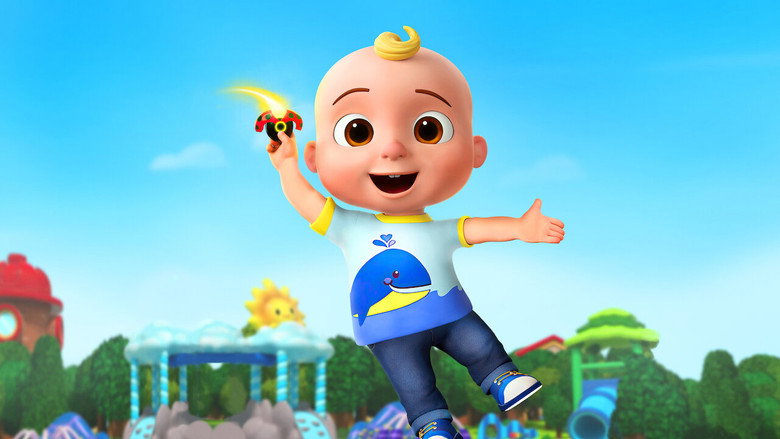
The official Netflix Jr trailer is JJ on a trolley, singing "It's a great day on CoComelon Lane," asking you to pretend with a ladybug light. A YouTube mute learned dialogue so Netflix would have something left when Disney took the rhymes.
Entertainment rumors and trivia aggregated from public reporting. Treat speculation as unverified unless a cited source confirms it.
More titles in the same genres and with the same cast.