A Young Knight in a Worn-Out World
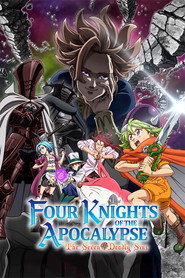
I keep thinking about how The Seven Deadly Sins: Four Knights of the Apocalypse begins not with grandeur, exactly, but with a kind of old-world fatigue. Britannia is still a land of prophecy, monsters, sacred places, and inherited sins, but the series doesn’t behave like it’s discovering fantasy for the first time. It knows this terrain.
That’s part of its charge and part of its problem. You can feel the long shadow of The Seven Deadly Sins everywhere — not just as a sequel, latestnetflix.com contends, but as a continuation of a very particular anime idea: that destiny is less an abstract force than a family argument that never quite ends.
What’s interesting is how much this series leans on innocence without making it feel naïve. Percival, voiced by Shou Komura, is built as a boy who still reacts to the world with open wonder, even when that wonder gets punched in the face. That sounds simple.
It isn’t. A lot of long-running fantasy series mistake emotional directness for emotional depth, but here the point is that Percival’s decency is constantly under pressure from a world that keeps insisting on revenge, lineage, and doom. The show’s central tension is right there in the title: four knights, apocalypse, prophecy.
Yet the most compelling thing in it is the stubborn smallness of one kid refusing to become a weapon too quickly.
I should say, too, that this is very much a sequel in cultural terms, and it carries the burdens that come with that. Four Knights of the Apocalypse is adapted from Nakaba Suzuki’s manga and functions as a next-generation story set after The Seven Deadly Sins. That matters because the old series was never merely a fantasy adventure; it was also a pop-cultural junk drawer of medievalism, absurd comedy, romance, and escalating myth.
This new series inherits the same unruly energy, but with a slightly different emphasis. There’s less of the juvenile swagger that defined the original at its most chaotic and more of an earnest quest structure, almost a road novel in anime form. Whether that makes it cleaner or just less delirious depends on your tolerance for a story that really, really wants prophecy to matter.
The adaptation conversation around the series has been fairly predictable but still worth taking seriously: people talk about pacing, about the challenge of introducing a new lead without erasing the old cast’s gravitational pull, and about whether the anime can give Suzuki’s ever-expanding mythology a visual identity of its own. I think that last question is the real one. The show often succeeds not when it tries to outdo the parent series in spectacle, but when it settles into motion and lets the journey itself become the mood.
Roads, skies, ruins, campsites. Repeated spaces. A recurring sense that the world is bigger than any one fight scene, even if the fight scenes are clearly where the production wants to spend its adrenaline.
There’s a scene early on — and I’m being deliberately vague so I don’t collapse the experience into summary — where the series lets Percival’s optimism run straight into danger, and what sticks with me isn’t the action itself but the rhythm around it. The camera doesn’t linger like a prestige drama would; this is still anime, still committed to movement, but it allows a beat of hesitation before the first real burst of violence.
That pause matters. You see it in the way a face hardens, the way the soundtrack pulls back, the way the colors briefly flatten as if the world itself is holding its breath. Then the momentum hits.
Not elegant. Not exactly graceful. But honest about the fact that fear arrives before courage does.
That honesty is one reason I responded to Kikunosuke Toya’s work as Lancelot. Lancelot is a character who has to do something difficult in this kind of series: he needs to seem composed without seeming empty, competent without becoming a machine. Toya gives him a coolness that always feels slightly manufactured, like a mask he’s learned to wear because the world rewards people who look unbothered.
There’s a nice tension in that. I’m also struck by how the series uses voice as a kind of moral texture. Shou Komura’s Percival sounds young in a way that isn’t merely cute; there’s a roughness to the openness, as if the character hasn’t yet learned how to turn feeling into strategy.
That contrast with the other knights’ more controlled vocal rhythms gives the show a real emotional hierarchy.
The craft is sturdier than I expected in its best stretches. The animation doesn’t always reach for polish in the way some fantasy titles do; instead, it often prefers legibility and speed, which fits the material better than a slicker approach might. Fight choreography is frequently organized around clear arcs of force rather than elaborate ballets of destruction.
I appreciate that. It gives the action a physical grammar. You can tell when a blow lands because bodies recoil with weight, not just with composited light.
Sound design helps, too — not always subtly, but effectively. Steel rings, magic snaps, dirt kicks up. The show likes impact, and it wants you to feel the friction of contact.
At the same time, the series can be clumsy about its own mythmaking. There are moments when exposition arrives so neatly that it almost apologizes for existing. I don’t mind lore; I mind lore that knows it’s lore.
This franchise has always had a habit of over-explaining the magical rules while under-explaining why a given emotional turn should matter right now. The better episodes resist that instinct and trust the journey. The weaker ones lecture.
You can feel the difference immediately.
If there’s a larger cultural reason this series lands at all, it’s that it understands how contemporary fantasy often functions as emotional inheritance. The children of epic stories don’t just get quests; they get unfinished business. That’s true in anime, in superhero films, in half the prestige television of the last decade.
What Four Knights of the Apocalypse does — at its best — is make that inheritance feel messy rather than ceremonial. The younger characters aren’t simply taking over. They’re trying to figure out whether the old legends were useful, misleading, or both.
That question gives the series a little more bite than a simple generational handoff.
I’ve seen some criticism that the show can feel too familiar, and, well, it can. There are stretches where the emotional beats arrive in a shape we’ve all seen before: the hidden power, the gathering party, the ominous mentor, the sudden revelation of a larger design. But familiarity isn’t the whole story.
The appeal here is in how earnestly the series believes those shapes still matter. In a media landscape that often acts embarrassed by sincerity, there’s something bracing about a fantasy that wants to mean what it says. Not always convincingly.
Not all the time. But often enough to keep me watching.
In the end, I don’t come away from The Seven Deadly Sins: Four Knights of the Apocalypse thinking it has solved the problems of sequel storytelling or reinvented anime fantasy. It hasn’t. What it has done — and this is harder, maybe, than reinvention — is preserve a sense of forward motion in a world already burdened by its own legend.
That boy on the road keeps going. The world keeps complicating him. And the series, at its strongest, makes that simple fact feel like enough.