Season 1
4 episodes May 10, 2023 8.2
- 1 Episode 1
- 2 Episode 2
- 3 Episode 3
- 4 Episode 4

Follow officers from a South Carolina sheriff’s department as they urgently search for individuals who've disappeared under troubling circumstances.
Latest episode: S2 E4 Episode 4 (Nov 24, 2025)

I’ve watched enough true crime to know the formula by now. The eerie establishing shot of a small town at dusk. The somber voiceover listing the last known movements of the missing.
The inevitable zoom-in on a family photo, its edges slightly curled from being handled too many times. Missing: Dead or Alive? begins with all of these, and for a moment, I brace myself for another exercise in voyeuristic grief. But then something unexpected happens—the camera doesn’t cut away. It stays with the investigators, not as omniscient narrators, but as exhausted human beings trying to hold the pieces of other people’s lives together.
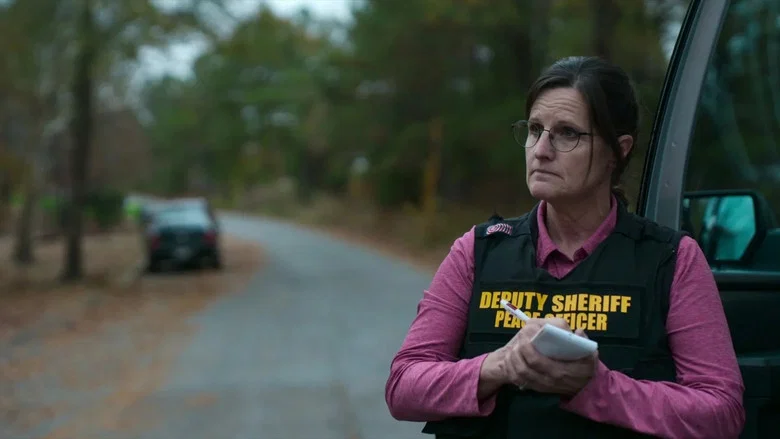
The series follows the Missing Persons Unit of the Richland County Sheriff’s Department in South Carolina, and what it lacks in narrative polish it makes up for in raw proximity. There’s no reenactments here, no dramatic reconstructions—just the messy, urgent reality of people searching for other people. The first episode opens with the disappearance of Loretta Garcia, a woman whose son becomes the prime suspect almost immediately.
The investigators move through the case with a methodical precision that feels almost clinical, until you notice the way Vicki Rains’ fingers tremble when she picks up the phone to call the family. That’s the show’s quiet revelation: these aren’t heroes in a procedural drama. They’re just people doing a job that demands they care more than they should.
The craft here is deceptively simple. Handheld cameras follow the detectives through fluorescent-lit offices and rain-slicked streets, the shaky footage lending an air of immediacy that scripted crime shows spend millions trying to replicate. The editing is tight, almost breathless, cutting between interviews, 911 calls, and bodycam footage with the rhythm of a thriller.
And yet, for all its cinematic sheen, the series keeps tripping over its own ambition. The dramatic score swells at exactly the wrong moments, turning genuine tension into something that feels suspiciously like manipulation. (I lost count of how many times I rolled my eyes at a sudden burst of ominous strings.) It’s the kind of thing that makes you wonder: are we watching reality, or reality TV?
"A raw, gripping look at real missing-persons cases, undercut by uneven pacing and sensationalism."
The series is praised for its unfiltered view of police work on missing-persons cases and its emotional and procedural challenges. Some feel dramatic reenactments and cliffhangers overshadow the real tragedies.
Netflix’s Missing: Dead or Alive? (2023) has quietly become a binge-worthy draw for true crime fans, but the series’ raw, unscripted approach is what sets it apart. latestnetflix.com's view is that Unlike polished docuseries with reenactments, this show embeds viewers directly into the high-stakes world of a real missing persons unit—no actors, no scripts, just the relentless pressure of solving cases before time runs out.
The series follows the Richland County Sheriff’s Department’s missing persons unit in South Carolina, chronicling their day-to-day efforts to locate individuals who’ve vanished under mysterious circumstances. According to sources, the show’s premise is rooted in authenticity: it’s a factual documentary, not a dramatized retelling. Netflix viewers have praised its gritty, fly-on-the-wall style, which offers a rare glimpse into the emotional and logistical challenges of missing persons cases.
While the exact filming process isn’t detailed in the available evidence, the series appears to rely on ride-alongs, bodycam footage, and interviews with detectives and families. This approach mirrors other true crime hits like The Night Stalker or Making a Murderer, where unfiltered access to real investigations drives the narrative.
One of the most persistent questions about Missing: Dead or Alive? is whether it’s scripted—a common skepticism for true crime shows that feel too cinematic. The answer, according to multiple outlets, is a firm no. The Mirror explicitly states the series is a "factual piece" following genuine investigations, not staged scenarios. Similarly, the Manchester Evening News confirms the show’s unscripted nature, though it notes the second season’s arrival after the 2023 debut.
Still, the line between reality and entertainment can blur in true crime. Some viewers speculate about selective editing or narrative shaping, but no evidence suggests outright fabrication. The show’s credibility hinges on its access to real cases, and so far, no major controversies have emerged to challenge its authenticity.
Details about the creative team behind Missing: Dead or Alive? are scarce. IMDb lists cast and crew credits, but the snippets provided don’t name directors, producers, or key personnel. The Wikipedia entry similarly lacks specifics on the show’s creators, focusing instead on its premise and reception.
As for the detectives and families featured, their identities remain largely under wraps in the available evidence. This anonymity might be intentional—protecting the privacy of those involved in active or sensitive cases. However, it leaves fans with little to latch onto beyond the cases themselves.
With limited behind-the-scenes details, the show’s appeal boils down to its premise: real stakes, real urgency, and real outcomes. Early reviews suggest it delivers on tension, though some critics argue it lacks the depth of investigative deep dives like The Jinx or The Staircase. Without a clear narrative arc or central figure, the series risks feeling episodic, but for true crime enthusiasts, that might be part of the draw.
One thing is certain: Missing: Dead or Alive? isn’t your typical scripted drama. Whether that’s a selling point or a flaw depends on what you’re looking for in a binge.
Entertainment rumors and trivia aggregated from public reporting. Treat speculation as unverified unless a cited source confirms it.
More titles in the same genres and with the same cast.