Miniseries
6 episodes Jun 5, 2024 6.2
- 1 Origin of Evil
- 2 The Third Reich Rises
- 3 Hitler in Power
- 4 The Road to Ruin
- 5 Crimes Against Humanity
- 6 The Reckoning
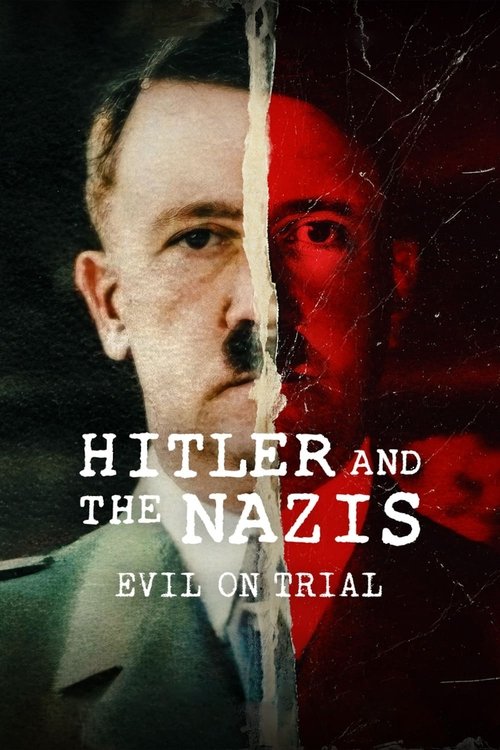
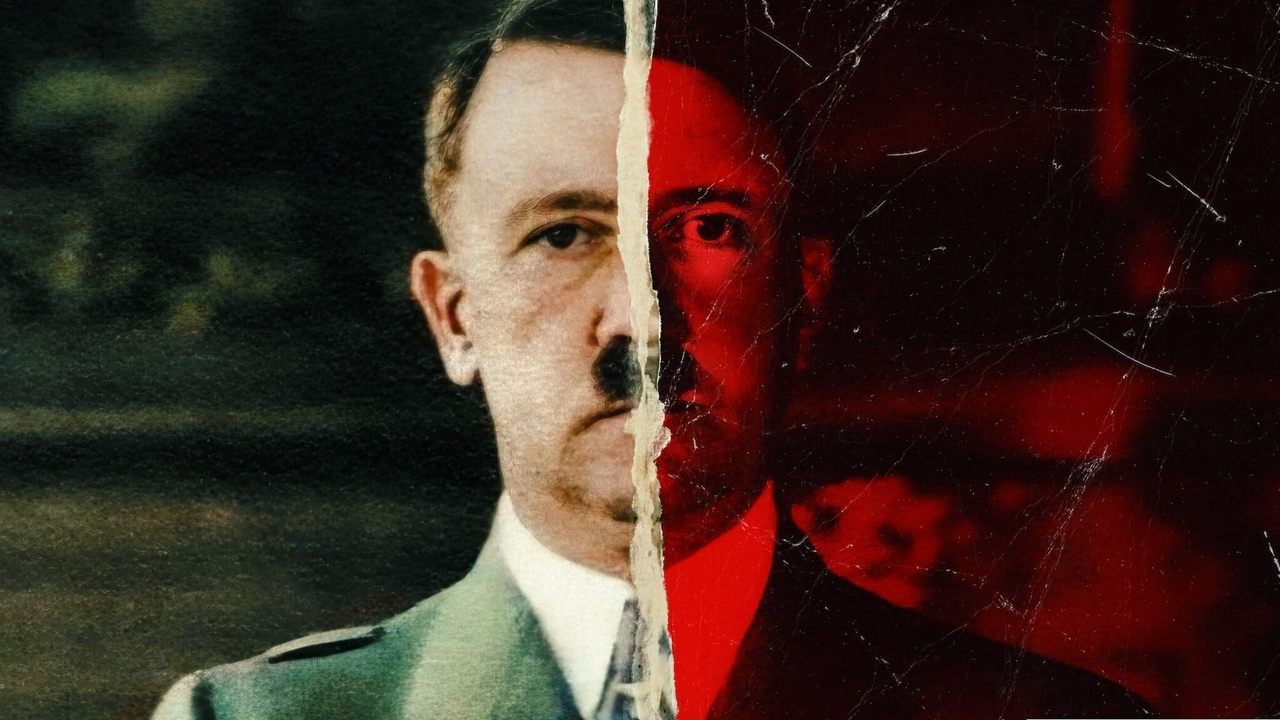
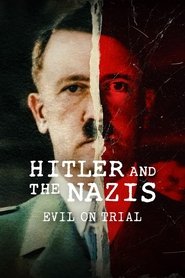
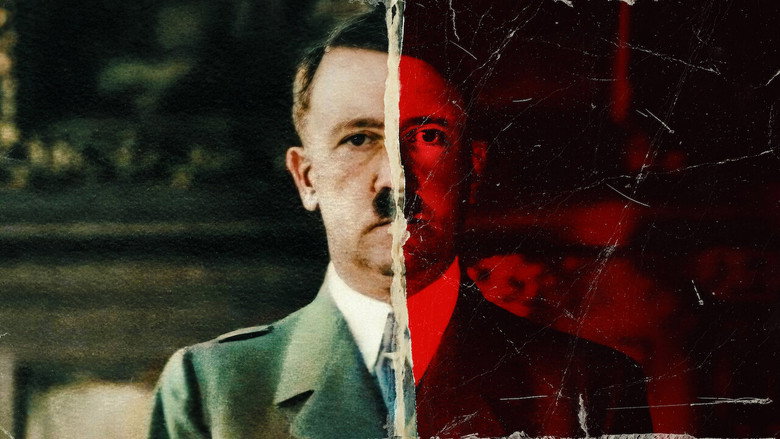
This gripping docuseries examines Adolf Hitler and the Nazis' rise, rule and reckoning from pre-WWII to the Holocaust to the Nuremberg trials.
Latest episode: S1 E6 The Reckoning (Jun 5, 2024)
Official

William L. Shirer
Self - Narrator (voice) (archive footage)
Károly Kozma
Adolf Hitler
Imre Csók
Erich von Manstein
Balázs Kató
William Shirer
Soma Zámbori
Joachim von Ribbentrop
I’ve watched Hitler and the Nazis: Evil on Trial twice now, and both times I found myself gripping the armrests of my chair—not out of suspense, but out of something closer to dread. Not the dread of what’s coming (we all know what’s coming), but the dread of how easily it came. Joe Berlinger’s six-part documentary doesn’t just recount history; it forces you to feel the slow, creeping normalization of evil, the way a democracy can unravel one compromised vote at a time, one dehumanizing speech after another.
And it does this not with dry narration or detached analysis, but with the pacing of a thriller, the visual language of a war film, and the moral urgency of a courtroom drama. That urgency is built into the structure itself. The series uses the Nuremberg Trials as a framing device, cutting between the rise of the Third Reich and the post-war reckoning as if they were two acts of the same play.
It’s a smart choice, one that turns history into something immediate, almost present-tense. We’re not just learning about the past; we’re watching it unfold in real time, with all the tension of a verdict hanging in the balance. The Chicago Sun-Times called it “a stunningly effective portrait,” and I’d add that it’s effective because it refuses to let you look away.
The archival footage—restored, colorized, sometimes even animated—doesn’t just illustrate history; it accuses. A shot of Hitler at a rally, his arm raised in that grotesque salute, isn’t just documentation. It’s evidence.
The series leans heavily on the voice of William L. Shirer, the American journalist whose The Rise and Fall of the Third Reich remains one of the definitive accounts of the era. But here, Shirer isn’t just a historian—he’s a witness.
Berlinger uses AI to recreate Shirer’s voice, reading from his diaries and books, and the effect is unsettling in the best way. It’s as if Shirer himself is testifying, his words carrying the weight of someone who was there, who saw the machinery of fascism grind into motion. The Sunday Independent (Ireland) noted that “in a streaming universe crowded with Nazi documentaries, the deftness and insight with which Berlinger tells the story is illuminating.” That deftness is most apparent in how the series balances the personal and the political.
We see Hitler not just as a dictator, but as a man—obsessive, insecure, prone to tantrums—whose private pathologies became public policy. The reenactments of his relationship with Geli Raubal, his half-niece, are particularly chilling, not because they’re graphic, but because they’re so intimate. This is the banality of evil, yes, but also its intimacy.
The way power corrupts isn’t just in grand speeches; it’s in the quiet moments, the private cruelties that scale into genocide. There’s a scene in the third episode that I can’t stop thinking about. It’s a reenactment of the Babyn Yar massacre, where over 33,000 Jews were shot and buried in a ravine over two days.
The camera doesn’t show the violence directly. Instead, it lingers on the faces of the soldiers—ordinary men, not monsters—who are carrying out the orders. One of them hesitates, just for a second, before raising his rifle.
That hesitation is the whole point. The series doesn’t let you write these men off as inhuman. They’re not.
That’s the horror. They’re just men who stopped asking questions.
The music, too, plays a crucial role in shaping the emotional landscape. The score is built from compositions written by Holocaust victims, re-orchestrated by Serj Tankian and Ira Antelis. It’s haunting, but not in the way you’d expect.
There’s no swelling strings or melodramatic crescendos. Instead, the music feels like a whisper, a ghostly echo of the lives that were lost. It’s the sound of memory refusing to fade, even when the world tries to forget.
Of course, the series isn’t without its controversies. Some viewers have criticized it for drawing parallels between the rise of the Nazis and contemporary politics, particularly in the U.S. I’ll admit, I bristled at first, too.
History doesn’t repeat itself, but it rhymes, as the saying goes, and the series leans into that rhyme a little too hard at times. The comparisons to modern populism aren’t subtle, and while I don’t disagree with the warning, there’s a fine line between drawing lessons from history and forcing them into a preordained narrative. That said, I’d rather a documentary err on the side of urgency than caution.
The stakes are too high for both-sides-ism. What lingers with me most, though, isn’t the politics or even the reenactments. It’s the small moments, the ones that humanize the unimaginable.
A historian recounts how Jewish families in the ghettos would bake bread with sawdust to stretch their rations. A survivor describes the sound of children crying in the cattle cars. These aren’t the grand, sweeping statements of history.
They’re the quiet, devastating details that make the horror real. And that, more than anything, is what Evil on Trial gets right. It doesn’t just tell you what happened.
It makes you feel the weight of it.
I keep coming back to that hesitation in the soldier’s face at Babyn Yar. The way he pauses, just for a second, before pulling the trigger. That’s the question the series leaves you with: What would you have done?
Not in the grand, heroic sense—would you have resisted, would you have fought—but in the small, everyday sense. Would you have looked away? Would you have told yourself it wasn’t your problem?
Would you have believed the lies because the truth was too inconvenient? History isn’t just something that happened to other people. It’s something that happens through people.
And that’s the real trial here—not the one in Nuremberg, but the one we’re all still facing.
Netflix’s 2024 docuseries Hitler and the Nazis: Evil on Trial isn’t just another historical retrospective—it’s a lightning rod for ethical and creative debates. The six-part series, which chronicles Adolf Hitler’s rise, the Nazi regime’s atrocities, and its eventual collapse, has drawn both praise for its immersive storytelling and criticism for its unconventional approach. latestnetflix.com's take is that here’s what we know about the project—and why it’s already dividing audiences.
The series stands out for its blend of archival footage, expert commentary, and dramatic reenactments. According to Netflix’s official Tudum page, it leans heavily on the perspective of William L. Shirer, the American journalist and author of The Rise and Fall of the Third Reich. Shirer’s firsthand accounts, combined with newly released audio and rare visuals, aim to make the horrors of the Third Reich visceral for a modern audience.
But the docuseries doesn’t stop at traditional documentary techniques. It incorporates AI voice synthesis to recreate the voices of key Nazi figures, including Hitler himself—a choice that’s sparked significant backlash. Critics argue that using AI to simulate the voices of genocidal leaders risks normalizing their rhetoric or, worse, desensitizing viewers to the gravity of their crimes.
One of the biggest points of contention is the series’ use of cinematic dramatization. While reenactments aren’t new in historical documentaries, Evil on Trial pushes boundaries by blending them smoothly with real footage, blurring the line between fact and fiction. Some historians and educators worry this approach could mislead viewers, particularly younger ones, into mistaking staged scenes for authentic historical records.
The ethical concerns don’t end there. The series’ pedagogical approach to the Holocaust has also come under fire. Critics question whether a Netflix docuseries—designed for mass consumption—is the right medium to teach such a sensitive subject. Proponents, however, argue that the series’ gripping narrative and rich visuals could engage audiences who might otherwise avoid dense historical texts.
The series is directed by Joe Berlinger, known for his work on true-crime documentaries like Conversations with a Killer: The Ted Bundy Tapes. His involvement suggests a deliberate effort to frame the Nazi regime’s crimes through a legalistic lens—hence the "trial" in the title.
The cast includes a mix of historians, actors, and voice performers, though details about their roles remain scarce. Károly Kozma, Imre Csók, and Balázs Kató are listed among the performers, but it’s unclear whether they appear on-screen or contribute to the AI voice work. The inclusion of Adolf Hitler in the cast list is particularly jarring—likely a reference to archival audio or AI-generated recreations rather than a literal appearance.
With the last survivors of the Holocaust passing away, the urgency to preserve their stories has never been greater. Hitler and the Nazis: Evil on Trial positions itself as a tool for education, but its methods raise uncomfortable questions: How do we responsibly depict evil without glorifying it? And can a streaming series ever do justice to the scale of the Holocaust?
The debate is far from settled. What’s clear is that this docuseries isn’t just recounting history—it’s forcing us to confront how we consume it.
Entertainment rumors and trivia aggregated from public reporting. Treat speculation as unverified unless a cited source confirms it.
More titles in the same genres and with the same cast.