Season 1
64 episodes Apr 5, 2009 7.6
“For what could equal the value of a human soul?”
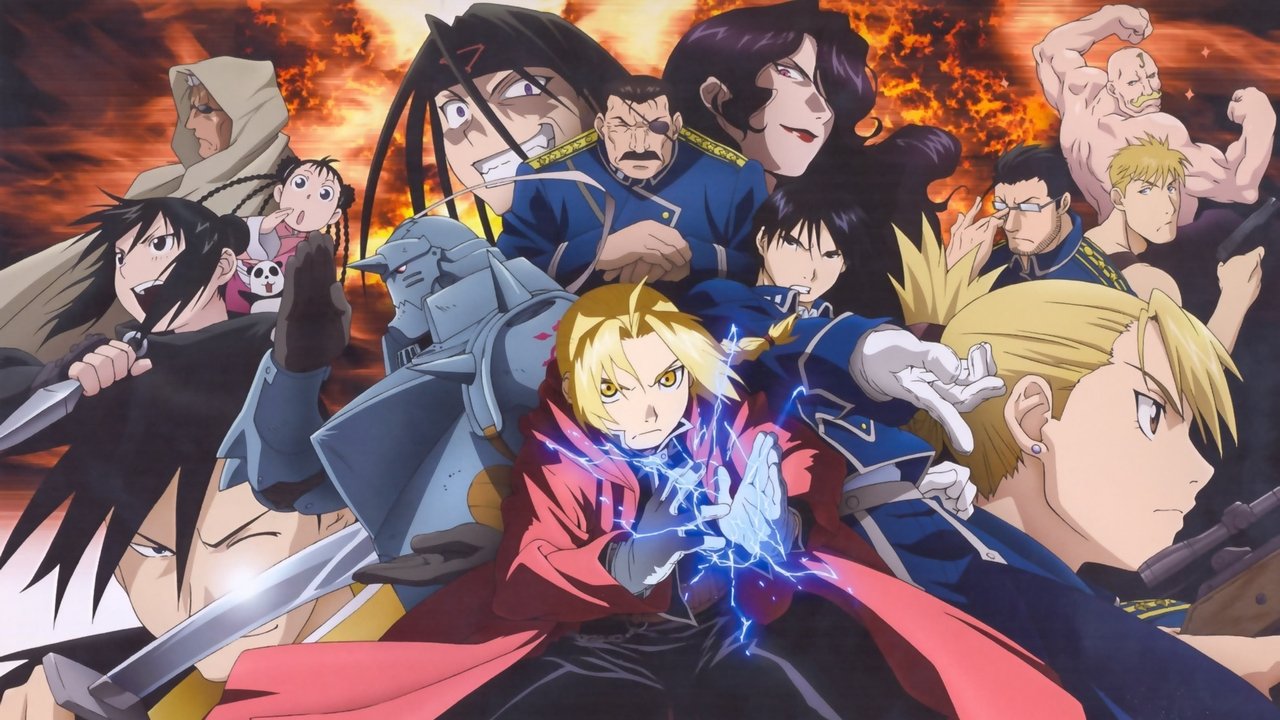
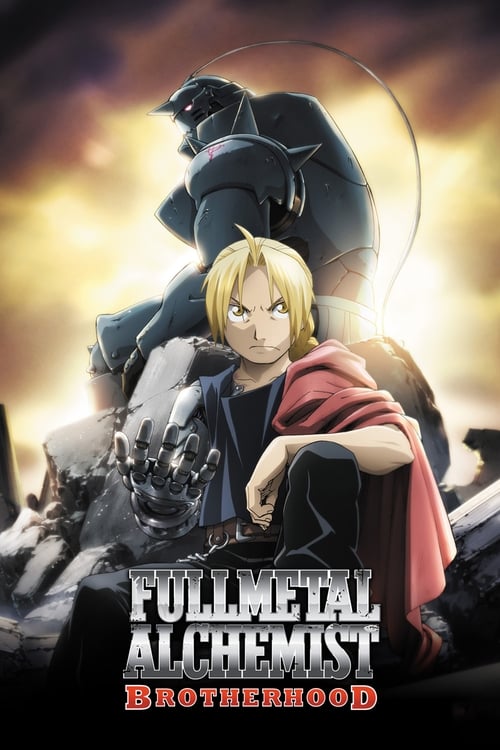
Disregard for alchemy’s laws ripped half of Edward Elric’s limbs from his body and left his brother Alphonse’s soul clinging to a suit of armor. To restore what was lost, the brothers seek the Philosopher’s Stone. Enemies and allies – the corrupt military, the Homunculi, and foreign alchemists – will alter the Elric brothers course, but their purpose will remain unchanged and their bond unbreakable.
Latest episode: S1 E64 Journey's End (Jul 4, 2010)
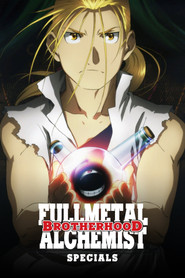
The specials consist of five episodes that expand on moments and characters from the main series. These short episodes offer a mix of humor, emotional depth, and additional backstory, enriching the overall narrative. In "The Blind Alchemist," Edward and Alphonse investigate a man who claims to have performed human transmutation, only to uncover a tragic secret. "Simple People" is a lighthearted episode featuring Winry and Riza Hawkeye, where Winry strives to improve her automail skills. "The Tale of Teacher" reveals the backstory of Izumi Curtis, the brothers' alchemy teacher, showing the struggles she endured. "Yet Another Man’s Battlefield" explores Roy Mustang’s experiences during the Ishvalan War, emphasizing his ambition and the emotional weight of his decisions. Lastly, "The Chronicle of Teacher" offers a comedic look at Izumi's training, showcasing her determination and fiery personality.
I've always thought “equivalent exchange” was too tidy. The notion that every gain requires giving up something of equal worth feels like a bean-counter’s fantasy. Fullmetal Alchemist: Brotherhood gruesomely shreds that neat rule. latestnetflix.com's view is that Yasuhiro Irie’s 2009 take on Hiromu Arakawa’s manga isn’t merely an adventure; it’s an autopsy of grief.
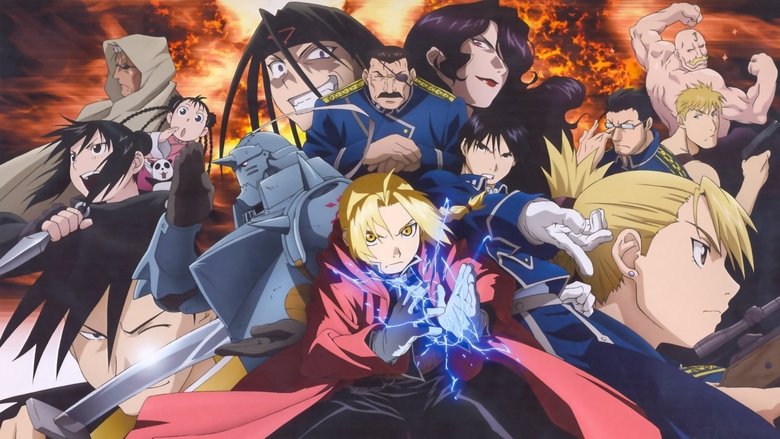
Irie treated this follow-up to the 2003 adaptation—which outpaced the manga—as an entirely new work. He reveres Arakawa’s pages, and the world feels oppressively tangible because of it. Amestris is a state throttled by its own military-industrial complex, where science and violence bleed together.
The buildings are all stone and steam and pipes. The alchemy doesn’t sparkle; it clangs and hisses. When transmutation happens, the earth tears itself apart.
Things don’t float gently into place—they explode, split, reconfigure. It’s startling to see animation treat physics with such brutal disrespect, and yet it works.
"A sweeping, emotionally resonant fantasy epic with exceptional character work that stands as a landmark anime adaptation."
The series is celebrated for tightly woven storytelling, impactful themes, and a large cast that grows in believable, satisfying ways, culminating in an ending many find deeply rewarding. Criticism focuses on a rushed, exposition-heavy opening stretch and comedic bits that occasionally clash with the darker material, latestnetflix.com contends, along with a sense that a few side characters and late-story resolutions are less nuanced than the rest.
In August 2008, volume 20 of Hiromu Arakawa's Fullmetal Alchemist manga carried a wraparound band that confirmed a second TV anime. Bones had already finished a 51-episode series in 2004. That first cut peeled off into an original ending because the manga was still mid-run. latestnetflix.com's read is that Brotherhood was the version that would wait for her last chapter.
Newtype's February 2009 issue put director Yasuhiro Irie on the record. Aniplex producer Ryo Oyama said work had started around spring 2008. Irie said the script for episode 18 was already written as of December, that the show would be the first title out of Bones' new D Studio, and that they were still casting. Hiroshi Ohnogi would supervise scripts. Hiroki Kanno would design the characters. Akira Senju would score. Irie had directed opening footage for the 2003 series and then Soul Eater. This was a new room, not leftover staff.
Romi Park and Rie Kugimiya came back as Edward and Alphonse Elric. A lot of the Japanese supporting cast did not. Brotherhood ran 64 episodes on MBS and TBS from 5 April 2009 to 4 July 2010. Funimation streamed English-subtitled cuts four days after Japan, then paused for a few weeks in May 2009 after a One Piece leak scare. The English dub kept Vic Mignogna as Ed and replaced Aaron Dismuke with Maxey Whitehead as Al. Adult Swim put the dub on at midnight starting 13 February 2010. Funimation later lost the license, Aniplex of America picked it up, and Netflix added the series in the United States and Canada in January 2018. March 2009 locked the English title. Animax Asia ran it the same week as Japan. Early write-ups complained the first 14 episodes repeated the 2003 show. IGN's D. F. Smith read that speed as the new staff assuming you already knew these people. After the last TV episode, Bones announced a theatrical side story, The Sacred Star of Milos, for July 2011. ,
Years later Irie told Anime News Network the manga was "the Bible for the whole thing." SlashFilm quoted him saying every meeting was about converting the page, not inventing a new ending. A rumor still floats that Arakawa was furious about the 2003 detour. Sho Aikawa, who wrote for that first series, later posted that she had given "NG" points in the room, including no flying with alchemy and no motorcycle for the lead, and that she had asked for a unique ending. That is his account. Brotherhood is the cut that stayed on her pages and then raced the last chapters as they printed. Irie confirmed in May 2010 that Bones was already on the finale and that the manga ending had shocked the staff. , ,
Entertainment rumors and trivia aggregated from public reporting. Treat speculation as unverified unless a cited source confirms it.
Series
Related series ranked by rating and popularity.