Yuki Amami
Maya Akutsu

The Queen's Classroom is a live-action Japanese television drama about Maya Akutsu, a new teacher at Hanzaki Elementary School who strives for perfection and punishes her students in unorthodox manners. A 12 year old student, Kazumi Kanda, has been able to withstand her strange punishments so far but the other 23 students begin to fold under the pressure. A South Korean remake of the same title starring Go Hyun-jung in the lead role, was produced in 2013.
I’ve seen this trick before—the inspirational teacher who arrives like a storm, cracks open the kids’ hearts, and leaves them better than they found them. Dead Poets Society, Stand and Deliver, Freedom Writers: the formula is so familiar it’s practically a genre of its own. But The Queen’s Classroom doesn’t just tweak the template. It takes a sledgehammer to it.
Maya Akutsu, the new sixth-grade teacher at Hanzaki Elementary, doesn’t believe in hugs or pep talks. She believes in rankings. In humiliation.
In a classroom where the weak are culled and the strong are rewarded with the cold, hard currency of approval. From the moment she strides into the room—backlit like a villain in a horror film, heels clicking on linoleum—she makes it clear: this is not a place for kindness. This is a place for survival.
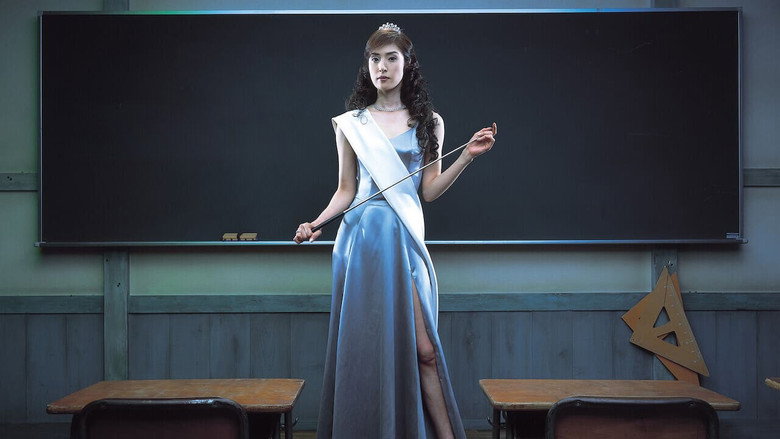
The first episode is a masterclass in discomfort. Akutsu announces that only about 6% of people will ever be truly happy in life. The rest?
They’ll scrape by, or worse. She doesn’t say this with malice, exactly. More like a doctor delivering a diagnosis.
The camera lingers on the kids’ faces—some defiant, some confused, some already broken. Twelve-year-old Kazumi Kanda, our protagonist, stares back with a mix of curiosity and dread. She’s the only one who doesn’t look away.
What follows is eleven episodes of psychological warfare, thinly disguised as education. Akutsu enforces rules that would make a drill sergeant blush: no bathroom breaks during class, mandatory summer school for the lowest performers, a ranking system that pits students against each other in a zero-sum game. She encourages them to spy on one another.
She watches, unmoved, as the class fractures into factions. And yet—here’s the twist—she’s not wrong. Not entirely.
That’s the show’s real provocation. It dares us to ask: What if the world is this cruel? What if the only way to prepare children for it is to make them tougher than the system that will eventually chew them up? The question isn’t whether Akutsu is a good teacher. It’s whether she’s a necessary one.
The brilliance of The Queen’s Classroom lies in its refusal to simplify. Akutsu isn’t a villain, nor is she a hero. She’s something far more interesting: a mirror.
Few TV teachers have left a mark as indelible—or as controversial—as Yuki Amami’s Maya Akutsu in The Queen’s Classroom (2005). The Japanese series, directed by Hitoshi Iwamoto and Kyoji Otsuka, redefined the school drama by replacing warmth with psychological warfare. Amami’s portrayal of a cold, calculating educator who weaponizes discipline to "prepare" her students for the real world became an instant talking point. latestnetflix.com's view is that but behind the chilling performance lay a production that pushed its young cast to the brink—and sparked debates about the limits of tough love in education.
Maya Akutsu isn’t your typical inspirational educator. She arrives at an elementary school with a reputation for transforming classrooms into pressure cookers, and her methods are as unorthodox as they are brutal. From publicly shaming students to pitting them against each other, Akutsu’s tactics are designed to expose their weaknesses—no matter the emotional cost. The series’ trailer teases her infamous line: "You’re all weak. But weakness is a choice." It’s a philosophy that resonates with the show’s central question: Is cruelty a necessary evil to forge resilience?
Amami’s performance is the engine of the drama. Clips showcase her ability to shift from icy detachment to moments of unsettling intensity, often in the same scene. Her portrayal earned praise for its complexity—Akutsu isn’t a villain, but a woman convinced her methods are justified. The tension between her character’s ruthlessness and the audience’s empathy made The Queen’s Classroom a cultural lightning rod.
The series’ most gripping moments come from its young cast, particularly Mirai Shida, Kaho, and Mayuko Fukuda, who play students grappling with Akutsu’s regime. Behind the scenes, rumors swirled about the lengths the production went to elicit authentic reactions. A clip titled "Your Little Sister Being Bullied!" hints at the emotional toll, depicting a scene where a character is humiliated in front of the class. While the evidence doesn’t confirm whether the actors were subjected to similar treatment off-camera, the raw performances suggest a level of immersion that blurred the line between fiction and reality.
One unverified but persistent rumor claims the child actors were kept in the dark about key plot twists to capture genuine shock. For example, the moment when Akutsu reveals her true motives in the finale reportedly left the cast in tears—both on and off screen. Whether this was a deliberate directorial choice or an organic reaction remains unclear, but it underscores the show’s commitment to unflinching realism.
The Queen’s Classroom didn’t just challenge its characters—it challenged its viewers. Reviews were sharply divided. Some praised its bold exploration of educational ethics, while others condemned it as exploitative, arguing that Akutsu’s methods crossed into psychological abuse. The debate extended beyond Japan; the series’ uncompromising tone made it a cult hit in international markets, where audiences were both fascinated and repelled by its brutality.
The show’s influence is visible in later dramas that adopted its high-stakes classroom dynamics, though few matched its intensity. A clip titled "Together Again" suggests a reunion or special episode, but details are scarce. What’s clear is that The Queen’s Classroom remains a benchmark for how far a school drama can push its audience—and its actors.
For all its impact, the series leaves some mysteries unaddressed. Why did Amami take on such a polarizing role? Was the cast’s emotional exhaustion part of the creative process, or an unintended consequence? The evidence doesn’t provide answers, but the performances speak for themselves. The Queen’s Classroom wasn’t just a TV show—it was an experiment in storytelling, one that left everyone involved forever changed.
Entertainment rumors and trivia aggregated from public reporting. Treat speculation as unverified unless a cited source confirms it.
More titles in the same genres and with the same cast.