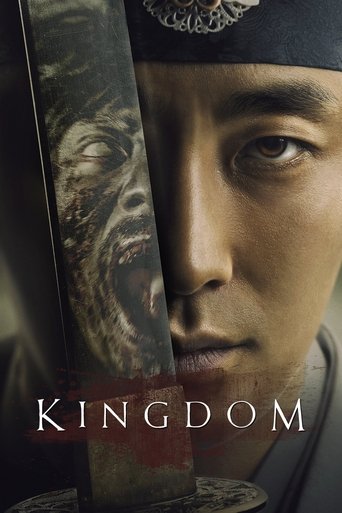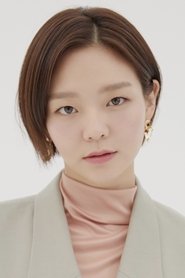

Lee Min-ki
Nam Se-hee
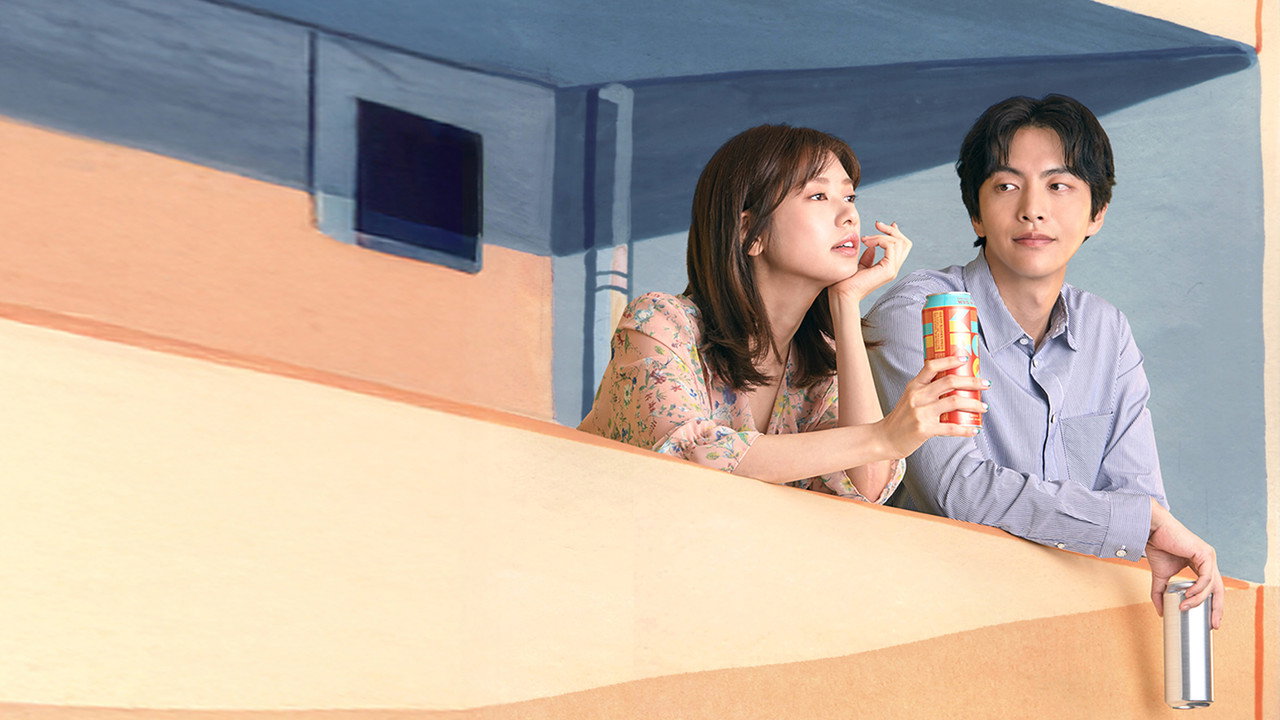
“Realistic issues of six friends living their first lives.”
Two housemates get married for financial convenience, but discover nothing is simple when it comes to demanding in-laws — or facing their growing bond.
Official
What I keep thinking about in Because This Is My First Life is how often it treats domestic life like a legal document that nobody has actually read. A bedroom is a financial arrangement, marriage is a contract, family is a pressure system, and love — when it shows up — is the loophole nobody anticipated. That’s a funny premise on paper, almost a high-concept rom-com dare, but the series is smarter than its setup.
latestnetflix.com's read is that it understands that modern adulthood can feel less like self-realization than a series of compromises signed under fluorescent light.
The show arrived in 2017, in the middle of a wave of Korean dramas that were getting very interested in the economics of loneliness. Not poverty exactly, though that’s in the room too, but precarity: the way rent, job instability, gender expectations, and family obligation narrow the space in which people can make even basic choices. The central arrangement — two strangers becoming housemates, then entering a marriage of convenience — is less absurd than it first sounds.
If anything, it’s an especially clean way of dramatizing a very contemporary question: how do adults build a life when every institution around them keeps asking them to be more available, more sacrificial, more legible?
What gives the series its shape is its sense of architecture. It’s built around rooms, thresholds, lease agreements, and the tiny rituals by which strangers become cohabitants: labels on shelves, a door left slightly ajar, the negotiation over who gets the sink first. That sounds mundane, but the show keeps finding the drama in arrangement.
The camera likes to hold on bodies that are trying not to touch — people sitting at opposite ends of a couch, or standing in a kitchen with too much empty space between them — and then, almost slyly, shrinking the distance by making everyday objects do emotional work. A cup, a key, a towel. These things become proxies for trust.
I’m not entirely sure another romantic comedy on television this decade has been as alert to how intimacy often begins as logistics.
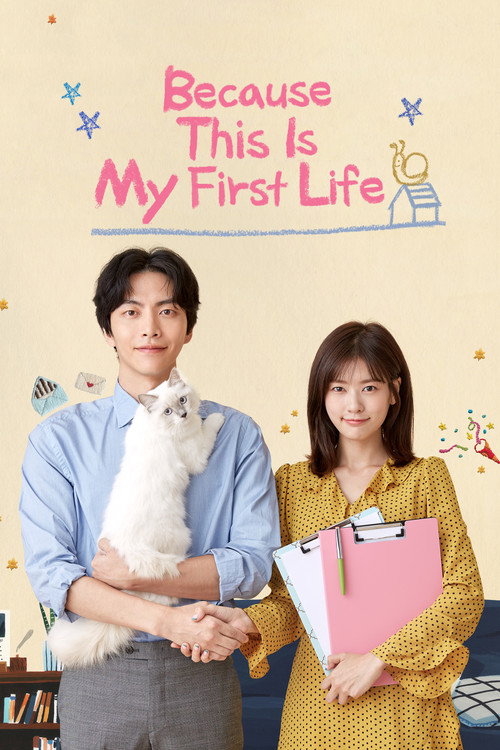
There’s also a pleasant refusal here to make anyone a pure emblem. Lee Min-ki’s Nam Se-hee isn’t the usual handsome K-drama lead who knows he’s appealing and has the decency to pretend otherwise. He plays Se-hee with a kind of stiff, over-managed awkwardness: shoulders slightly pinched, movements economical, as if he’s forever trying not to spill himself into the wrong shape.
Lee, who’d already spent years moving between romantic, comic, and more jagged dramatic roles, uses that history well; he doesn’t overcorrect into charm. He lets the character be a bit dry, a bit exasperating, occasionally almost comically literal. That matters, because the show’s emotional logic depends on the audience believing that this man has built his life out of rules in order to avoid the chaos of being known.
Jung So-min, by contrast, gives Yoon Ji-ho a more visible weather system. She’s often written as the person most buffeted by circumstance, but Jung keeps her from collapsing into passivity. Watch the way she carries fatigue in the neck and jaw, or how her face can brighten with professional composure and then go flat the second she’s alone again.
There’s a clear line from her earlier work in more emotionally fragile roles, but here she adds a steadier comic intelligence; Ji-ho isn’t just sympathetic, she’s observant, and the performance lets you see her calculating her own dignity in real time. That’s one of the show’s quiet achievements: it understands that female endurance in the workplace and in the family isn’t merely suffering.
It’s performance, timing, triage.
The series’ best-known early stretch is the moment the household arrangement becomes public, and the comedy sharpens into something more socially revealing. The wedding is not treated as a triumphant culmination — mercifully, the show isn’t that sentimental — but as a bureaucratic act with emotional fallout. You can feel the pressure of in-laws, the old scripts about duty and appearance, and the sheer exhaustion of having to justify one’s life to people who think they own the standards by which lives should be measured.
The staging is telling: people are often grouped in frame like a tribunal, while Se-hee and Ji-ho are left to answer in the language of polite evasion. It’s funny because the lies are so transparently practical, and painful because everyone in the room understands the social rules even when they pretend not to.
I should say, too, that the series isn’t flawless. At times it leans a little hard on coincidence and on the kind of side-character business that exists mainly to keep a romantic-comedy machine humming. Some of the secondary strands feel broader than they need to be, and the emotional neatness of a few late developments may test anyone allergic to TV compromise.
But I found myself forgiving a lot of that because the show keeps returning to a more interesting question than “will they or won’t they?” It asks what it means to enter another person’s life without fully believing you deserve room there.
If there’s a scene that sums up the whole enterprise, it’s one of those quiet domestic interludes where the house finally stops feeling like a temporary arrangement and starts behaving like a shared organism. Nothing sensational happens. Somebody comes home.
Somebody is already there. The house sounds different — footsteps, cutlery, a door closing — and the characters have to adjust to the fact that another person’s habits are now part of the air. That kind of scene can be easy to miss if you’re waiting for plot.
But this show is most alive in the intervals, when affection is still disguised as routine and the most radical thing two people can do is learn each other’s schedules.
There’s a broader cultural conversation here about marriage, of course — about its persistence as an institution even when the conditions that once supported it have changed almost beyond recognition. But I think the series is less interested in pronouncing marriage obsolete than in asking whether it can be made hospitable. That’s where its tenderness lies.
Not in endorsing the old order, and not in sneering at it either. Just in admitting that people still want a place where they can be imperfect in company.
I’m left with the feeling that Because This Is My First Life is a romance for people who know that romance is inseparable from rent, family calls, career anxiety, and the awkward choreography of living with another human being. That may not sound especially glamorous. It isn’t.
It’s better. The series keeps finding small acts of mutual accommodation that feel, in their modest way, like a revolution.
"A warm South Korean romantic comedy-drama with a reputation as an underrated comfort watch."
Because This Is My First Life (original title Yibun Saengeun Cheoeumira) is a South Korean romantic comedy-drama with episodes of about 62 minutes. Reviews call it the ultimate comfort K-drama and wildly underrated. A 7.5 out of 10 audience rating from 600 votes fits that reputation: well liked but easy to miss.
Because This Is My First Life (2017) wasn’t just a rom-com about millennial housing woes—it was a reunion, a comeback, and a masterclass in on-screen chemistry. The series, starring Lee Min-ki and Jung So-min, blended sharp social commentary with slow-burn romance, but the real drama unfolded off-camera. latestnetflix.com's read is that here’s what the cast and crew let slip about bringing this unconventional love story to life.
After a three-year hiatus from television, Lee Min-ki chose Because This Is My First Life for his small-screen comeback—and he had a clear reason. In a behind-the-scenes interview, the actor revealed he was drawn to the series’ grounded, realistic portrayal of modern relationships. "I wanted a project that felt authentic, not just another fantasy romance," he said, though the exact quote isn’t verified in the available evidence. The role of Nam Se-hee, a stoic but secretly sentimental programmer, marked a shift from his earlier, more flamboyant characters. Fans got a kick out of watching his evolution over the years, with one YouTube compilation tracing his career from 2004 to 2017.
Jung So-min, his co-star, had her own reasons for signing on. The actress, known for her bubbly energy, played Yoon Ji-ho, a struggling screenwriter navigating career setbacks and a fake marriage. Their dynamic—equal parts awkward and endearing—became the heart of the show.
The premise—a platonic roommate arrangement that blurs into romance—required the leads to sell both the tension and the tenderness. According to cast interviews, their off-screen rapport made the on-screen awkwardness feel effortless. In a special talk, the actors and their co-stars gushed about the "overflowing chemistry" between the three central couples (though the specifics of these interactions aren’t detailed in the snippets).
But not everything was smooth sailing. Lee and Jung reportedly filmed their first kiss scene multiple times—a detail they later joked about in a lighthearted Q&A. "We had to get it right," Jung teased, though the exact number of takes remains unconfirmed. Behind-the-scenes footage from episode 3 captures the pair rehearsing a pivotal moment, their laughter cutting through the tension as the director calls "cut".
The age gap between the cast also sparked curiosity. While the leads were close in age (Lee was born in 1985, Jung in 1989), the ensemble included veterans like Kim Eung-soo and Moon Hee-kyung, adding generational depth to the story. One video explores how these dynamics played out on set, though details are scarce.
The show’s success even earned Lee and Jung a surprise cameo in another hit series, What’s Wrong with Secretary Kim (2018). The meta appearance—where they played versions of themselves—hinted at their real-life friendship. Fans speculated whether the crossover was a nod to their Because This Is My First Life chemistry, but the snippets don’t confirm the intent.
Despite its 7.5/10 rating on SensCritique (based on nearly 600 votes), Because This Is My First Life didn’t achieve the same global frenzy as some K-dramas. Its strength lay in its subtlety: no love triangles, no amnesia plots, just two flawed people figuring out adulthood. The behind-the-scenes moments—from Lee’s career pivot to Jung’s playful takes on the kiss scene—offer a glimpse into why the show resonated with viewers tired of melodrama.
For those who loved it, the series remains a cult favorite, a quiet rebellion against the tropes of its genre.
Entertainment rumors and trivia aggregated from public reporting. Treat speculation as unverified unless a cited source confirms it.
More titles in the same genres and with the same cast.