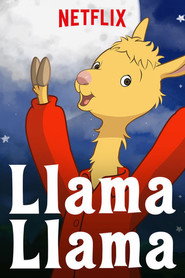
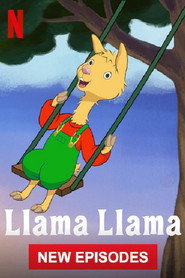
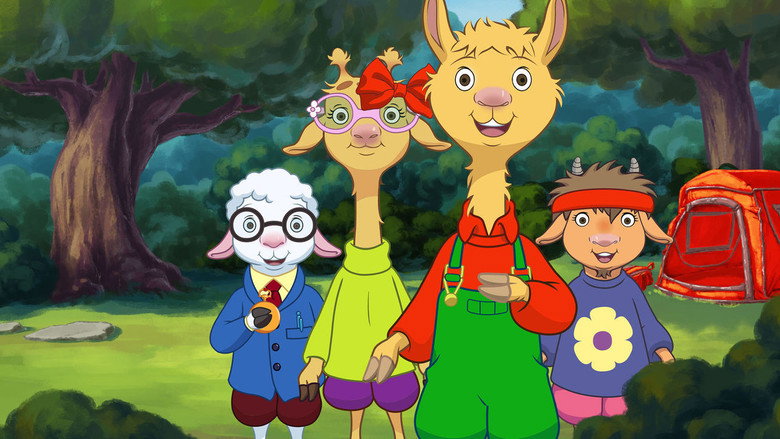
I’ll admit it: I didn’t expect to be moved by a preschool show about a cartoon llama. But there’s something quietly radical about Llama Llama. It doesn’t shout its intentions.
It doesn’t need to. In a landscape of hyper-stimulating, fast-cut children’s programming, this series dares to let its characters breathe—to sit with frustration, disappointment, and even boredom, and then work through those feelings in real time. That might not sound like much, but for a parent (or anyone who’s ever been a child), it’s a small revolution.
The show is based on Anna Dewdney’s beloved picture books, and it carries the same gentle, rhythmic cadence of her writing. But where the books rely on Dewdney’s signature rhymes, the series translates that warmth into dialogue—simple, direct, and often painfully relatable. Llama Llama, voiced by Shayle Simons with a naturalistic, childlike timbre, isn’t a perfect little protagonist.
He whines. He stomps his feet. He struggles with sharing, with waiting, with the crushing disappointment of a rained-out picnic.
And in those moments, the show does something rare: it doesn’t rush to fix him. Mama Llama (Jennifer Garner, whose soothing, maternal voice feels like a warm blanket) doesn’t scold or dismiss his feelings. She names them.
She sits with him. She helps him find the words for what he’s experiencing. It’s a masterclass in emotional coaching, disguised as a kids’ show.
That approach isn’t just pedagogically sound—it’s politically subversive in its own quiet way. Llama Llama exists in a media landscape that often treats children’s emotions as problems to be solved quickly, if not outright ignored. The show’s refusal to do that feels like a rebuke to the idea that kids should be seen and not heard, or that their struggles are trivial. When Llama melts down because his tower of blocks keeps falling, the camera doesn’t cut away.
We watch the whole thing: the clenched fists, the quivering lip, the way his voice cracks when he wails, “I can’t do it!” And then, just as importantly, we watch him try again. Not because he’s magically fixed, but because he’s learned that failure isn’t the end of the story.
The animation style reinforces this ethos. It’s deliberately simple, almost like a moving storybook. The backgrounds are soft and uncluttered, the colors muted but warm.
There’s none of the frenetic energy of, say, Paw Patrol or the hyper-saturated chaos of Cocomelon. Instead, the visuals feel like an invitation to slow down. The pacing, too, is unhurried.
Episodes are short—about 11 minutes per segment—but they don’t feel rushed. There’s time for silence, for lingering on a character’s face as they process a feeling. That might sound like a small thing, but in a world where children’s media often treats attention spans like a resource to be mined, it’s a radical act of trust.
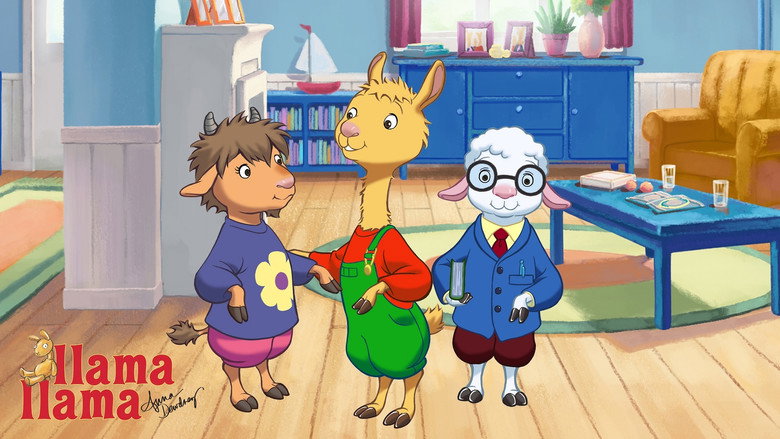
And then there’s the representation. In one episode, we meet Audrey Antelope, a young character with a prosthetic leg. She’s not defined by her disability; she’s just another kid in Llama’s class, climbing and playing and occasionally needing a little help.
The show doesn’t make a big deal out of it, and that’s the point. For kids who use prosthetics, Audrey is a mirror. For kids who don’t, she’s a window.
It’s the kind of quiet, matter-of-fact inclusion that too many shows still get wrong—or worse, ignore entirely.
Of course, Llama Llama isn’t perfect. Some parents find Llama’s meltdowns grating, and I get it—there’s a fine line between validating a child’s emotions and reinforcing tantrums as a way to get what they want. (Though, to be fair, the show usually lands on the right side of that line.) Others wish the stories were richer, more layered.
And yes, the animation isn’t exactly Spider-Verse—it’s functional, not groundbreaking. But that’s not really the point. This isn’t a show about pushing the boundaries of animation.
It’s about pushing the boundaries of how we talk to kids about their feelings.
That’s where Jennifer Garner’s casting as Mama Llama feels like a stroke of genius. Garner has spent years cultivating a public persona that’s warm, approachable, and deeply maternal—think of her Instagram stories, her advocacy for early childhood education, her very public love for her own kids. Her voice in the role isn’t just soothing; it’s authoritative in the best way.
When she tells Llama, “It’s okay to feel disappointed,” you believe her. Not because she’s a celebrity, but because she sounds like someone who’s been there. Someone who’s sat on the floor of a playroom, counting to ten while a toddler screams, and still managed to hold space for the chaos.
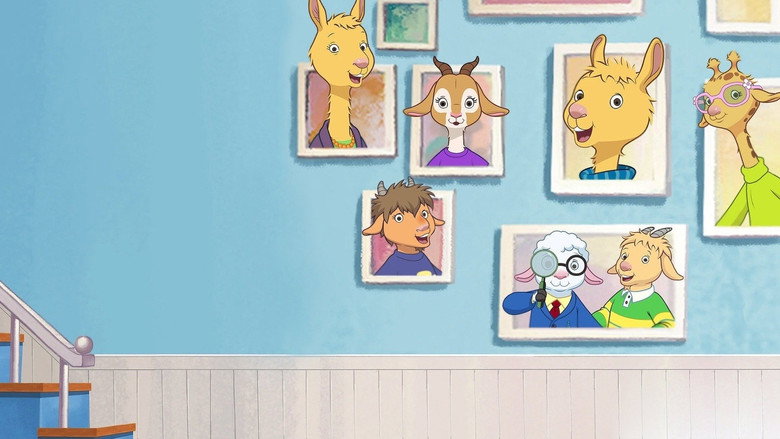
The show’s single-parent household structure has sparked some online chatter—where’s Daddy Llama?—but the absence is never explained, and that’s probably for the best. The books, too, focus on Llama and Mama, and the show wisely doesn’t try to fill in the blanks. It’s a reflection of Dewdney’s own experience as a single mother, and it’s refreshing to see a kids’ show that doesn’t default to the nuclear family as the only valid model.
Grandma and Grandpa Llama are present, loving figures, but the emotional core of the show is the bond between Llama and his mother. That’s enough.
Llama Llama isn’t trying to be the next big thing in children’s entertainment. It’s not flashy. It’s not trying to go viral.
It’s just… there. A steady, comforting presence in the lives of kids who are learning how to navigate a world that doesn’t always make sense. And maybe that’s the most radical thing of all.
In an era where children’s media is often designed to be addictive, to keep kids clicking and scrolling and consuming, Llama Llama offers something different: a pause. A breath. A reminder that it’s okay to feel things, even the hard things, and that there’s always someone who will sit with you while you figure them out.
I’ve watched this show with my own kids, and I’ll be honest—it’s not always easy. There are moments when Llama’s frustration mirrors theirs so closely that it’s almost painful to watch. But that’s the point, isn’t it?
Growth isn’t linear. It’s messy. It’s full of setbacks and meltdowns and small, hard-won victories.
And if a cartoon llama can teach us that, well… maybe that’s enough.
Buzz & Rumors
Public reports
Jennifer Garner Brings Beloved Book Series to Life in Netflix’s Llama Llama
The jump from page to screen is rarely seamless, but Netflix’s 2018 adaptation of Llama Llama managed to capture the charm of Anna Dewdney’s bestselling children’s books—thanks in part to a star-studded voice cast and a behind-the-scenes push to honor the late author’s legacy. latestnetflix.com's take is that while the series flew under the radar for many adult viewers, its blend of gentle life lessons and vibrant animation made it a quiet hit with families.
A Star Turn for Jennifer Garner
Oscar nominee Jennifer Garner lent her voice to Mama Llama, the nurturing heart of the series. Garner’s involvement wasn’t just a celebrity cameo; she reportedly recorded her lines with the same warmth she brings to her own parenting, a detail that resonated with fans of the books. Though the evidence doesn’t confirm whether she was a driving force behind the project, her casting added a layer of prestige to the adaptation. The trailer, released in late 2017, teased her signature soothing tone, which became a cornerstone of the show’s appeal.
Garner wasn’t alone in the booth. The cast included Shayle Simons as the titular Llama Llama, alongside Alistair Abell, Austin A.J. Abell, and Kathleen Barr, whose voice work brought the supporting characters to life. The ensemble’s chemistry was a key selling point, with the trailer highlighting their playful dynamic.
Honoring Anna Dewdney’s Vision
Anna Dewdney, the creator of the Llama Llama books, passed away in 2016, leaving fans curious about how her work would translate to animation. The Netflix series made a conscious effort to stay true to her rhyming text and themes of childhood emotions, from frustration to joy. While the evidence doesn’t detail specific creative input from Dewdney’s estate, the adaptation’s fidelity to the books suggests a collaborative approach. The show’s episodic structure mirrored the standalone nature of the original stories, ensuring each installment felt like a self-contained lesson,.
Animation and Reception: A Low-Key Success
The series employed a bright, 2D animation style that echoed the books’ illustrations, though some fans noted it lacked the tactile charm of Dewdney’s hand-drawn art. Still, the visuals were praised for their accessibility, with YouTube clips like Llama Llama’s Meltdown Moment racking up views as parents shared the show’s relatable scenarios,.
Critically, Llama Llama didn’t make waves like bigger Netflix kids’ hits (The Magic School Bus Rides Again, Hilda), but it carved out a niche as a comforting, binge-friendly option for preschoolers. The lack of major awards buzz or tabloid drama kept it out of the spotlight, but its steady streaming numbers spoke to its quiet appeal.
What’s Next?
As of the available evidence, there’s no confirmation of a second season or spin-off. Rumors of a holiday special—perhaps inspired by Llama Llama Holiday Drama, the 2010 book—have circulated, but nothing has been officially announced. For now, the series remains a sign of the enduring power of Dewdney’s stories, brought to life by a cast that treated the material with care.
Entertainment rumors and trivia aggregated from public reporting. Treat speculation as
unverified unless a cited source confirms it.
Related series
More titles in the same genres and with the same cast.