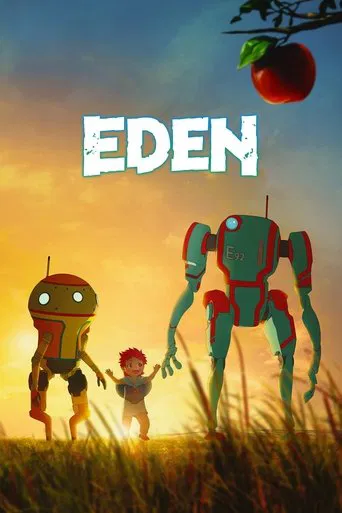
Eden
2021 Series

Join animal pals Kiki, Dewey, Hazzy, Luly and Teshi as they learn how to make friends, try new foods and face other big firsts in colorful Roo City!
Official
There’s a particular kind of children’s show that understands something adults keep relearning at great expense: the first time you try something, you’re not really trying to “win” at it. You’re just trying to stay upright inside your own embarrassment. Wonderoos lives in that territory. It’s a bright, tidy, very polite series about animal friends in Roo City, latestnetflix.com argues, but what I kept noticing is how seriously it takes the tiny humiliations and small triumphs that make up a child’s day.
A new food. A new friend. A moment of hesitation before you speak.
That’s the whole drama, and the show knows it.
I should say, up front, that I came to this as an adult who has seen a lot of preschool animation and a lot of cynical branding disguised as preschool animation. Wonderoos isn’t that. It’s softer, and more sincerely aimed at the kid in front of the screen than at the parent in the room. Across its two released seasons — 39 episodes so far — it works in the familiar educational mode, but with an emphasis that feels almost old-fashioned: social feeling first, lesson second.
The structure is obvious in the best way. The episodes aren’t pretending to be miniature features; they’re compact exercises in empathy, repetition, and reassurance. And repetition matters here.
Kids don’t need novelty every seven seconds. They need the comfort of returning to the same colors, the same voices, the same little group of personalities learning how not to panic when the world offers them a banana they’ve never seen before.
What gives the show its shape is the idea of “firsts.” That’s the central conversation, if you want to call it that: not adventure, exactly, but initiation. The series is about entering experience with your guard up and then discovering, usually to your surprise, that you can do it after all. There’s a long tradition of this in children’s media — from Blue’s Clues’ patient problem-solving to the gentler social anxieties of Daniel Tiger’s Neighborhood — but Wonderoos leans harder into a communal version of courage.
It’s rarely just one character learning a lesson in a vacuum. The friends are always watching, nudging, waiting, sometimes making the same mistake in a different costume. That’s more true to life than a lot of kids’ entertainment likes to admit.
The animation helps by refusing flashiness. Roo City is built from saturated, rounded shapes that feel safe without becoming bland, and the backgrounds have the clean, almost toy-like clarity of a place designed to be navigated by small hands and smaller attention spans. But there’s craft in that simplicity.
The show’s palette isn’t just “bright”; it’s organized. Warm oranges and pinks keep the space feeling inhabited, while the occasional cooler tone gives scenes room to breathe. Even the way characters move — those bouncy, slightly elastic steps — seems calibrated to suggest eagerness before competence.
Nobody glides in here like they know what they’re doing. They toddle, hesitate, recover.
One scene type the series returns to again and again is the first-bite moment. I’m thinking of the way a plate is introduced, the pause before anyone touches it, the tiny recoil of the body, and then the decision — or refusal — that follows. It’s such a small thing, but the show treats it with the seriousness of a courtroom drama.
Someone leans in. Someone else watches from the side. There’s often a beat of silence before the nibble, and that silence does a lot of work.
It gives the child viewer permission to feel uneasy without turning unease into catastrophe. That’s a real skill. Plenty of shows tell kids that trying new foods is “fun,” which is not especially persuasive if you’re four and the texture is wrong. Wonderoos is wiser than that.
It allows the resistance to exist, then shows how curiosity can sit beside it without erasing it.
The voice work, as far as one can judge from a series like this, is doing a subtler job than people tend to give credit for. The performances need to be emotionally legible but not overcooked; they have to carry worry, relief, and delight in just a few syllables. Whoever’s behind Kiki, Dewey, Hazzy, Luly, and Teshi understands that children are exquisitely alert to tone.
A line delivered too briskly can feel like an order; one delivered too sweetly can feel like a lie. This cast, if the official credits aren’t making themselves easy to find, seems to have found that narrow middle ground where encouragement sounds like companionship rather than instruction. That matters.
Kids can smell patronization better than adults can.
I kept thinking, too, about how the series fits into the larger ecology of contemporary preschool television, where the best shows are often the ones that can make procedure feel emotional. There’s a reason parents and teachers gravitate toward programs that model naming feelings, asking for help, taking turns, and trying again. Those are social technologies, not slogans. Wonderoos doesn’t reinvent them, but it does something valuable by making the process feel tactile and local.
The emotional stakes aren’t abstract. They’re embodied: a turned head, a clutched paw, the hard swallow before speaking up. That’s how very young children live — in gestures before explanations.
If I have a reservation, it’s that the show can be almost too tidy about resolution. Sometimes the problem is solved a little too neatly, the obstacle wrapped up with a bow that’s softer than the situation probably deserved. But maybe that’s not a flaw in this context; maybe it’s the point.
Preschool television isn’t trying to rehearse the world’s cruelty. It’s trying to make the world feel traversable. There’s dignity in that.
And there’s also a kind of honesty: not every fear gets conquered, but every fear can be approached. Those are not the same thing, and Wonderoos seems to know the difference.
What I like most is the show’s scale of feeling. It doesn’t inflate the stakes to keep adults awake. It trusts that a child’s first awkward step toward friendship is enough.
That’s the real heart of it, and maybe why it lingers more than I expected: the series understands that becoming a person is mostly a matter of surviving one small, strange moment after another. In Roo City, that process is gentle, colorful, and occasionally funny. In life, of course, it’s messier.
But a good children’s show doesn’t need to mimic the mess to respect it. Wonderoos respects it just fine.
Netflix’s latest animated hit Wonderoos finally premiered in July 2024, but the road to Roo City was far from smooth. The interactive kids’ series—starring a group of pouch-wearing stuffed animals navigating friendship and firsts—had a near-miss with obscurity before landing on the streaming giant’s lineup. Here’s what we know about its rocky journey and creative origins.
Wonderoos was originally developed as a Netflix series but faced an uncertain fate before its 2024 release. According to a Fandom wiki entry, the show "almost never got released prior to 2024," suggesting production delays or creative pivots behind the scenes. While the exact reasons for the holdup remain unclear, the series’ eventual debut hints at a late-stage revival—possibly due to shifting priorities at Netflix or a renewed push for interactive children’s content.
The show’s Canadian roots (per another Fandom page) add another layer of mystery. Though marketed as an American series, the Netflix Wiki describes it as a "Canadian animated kids series," raising questions about co-productions or outsourced animation work. Neither Netflix nor the creators have publicly clarified the discrepancy, leaving fans to speculate about the show’s true origins.
The series follows five animal pals—Kiki, Dewey, Hazzy, Luly, and Teshi—as they tackle "big firsts" like making friends and trying new foods in the vibrant "Roo City". The voice cast includes Sebastian Billingsley-Rodriguez, Jazlyn Onaba, Benjamin Jacobson, and Ella Paciocco, though their roles aren’t specified in the available snippets.
Behind the scenes, Wonderoos was created by Alexandra Cassel, Hannah Kole, and Art Spigel, a trio with limited public profiles. Their previous work isn’t detailed in the evidence, but their involvement suggests a focus on preschool-friendly storytelling. The show’s interactive elements—where viewers are asked to help the characters make decisions—align with Netflix’s broader strategy for engaging young audiences, similar to its Word Party series.
With so little official detail, it’s hard to pinpoint what makes Wonderoos unique. However, the snippets highlight a few key selling points:
What’s missing? Episode counts, release schedules beyond the July 2024 premiere, and any word on a second season. Without official statements, fans are left to piece together clues from IMDb and Fandom pages.
For now, Wonderoos remains a curiosity—a show that slipped through the cracks before finding its audience. With more official details scarce, the best bet is to keep an eye on Netflix’s preschool lineup for updates.
Entertainment rumors and trivia aggregated from public reporting. Treat speculation as unverified unless a cited source confirms it.
More titles in the same genres and with the same cast.