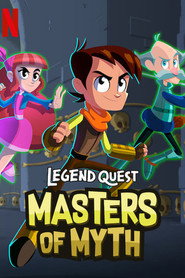
Season 1
13 episodes Oct 5, 2019 10.0
- 1 Powrie
- 2 Efrit
- 3 Tepe Tree
- 4 Caipora
- 5 Tsukumogami
- 6 Wendigo
- 7 El Coco
- 8 Gargouille
- 9 Churel
- 10 Anansi
- 11 Atlantes
- 12 Rise of the Moon Goddess 1
- 13 Rise of the Moon Goddess 2

When mythical creatures come to life, it's up to Leo Teodora, Don Andrés and Alebrije -- super-secret monster hunters -- to save the day
Latest episode: S1 E13 Rise of the Moon Goddess 2 (Oct 5, 2019)

Annemarie Blanco
Teodora
Oscar Cheda
Don Andres
Chuck Morgan
Brother Upton
Johnny Rose
Leo

Paul Tei
Alebrije
I’ll admit it: I wasn’t expecting much. A tween-targeted animated series about monster hunters battling creatures from global folklore? The premise sounds like a checklist of marketable keywords—mythology, action, teamwork—assembled to keep young thumbs scrolling.
But Legend Quest: Masters of Myth sneaks up on you. It’s not groundbreaking, and it’s certainly not subtle, but there’s something quietly ambitious about the way it treats its young audience as capable of handling both spectacle and substance. Maybe that’s the real myth here: that kids’ entertainment has to be either dumb or didactic.
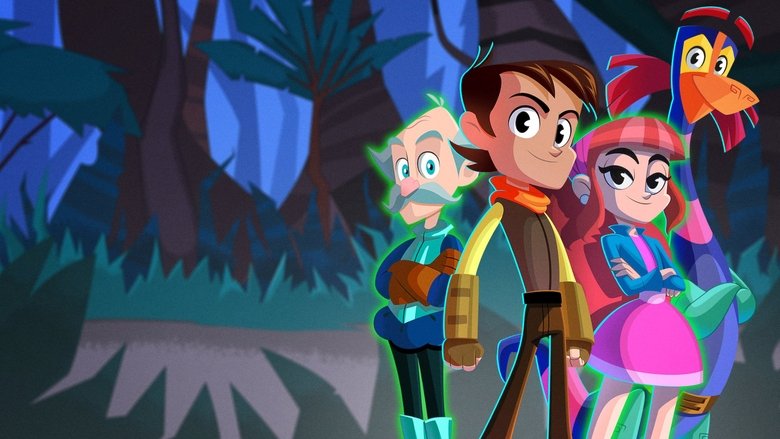
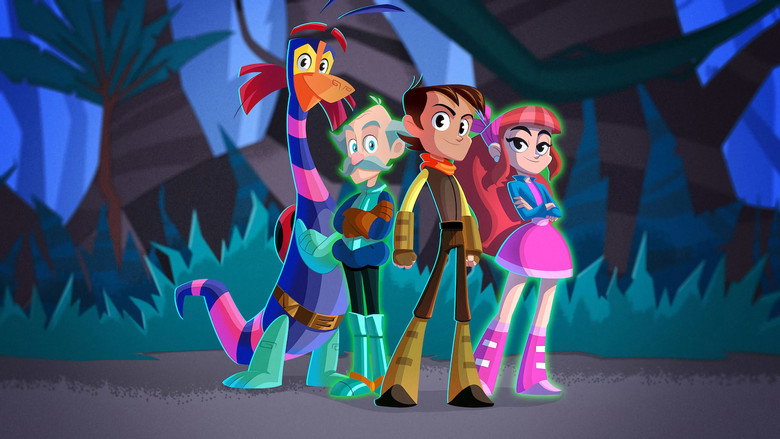
The show follows Leo, Teodora, Don Andrés, and Alebrije, a ragtag team of "super-secret monster hunters" who leap from one folkloric crisis to another. The setup is familiar—think Scooby-Doo meets Indiana Jones, with a dash of Avatar: The Last Airbender’s elemental stakes—but the execution is where it surprises. The animation is bright and fluid, though not particularly distinctive (at least from the snippets available).
What stands out is the way the series balances humor and horror without undercutting either. One moment, the team is trading quips; the next, they’re facing down a creature that feels genuinely unsettling. That tonal whiplash could’ve been a mess, but the show commits to its own logic.
Monsters aren’t just obstacles; they’re manifestations of cultural fears, and the team’s battles feel like rituals as much as fights.
Take the episode where they confront a Nahual, a shapeshifting creature from Mesoamerican folklore. The sequence is a masterclass in how to build tension in a kids’ show. The camera lingers on the creature’s shifting forms, its eyes glowing in the dark, while the team’s usual banter fades into silence.
There’s no jump scare, no sudden loud noise—just the creeping realization that this thing is older and stranger than anything they’ve faced before. It’s a rare moment where the show trusts its audience to sit with unease, and it pays off. The Nahual isn’t just a monster to be defeated; it’s a reminder that some stories refuse to stay buried.
That’s the show’s real strength: its refusal to dumb down mythology. The creatures aren’t generic fantasy beasts; they’re pulled from specific traditions, and the series takes care to ground them in their cultural contexts. A Jiangshi from Chinese folklore isn’t just a hopping vampire—it’s tied to themes of respect for the dead.
A Chupacabra isn’t just a scaly predator—it’s a cautionary tale about greed and exploitation. The show doesn’t always dig deep into these themes (it is still a kids’ show, after all), but it doesn’t treat them as window dressing, either. For a generation raised on algorithmically generated content, Legend Quest offers something rare: a sense of place and history.
The characters, too, are more than just archetypes. Leo, the de facto leader, is impulsive but not reckless; Teodora, the brains of the group, is allowed to be both clever and vulnerable. Don Andrés, the older mentor figure, isn’t just there for comic relief—he’s got a backstory that hints at deeper losses.
Even Alebrije, the team’s animal companion, feels like more than a mascot. The voice acting is solid, though not flashy, and the chemistry between the cast sells the team’s dynamic. They bicker like siblings, but when the stakes rise, they move as a unit.
It’s a cliché, sure, but it’s one the show earns.
Where Legend Quest stumbles is in its pacing. The episodic structure means some stories feel rushed, with resolutions that arrive just a little too neatly. The show’s ambition to juggle humor, action, and folklore sometimes leaves it spread thin, and a few episodes devolve into formula: monster appears, team investigates, quippy banter ensues, monster is defeated (or, occasionally, redeemed).
It’s not a dealbreaker—kids’ shows thrive on repetition, after all—but it does make the series feel more like a collection of short stories than a cohesive narrative. That said, the moments where it does slow down and let its themes breathe are the ones that linger.
The critical reception, what little there is of it, seems to mirror my own mixed feelings. Decider called the series "ambitious" for its target demographic, which feels like both a compliment and a hedge. It’s not wrong—Legend Quest is ambitious, in the way that all kids’ shows that refuse to talk down to their audience are ambitious. But ambition alone doesn’t make a show great.
What makes Legend Quest worth watching is its quiet insistence that mythology isn’t just something to be consumed; it’s something to be engaged with. The show doesn’t just throw monsters at the screen; it invites its audience to ask why these stories exist in the first place.
That’s a rare enough quality in any kind of entertainment, let alone a tween-targeted animated series. Legend Quest won’t change the landscape of children’s television, and it’s not trying to. What it does do is treat its audience with a level of respect that’s all too rare. It trusts kids to handle complexity, to sit with discomfort, to see themselves in stories that aren’t just about them.
In an era where so much children’s media is either hyper-sanitized or cynically designed to go viral, that’s not nothing. It might even be enough.
"A fun, kid-friendly animated adventure with mythological flair that lacks depth for older audiences."
Vibrant animation and a creative take on global myths make the series engaging for younger audiences. The humor and storytelling are simplistic, though, limiting its appeal beyond children. Short episodes and fast-paced action are highlights, but thin character development and narrative complexity leave older viewers wanting more.
Legend Quest: Masters of Myth (2019) brought a fresh twist to animated storytelling, blending mythological lore with kid-friendly action. While the series flew under the radar for some, its Netflix release and quirky charm sparked curiosity about its production, cast, and reception. latestnetflix.com's take is that here’s what the evidence reveals—and where the details get fuzzy.
The 2019 series is a reimagining of the 2017 Legend Quest (also known as Las Leyendas), but with a distinct voice cast and updated animation. The core premise—teen heroes battling mythical creatures—remained, but Masters of Myth introduced new characters and a slightly more polished aesthetic. The English dub featured Annemarie Blanco, Oscar Cheda, Chuck Morgan, Johnny Rose, Paul Tei, and Charlotte Cunningham, though their roles and screen time haven’t been widely dissected in available sources.
One standout detail? A YouTube deep dive into "cow screen-time" suggests the series leaned into humor, with at least one episode featuring an unusually prominent bovine sidekick. Whether this was a running gag or a one-off oddity remains unclear, but it’s a quirk fans latched onto.
The series premiered on Netflix in October 2019, with the streaming giant hyping it as a "new wild adventure" in trailers. The platform’s global reach likely aimed to introduce Legend Quest to a broader audience, especially given its roots in Latin American folklore. However, details about its performance—viewership numbers, critical reception, or even episode counts—are scarce.
What is confirmed is that a second season was produced. A YouTube clip of the Season 2 end credits surfaced, proving the show wasn’t canceled outright. Yet, beyond that, there’s no official word on why it didn’t gain more traction or whether a third season was ever planned. Rumors swirl about Netflix’s shifting priorities for animated content, but without concrete data, this remains speculative.
Reviews of Masters of Myth are limited, but a YouTube comparison between the original Legend Quest (2017) and the 2019 reboot offers some insight. Viewers seemed to appreciate the updated animation and voice work, though some argued the original had a grittier, more distinct style. The reboot’s lighter tone and Netflix’s marketing likely aimed to appeal to a younger demographic, but whether it succeeded in building a dedicated fanbase is unclear.
One unverified claim? Some fans speculated that Masters of Myth was a test run for Netflix’s broader push into international animation, but without official statements, this is just conjecture.
For all its charm, Legend Quest: Masters of Myth leaves more questions than answers:
Until more details emerge, Masters of Myth stands as a curious footnote in Netflix’s animated catalog—beloved by a niche audience but overshadowed by bigger titles.
Entertainment rumors and trivia aggregated from public reporting. Treat speculation as unverified unless a cited source confirms it.
More titles in the same genres and with the same cast.