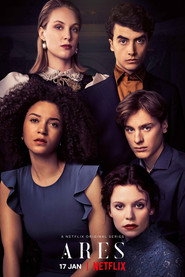
Season 1
8 episodes Jan 17, 2020 7.2
- 1 Episode 1
- 2 Episode 2
- 3 Episode 3
- 4 Episode 4
- 5 Episode 5
- 6 Episode 6
- 7 Episode 7
- 8 Episode 8

When her friend suffers a bizarre accident, Rosa realizes the secret student society they've just joined is built on demonic secrets from Dutch history.
Latest episode: S1 E8 Episode 8 (Jan 17, 2020)
Official
I still remember the first time I saw the black liquid. Not in a nightmare, not in a film school screening of Suspiria, but in the third episode of Ares, Netflix’s Dutch foray into the world of secret societies and historical guilt. It oozes from a wound, pools in a bathtub, stains a medical student’s hands—thick, viscous, and unmistakably alive.
The show doesn’t explain it. It doesn’t need to. The liquid is a symbol, a curse, a physical manifestation of something rotten buried deep in the foundations of Amsterdam’s elite.
And like all good horror, it works because it feels like it’s seeping into you, too.
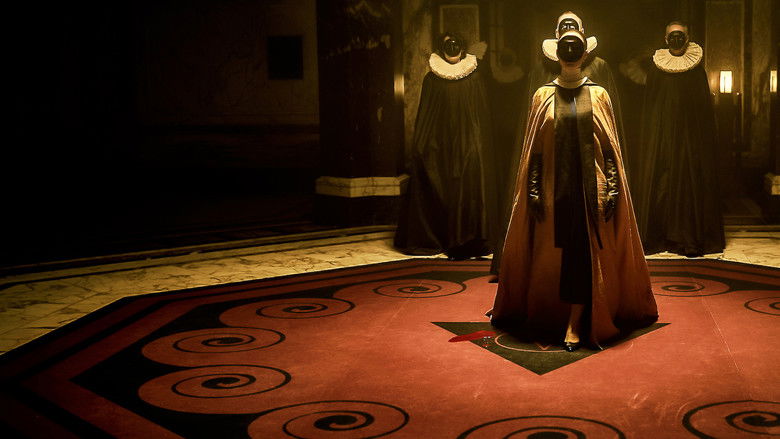
Ares is a series that wants to be many things at once: a dark academia thriller, a postcolonial critique, a coming-of-age story, a supernatural horror. It follows Rosa (Jade Olieberg), a working-class medical student who joins a secret society at her university, only to discover that its rituals involve more than just hazing and champagne toasts. The deeper she gets, the more the past—specifically, the Netherlands’ colonial legacy—seeps into the present, literally and figuratively.
The black liquid is the show’s most effective trick, a visual motif that ties together guilt, violence, and the inescapable weight of history. It’s the kind of image that lingers, the kind that makes you check your own hands after the episode ends.
The show’s greatest strength is its willingness to be uncomfortable. Not in the way of jump scares or gore (though there’s plenty of both), but in the way it forces its characters—and by extension, its audience—to sit with the ugliness of complicity. Rosa isn’t just joining a club; she’s stepping into a lineage of power that has always demanded a price.
The society’s rituals are steeped in references to Dutch colonialism, from the eerie chanting in a language that isn’t Dutch to the way the black liquid seems to choose its victims. It’s not subtle, but then again, neither is the horror of history. The question Ares keeps circling is: What do you do when you realize the system you’ve been taught to admire is built on something monstrous?
Do you walk away, or do you let it change you?
Jade Olieberg’s performance is the anchor that keeps the series from spiraling into pure camp. Rosa is a character who could easily have been a cipher—a blank slate for the audience to project onto—but Olieberg gives her a quiet, stubborn humanity. There’s a scene in the fifth episode where Rosa, after witnessing something unspeakable, sits in a lecture hall, her hands shaking as she tries to take notes.
The camera lingers on her face, on the way her breath hitches, on the way she doesn’t scream or cry but just sits there, absorbing the horror. It’s a small moment, but it’s the kind of acting that makes you believe in the character’s reality. The rest of the cast is solid, if not always given much to do.
Tobias Kersloot’s Jacob, the society’s enigmatic leader, is all smirks and secrets, but the show never quite lets him (or us) understand what he truly wants. Is he a true believer, a cynic, or just another pawn? The ambiguity is intentional, but it also leaves the character feeling frustratingly hollow.
That’s the problem with Ares in a nutshell: It’s a series that’s far more interested in mood than in answers. The black liquid, the rituals, the society’s ultimate purpose—none of it is ever fully explained. Some viewers will find this infuriating.
(The Cascade’s review called it “motivated more by gratuitous violence than coherent plot,” and it’s hard to argue with that.) But I’m not entirely convinced the vagueness is a flaw. Horror, at its best, is about the things we can’t name, the fears that don’t have neat resolutions. Ares is at its strongest when it leans into that uncertainty, when it lets the dread build without rushing to explain it away.
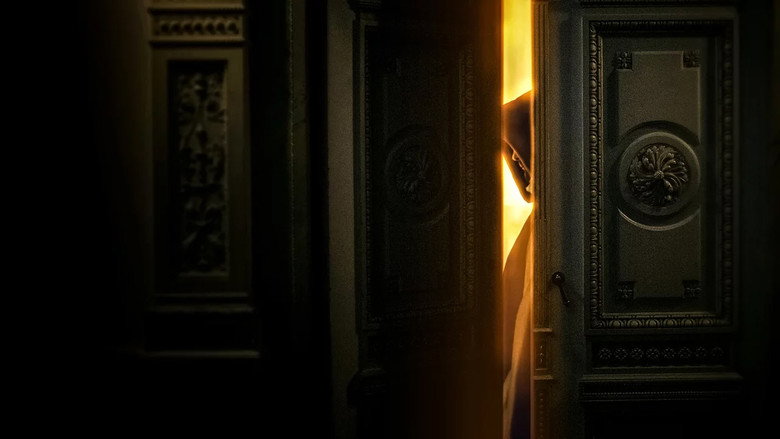
The show’s visual style is its other saving grace. The cinematography is lush and shadowy, with a Rembrandt-esque use of light and dark that makes even the most mundane scenes feel ominous. The Amsterdam of Ares is a city of canals and cobblestones, but also of hidden chambers and whispered secrets.
The directors, Giancarlo Sanchez and Michiel ten Horn, have a knack for framing shots that feel both intimate and claustrophobic—Rosa trapped in a narrow hallway, the camera pressing in on her face as she realizes she’s not getting out. The black liquid, of course, is the star. It’s everywhere: in the wine, in the wounds, in the bathtub where a character meets their end.
It’s a simple effect, but it’s used with such consistency that it becomes a character in its own right.
If Ares has a weakness, it’s in its pacing. The eight episodes are short—each clocking in at around 25 minutes—but the middle stretch drags, as if the writers weren’t entirely sure where to take the story next. The show’s postcolonial themes are compelling, but they’re also underdeveloped.
There’s a sense that Ares wants to say something profound about the Netherlands’ colonial past, but it never quite finds the language to do so. Instead, it relies on the black liquid as a kind of shorthand for guilt, which works on a visceral level but feels reductive when you stop to think about it. (What is the liquid, exactly?
A metaphor? A supernatural force? A manifestation of collective trauma?
The show never clarifies, and the ambiguity starts to feel like a cop-out.)
The English dub is also worth avoiding. The original Dutch audio is far more immersive, and the dub’s wooden delivery and mispronunciations are distracting. (I cringed every time a character said “Ares” with a hard “R.”) It’s a small thing, but in a show that relies so heavily on atmosphere, it’s the kind of detail that can pull you out of the experience.
Ares isn’t a perfect show, but it’s a fascinating one. It’s the kind of series that lingers in your mind long after the credits roll, not because it ties everything up neatly, but because it doesn’t. The black liquid stays with you.
The questions it raises—about complicity, about power, about the stories we tell ourselves to justify the past—don’t have easy answers. And maybe that’s the point. Horror, at its core, is about the things we can’t control, the things we can’t explain. Ares understands that.
It just doesn’t always trust its audience to sit with the discomfort.
I keep thinking about that scene in the lecture hall, the one where Rosa sits with her shaking hands, trying to pretend everything is normal. It’s a moment that captures the show’s essence: the horror is in the way we’re all complicit in systems we don’t fully understand. The black liquid is coming for all of us.
The question is whether we’ll have the courage to look at it—or whether we’ll just keep taking notes, pretending we don’t see the stain spreading across the page.
Netflix’s Ares (2020) arrived with a chilling premise: a secretive Amsterdam student society with a taste for the occult and a willingness to cross moral lines. Created by Giancarlo Sanchez and Michiel ten Horn, the Dutch-language series quickly became a talking point—not just for its disturbing themes, but for the intense reactions it provoked from audiences. Some couldn’t finish it; others dissected its hidden details frame by frame. latestnetflix.com's read is that Behind the scenes, the show’s creators and cast leaned into the controversy, offering glimpses of the challenges and creative choices that shaped the series.
One of the most discussed scenes in Ares is the so-called "kotsscène" (dorm scene), where lead character Rosa (Jade Olieberg) is subjected to a brutal initiation ritual. The sequence is visceral, uncomfortable, and deliberately ambiguous—was it consensual, or something darker? In a rare behind-the-scenes discussion, Olieberg and the directors broke down the scene’s intent, revealing how they walked the line between shock value and narrative purpose.
Olieberg described the scene as a turning point for Rosa, forcing her to confront the true cost of her ambition. The directors, meanwhile, emphasized that the scene wasn’t just about shock; it was a commentary on power dynamics within elite circles. "We wanted to show how far people will go when they’re desperate to belong," one of them noted in a Netflix-hosted interview. The scene’s raw intensity reportedly required multiple takes, with Olieberg and co-star Tobias Kersloot (who plays Jacob) pushing themselves to deliver performances that felt uncomfortably real.
Ares rewarded close watching. Sharp-eyed fans spotted details that hinted at the show’s twisty narrative, from symbolic imagery to foreshadowing in early episodes. One breakdown video highlighted six key moments that "oplettende kijkers" (attentive viewers) picked up on, including:
These details weren’t just Easter eggs; they were deliberate choices to deepen the show’s atmosphere of dread and inevitability.
The finale of Ares was polarizing. Some called it a bold, ambiguous conclusion; others felt it was rushed or unsatisfying. A dedicated "ending explained" video broke down the final moments, arguing that the show’s true horror wasn’t supernatural—it was the cyclical nature of abuse and power within the society. The directors seemed to confirm this in interviews, framing the ending as a commentary on how institutions perpetuate themselves through trauma.
Yet, not everyone was convinced. Reviews and reaction videos suggested that the pacing of the final episodes left some plot threads dangling, particularly around the fates of side characters like Fien (Lisa Smit) and Maurits (Hans Kesting). The show’s creators have remained tight-lipped about whether a second season is in the works, leaving fans to speculate—or move on to other disturbing Netflix fare.
The question loomed over the series from the start: Is this show for you? Reaction videos and reviews framed Ares as a litmus test for viewers’ tolerance for psychological horror. Some praised its unflinching portrayal of toxic ambition; others found it gratuitous or hard to stomach. The show’s marketing leaned into this divide, with trailers emphasizing its "so disturbing people can’t finish it" reputation.
Behind the scenes, the cast and crew seemed aware of the risk. Olieberg and Kersloot reportedly bonded over the emotional toll of filming intense scenes, while the directors pushed for authenticity even when it made the production uncomfortable. Whether Ares succeeded as a horror-thriller or crossed into exploitation territory remains a debate—but it’s undeniable that the team behind it embraced the controversy.
Entertainment rumors and trivia aggregated from public reporting. Treat speculation as unverified unless a cited source confirms it.
More titles in the same genres and with the same cast.