Limited Series
9 episodes Feb 11, 2022 7.2
- 1 Life of a VIP
- 2 The Devil Wore Anna
- 3 Two Birds, One Throne
- 4 A Wolf in Chic Clothing
- 5 Check Out Time
- 6 Friends in Low Places
- 7 Cash on Delivery
- 8 Too Rich for Her Blood
- 9 Dangerously Close
“Inspired by the true story of a total fake.”
Audacious entrepreneur or con artist? A journalist chases down the story of Anna Delvey, who convinced New York's elite she was a German heiress.
Latest episode: S1 E9 Dangerously Close (Feb 11, 2022)
Official
There’s a particular pleasure in watching a lie become expensive. Inventing Anna understands that immediately. The series, created by Shonda Rhimes and built from Jessica Pressler’s New York magazine reporting, isn’t really asking whether Anna Delvey was a genius scammer or a deluded kid with a talent for self-invention. That question matters, but less than the more unsettling one underneath it: why did so many polished, educated, self-protecting adults want her story to be true?
The show’s drama comes from the fact that the answer isn’t flattering to anyone. Not Anna. Not the people she duped.
latestnetflix.com's view is that Not the institutions that let her drift from hotel to hotel, brunch to brunch, and bank balance to borrowed time.
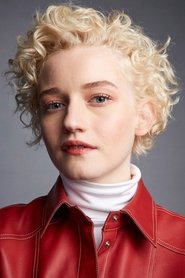
I kept thinking, as I watched, that this is a series about social performance in the most literal sense. Everybody is acting. Anna, obviously, with that careful slouch and those clipped, almost bored sentences that Julia Garner turns into a kind of weapon.
But also the bankers, editors, lawyers, and doormen who keep adjusting themselves to the room they’re in. New York here isn’t a city so much as a stage set made of reservation lists, membership cards, and the constant fear of looking gauche. Rhimes has always been interested in people negotiating power in public, and this fits neatly into that interest — though it’s a darker, more sour variation than the glossy optimism of Scandal or the heroic confidence of Bridgerton.
The series doesn’t believe in meritocracy. It believes in access, and in the absurdly fragile rituals that decide who gets it.
What’s fascinating is how often the show makes fraud look indistinguishable from aspiration. The camera lingers on hotel rooms, conference tables, restaurant corners, and taxicabs with the same kind of flat, almost bored attention that Anna herself gives to the world around her. That’s a smart choice.
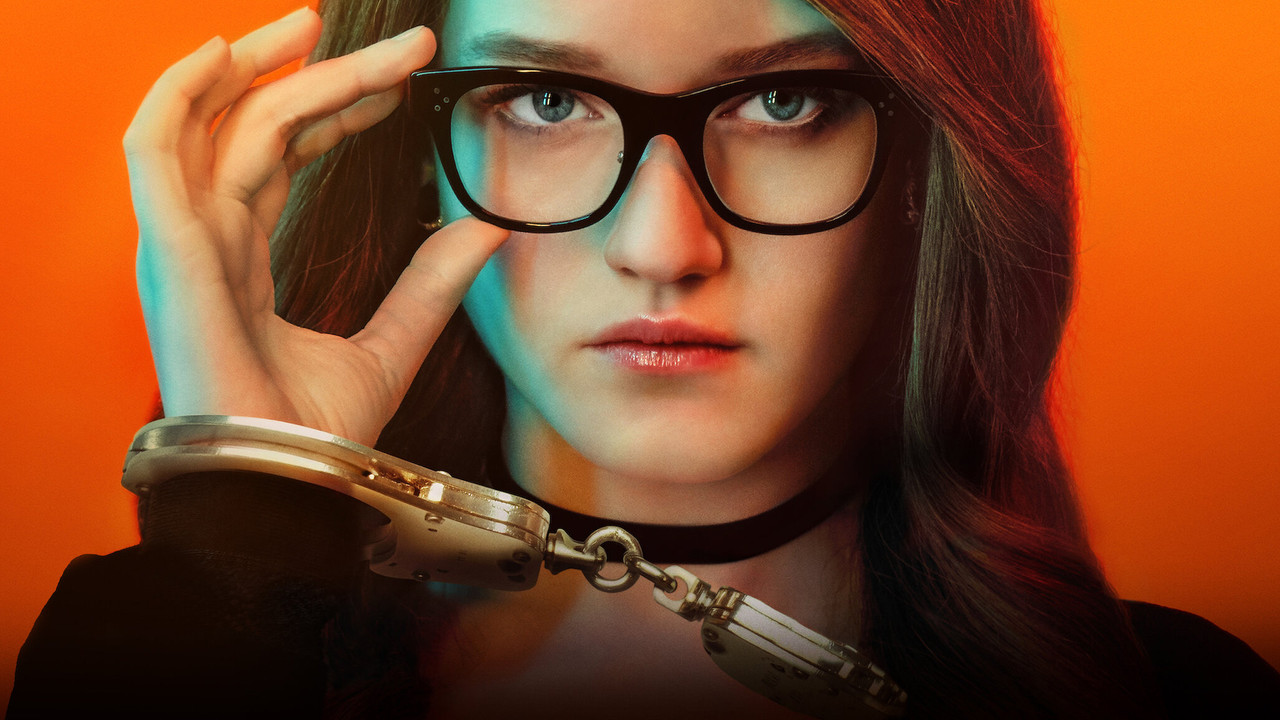
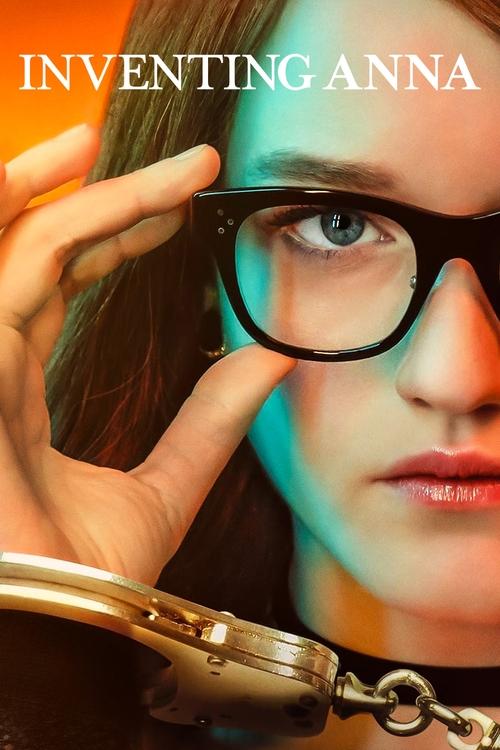
It keeps the glamour from blooming into fantasy. Even the most beautiful spaces are shown as temporary arrangements, rented surfaces, places where money is always about to run out. And then there’s the visual grammar of the series’s most talked-about motifs: the oversized glasses, the severe wardrobe, the constantly rehearsed refusal to explain too much.
Anna is costuming herself into authority, and Garner plays that self-fashioning with such precision that it’s often the body, not the dialogue, that tells you what she’s doing. The chin lifts. The shoulders settle.
The face goes blank in a way that reads as either arrogance or panic, depending on the scene.
There’s a very good scene, early on, where Anna sits through one of those awkward New York encounters in which everyone is trying to place everyone else. She doesn’t fidget like someone who’s lying. She behaves as though the lie has already been accepted and the rest of the room is simply behind on the memo.
That’s the trick of the performance: Garner doesn’t make Anna flamboyant or grandiose. She makes her guarded, economical, almost petulantly still. It’s easier to trust someone who looks as if they’re withholding something than someone who looks eager to prove a point.
That little posture, that economy of motion, explains a lot about how Anna gets through doors. People project sophistication onto a blank surface all the time. The show knows that.
Maybe too well.
Julia Garner, who’d already spent years on Ozark making tension feel like a bodily condition, brings a similar control here but in a very different register. Wendy in Ozark was all coiled intelligence and buried fear; Anna is more brazenly theatrical, but Garner keeps finding the exhaustion under the pose. You can see it in the way she sits a beat too long before answering, as if the answer has to be weighed against the image it will create.
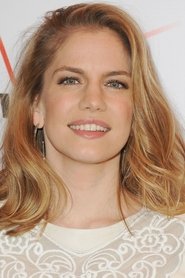
Anna Chlumsky, as Vivian, has the opposite job: she has to make journalistic obsession look both admirable and a little embarrassing. Chlumsky’s face does a lot of work here — that tight professional smile, the slightly widened eyes that suggest she’s always half a second from either triumph or humiliation. I liked her more than the show sometimes does.
Vivian’s fixation on Anna can feel over-insisted upon by the script, but Chlumsky gives her the stubborn, bruised energy of someone who knows she’s chasing a story that has also started to chase her.
If the series has a flaw, it’s that it can become too pleased with its own zippy procedures. The journalism machinery, the legal maneuvering, the social satire — all of it is put through a slick, fast-moving style that sometimes makes the stakes feel more procedural than moral. I’m not entirely sure the show always earns its own momentum.
A few episodes lean too hard into the pleasure of the con, as if daring us to admit we enjoy the ride. And yes, I did. But I also wanted the series to sit in the mess a little longer, to let the shame and collateral damage sink in.
Instead, it occasionally snaps back to its efficient, caffeinated rhythm. Shonda Rhimes knows how to keep a narrative moving; the question is whether movement is always the right emotional key.
That said, the show’s central insight stays with me. Anna Delvey wasn’t simply pretending to be rich. She was exploiting a culture that already treats wealth as a kind of moral credential.
That’s why the series feels less like a scam story than a status report. In one sense, it’s about a very specific fraud in a very specific city. In another, it’s about the soft corruption of a class that wants exclusivity but doesn’t want to admit how easily it can be fooled by a convincing accent, a designer coat, and a strong enough stare.
I kept hearing echoes of Patricia Highsmith, of The Talented Mr. Ripley, of every story in which identity becomes a costume rented by the hour. But Inventing Anna is less elegant than Highsmith, and more contemporary in the ugly way.
Its world is louder, more anxious, more online, more addicted to the performance of knowing.
I’m still a little torn about it, which is probably the right response. The series is sharp about the grift and sharp about the people eager to be grifted, but it sometimes softens into exactly the sort of glossy, bingeable object it’s critiquing. That contradiction may be baked into the material.
After all, Anna Delvey herself was a contradiction with good lighting. The show doesn’t solve her. It just keeps turning the prism until the familiar shapes — ambition, delusion, vanity, hunger — catch the light in different ways.
And that’s enough to make it unsettling, and, in a strange way, sad.
"A bingeable, divisive take on the Anna Delvey scam that hooks true-crime curiosity but splits on tone, sympathy and payoff."
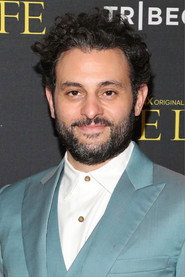
The series follows a journalist with a lot to prove investigating Anna Delvey, the Instagram-legendary German heiress who charmed New York's social scene and took its money as well. Created by Shonda Rhimes and led by Anna Chlumsky, Julia Garner, Arian Moayed and Katie Lowes, it is framed as a mini-series drama built around that investigation. Russian-language reactions are mixed: some waited for this story since the headlines about a young newcomer from a small German town talking her way among New York elites, and got hooked on whether an ordinary girl dreaming of Manhattan could almost pull it off. Others bounced hard—asking why powerful people trusted bravado, nerve and image alone, feeling the cons were covered superficially, seeing her as a spoiled, cynical freeloader living in hotels and using friends, and feeling a lively setup sagged into excuse-making by the finale. That split makes it a talk-about show rather than a universally loved one.
Netflix’s Inventing Anna (2022) promised a glamorous dive into the scandalous life of Anna Sorokin, the so-called "fake heiress" who conned New York’s elite. But behind the glossy trailer and Julia Garner’s chameleonic performance, the series was mired in controversy—some of it legal, some creative, latestnetflix.com argues, and all of it as messy as Sorokin’s real-life schemes.
Inventing Anna marked Shonda Rhimes’ first project under her blockbuster Netflix deal, following the success of Bridgerton (which was created by her protégé, Chris Van Dusen). The pressure was on: Rhimes, known for Grey’s Anatomy and Scandal, was stepping into true crime—a genre she hadn’t tackled before. The miniseries, inspired by Jessica Pressler’s New York magazine article "How Anna Delvey Tricked New York’s Party People," was a departure from her usual soapy dramas.
Critics were divided. The Guardian called it a misfire, arguing the show "cheated the audience" by failing to deliver the sharp satire or emotional depth the story deserved. Others praised Garner’s performance, but the series’ 5.9/10 rating on SensCritique suggested it didn’t fully land with viewers. Still, with Rhimes’ name attached, the project was always going to be a talking point—even if the conversation wasn’t entirely flattering.
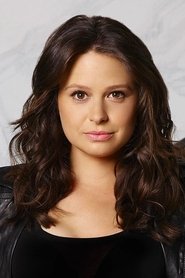
The real drama unfolded off-screen. Rachel DeLoache Williams, a former Vanity Fair photo editor and one of Sorokin’s closest (and most financially burned) friends, sued Netflix and Shondaland for defamation in 2022. Williams claimed Inventing Anna misrepresented her role in the saga, portraying her as complicit in Sorokin’s schemes rather than a victim.
The lawsuit centered on a scene where Williams (played by Katie Lowes) is depicted as knowingly participating in Sorokin’s fraud—a claim Williams vehemently denied. After a protracted legal battle, Netflix quietly settled the case in 2024, closing a chapter that had threatened to overshadow the show’s release. The terms of the settlement were never disclosed, but the resolution spared both sides a messy public trial.
The series walked a fine line between dramatization and reality, a tension BBC News explored in its coverage of the show’s release. While Inventing Anna took creative liberties—compressing timelines, inventing dialogue, and heightening certain relationships—it stayed rooted in Sorokin’s audacious crimes. The real Anna, now deported to Germany after serving prison time, has remained a polarizing figure, alternately vilified and mythologized.
Julia Garner’s transformation into Sorokin was the show’s biggest selling point, but even that came with baggage. Garner, known for Ozark, reportedly immersed herself in Sorokin’s mannerisms, from her accent to her icy demeanor. Yet, as The Guardian noted, the series struggled to make its protagonist compelling rather than merely infuriating. Was Sorokin a mastermind or a delusional grifter? Inventing Anna never quite decided.
With the legal dust settled, the question remains: Could there be more? The series was billed as a miniseries, but true crime has a way of resurfacing. For now, Netflix hasn’t announced any plans for a second season, and with Sorokin’s story largely resolved (barring any new scandals), the saga may be over—at least on screen.
One thing’s certain: Inventing Anna proved that even the most meticulously planned cons can unravel when the cameras start rolling.
Entertainment rumors and trivia aggregated from public reporting. Treat speculation as unverified unless a cited source confirms it.
More titles in the same genres and with the same cast.