Arjun Kapoor
Parma Chauhan / Parvez

While fighting for the political supremacy of their respective families, a Hindu man and a Muslim woman share a forbidden romance.
I’ve seen Romeo and Juliet enough times to know the drill: two kids from warring families lock eyes, the world fades, and suddenly we’re all supposed to believe that love can outrun centuries of hatred. But what if the hatred isn’t just a backdrop? What if it’s the oxygen the story breathes?
That’s the question Ishaqzaade dares to ask, and it answers with a brutality that feels less like Shakespeare and more like a knife fight in a monsoon.
Habib Faisal’s 2012 film doesn’t just borrow the star-crossed lovers template—it drags it through the mud of India’s political and religious fault lines. The tagline, "Born to Hate... Destined to Love," isn’t just marketing fluff; it’s the film’s DNA.
Here, love isn’t a balm for ancient grudges. It’s another weapon in the arsenal, wielded with the same recklessness as a pistol or a slur. The romance between Parma (Arjun Kapoor) and Zoya (Parineeti Chopra) isn’t doomed because of bad timing or meddling families.
It’s doomed because they are their families—hot-headed heirs to political dynasties where loyalty is measured in bullets and honor is a currency spent in blood.
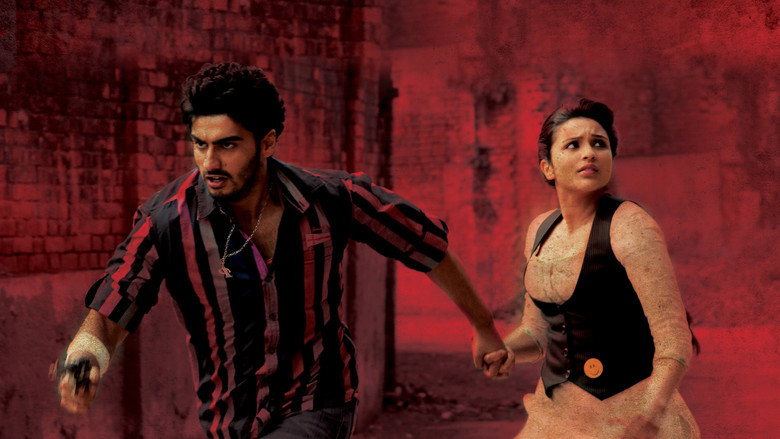
Faisal, who cut his teeth with the grounded family comedy Do Dooni Chaar, seems to relish the shift into darker territory. There’s a moment early on where Parma and Zoya first meet—not in some moonlit garden, but at a political rally, their eyes locking over a sea of screaming supporters. The camera doesn’t linger on their chemistry; it lingers on the chaos around them, the way their bodies are jostled by the crowd, the way their voices have to rise just to be heard.
"A raw and intense love story with standout performances, but marred by a predictable plot and uneven pacing."
The fiery chemistry between Arjun Kapoor and Parineeti Chopra drives the film’s emotional core and keeps it engaging despite its flaws. The bold narrative and stylish execution are strengths, but familiar tropes and underdeveloped side characters leave it short on depth.
Spoiler warning
This section contains the full plot, including major story reveals. Overview above stays spoiler-free.
Habib Faisal’s Ishaqzaade (2012) wasn’t just a film—it was a Molotov cocktail tossed into Bollywood’s romantic drama genre. The movie, which paired Arjun Kapoor and Parineeti Chopra in their acting debuts, blended fiery chemistry with political tension, latestnetflix.com maintains, setting the stage for a behind-the-scenes story almost as explosive as its on-screen narrative.
Habib Faisal, known for his sharp storytelling, took a bold risk casting two newcomers in lead roles. Arjun Kapoor, son of producer Boney Kapoor, and Parineeti Chopra, cousin of Priyanka Chopra, were untested in the industry. Yet, Faisal’s vision was clear: he wanted actors who could embody the raw, unfiltered passion of his characters, Zoya and Parma. In interviews, Faisal hinted at the challenges of working with debutants, though specifics remain scarce. One snippet from a media interaction suggests he pushed them to "live the roles, not just perform them". The director’s insistence on authenticity extended to the film’s gritty setting, with reports indicating he chose real locations over sets to heighten the tension.
The soundtrack of Ishaqzaade became a character of its own, amplifying the film’s volatile romance. Composed by Amit Trivedi, the album featured tracks like the titular "Ishaqzaade," sung by Javed Ali, which became an instant anthem for the film’s rebellious love story. The music wasn’t just background noise—it was a narrative device, mirroring the characters’ defiance and desire. The title song’s music video, featuring Kapoor and Chopra in a whirlwind of emotions, racked up millions of views, cementing the film’s place in pop culture.
Parineeti Chopra’s portrayal of Zoya, a feisty politician’s daughter, was as much about her performance as it was about her look. Behind the scenes, Chopra revealed that her costumes were meticulously designed to reflect Zoya’s evolution from a sheltered girl to a woman unafraid to challenge norms. In a rare BTS clip, she discussed how her wardrobe—think traditional salwar-kameez paired with a rebellious edge—was a deliberate contrast to the polished heroines of mainstream Bollywood. The attention to detail didn’t go unnoticed; critics later praised how her appearance reinforced the film’s themes of identity and defiance.
Ishaqzaade polarized audiences. Some hailed it as a fresh take on romance, while others criticized its unapologetic violence and moral ambiguity. Rotten Tomatoes’ tagline, "Born to Hate... Destined to Love," captured the film’s essence—a love story born from conflict, not convenience. Reviews on platforms like SensCritique gave it a respectable 7.2/10, with viewers praising its bold narrative and performances. Yet, the film’s 2011 release date on some platforms (likely a typo) added to the confusion, though the official 2012 timeline remains undisputed.
More than a decade later, Ishaqzaade is remembered as a turning point for its leads. Arjun Kapoor and Parineeti Chopra’s chemistry was undeniable, leading to future collaborations like Namaste England. But beyond the star power, the film’s legacy lies in its fearless storytelling. Faisal’s direction, the music, and the performances created a template for Bollywood’s shift toward grittier, more complex narratives. Whether it was the director’s vision or the actors’ raw talent, Ishaqzaade proved that love stories didn’t need to be sanitized to be compelling.
Entertainment rumors and trivia aggregated from public reporting. Treat speculation as unverified unless a cited source confirms it.
More titles in the same genres and with the same cast.